Court mandates pre-cognizance hearings for accused in private complaints to ensure fairness and prevent misuse.
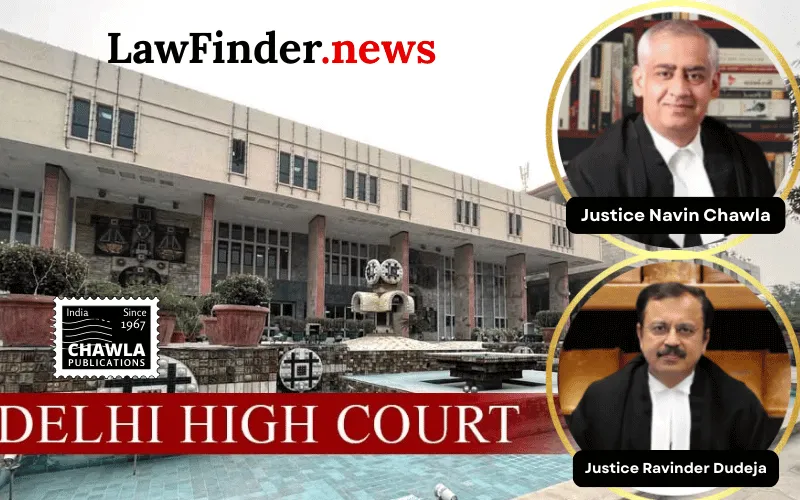
In a landmark judgment, the Delhi High Court has provided crucial clarity on the procedure for taking cognizance under the Bharatiya Nagarik Suraksha Sanhita (BNSS), 2023, particularly in the context of private complaints. The Division Bench, comprising Justices Navin Chawla and Ravinder Dudeja, emphasized the importance of pre-cognizance hearings for accused individuals to protect against unwarranted harassment and ensure a fair legal process.
The case involved two petitions: Crl.M.C. 2551/2025, filed by Dr. Rita Bakshi, and Crl.M.C. 3169/2026, filed by Anita Rani Mehra and others. Both petitions challenged the issuance of notices without pre-summoning hearings as required by the BNSS.
The Court's ruling focused on two pivotal questions: the stage at which a Magistrate is deemed to have taken "cognizance" of an offence, and the timing for issuing notice to the accused under Section 223(1) of the BNSS. The Court determined that cognizance can only be taken after examining the complainant and witnesses on oath and providing the accused an opportunity to be heard. This approach departs from the earlier legal framework under the Criminal Procedure Code (Cr.P.C.), where cognizance was taken before such examinations.
The judgment underscores a significant shift brought by the BNSS, with the examination of complainants and witnesses now integral to the cognizance process. This change aims to prevent the initiation of criminal proceedings without due examination of allegations and ensures the accused is not subjected to the legal process without being heard.
The Court also clarified that notices to the accused should be issued after the Magistrate has examined the complainant and witnesses and formed a prima facie opinion on the complaint's merit. This ensures that the accused has a meaningful opportunity to contest the complaint before formal cognizance is taken, aligning with the BNSS's intent to safeguard against frivolous complaints.
The Delhi High Court's decision aligns with similar interpretations by other High Courts and marks a significant development in procedural law, emphasizing the rights of accused individuals in criminal proceedings. The judgment has been welcomed as a step forward in ensuring justice and preventing misuse of legal processes.
Bottom Line :
BNSS, 2023 Section 223(1) - In private complaint cases, examination of complainant and witnesses on oath is part of the process of taking cognizance, and notice to proposed accused must be issued after such examination but before formal cognizance is taken - Pre-cognizance hearing of accused is mandatory; cognizance taken without such hearing is void.
Statutory provision(s): Bharatiya Nagarik Suraksha Sanhita, 2023 Sections 210, 223, 225, 226, 227
Dr. Rita Bakshi v. Seema Bajaj, (Delhi)(DB) : Law Finder Doc id # 2989258