Court Rules Territorial Jurisdiction Limited to Cause of Action Location, Directs Petitioner to Approach Chhattisgarh High Court for Human Rights Grievance
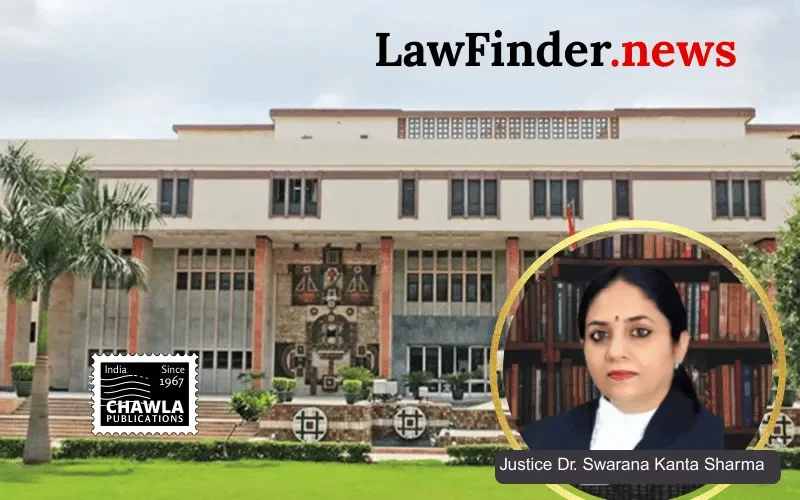
In a significant judgment delivered on November 19, 2026, the Delhi High Court, presided over by Justice Dr. Swarana Kanta Sharma, dismissed a petition filed by Baman Ram Kawasi challenging an order of the National Human Rights Commission (NHRC) relating to alleged religious persecution and violence in Sukma district, Chhattisgarh. The Court held that it lacked territorial jurisdiction under Article 226 of the Constitution of India to entertain the petition, as the substantive cause of action arose entirely outside Delhi.
The petitioner, representing Adivasi Christian families from Village Chitlanar in Sukma, had approached the NHRC complaining of mob violence, threats of forced religious conversion, and inaction by local police authorities. The NHRC had disposed of the complaint with directions to the District Magistrate and Superintendent of Police, Sukma, to take appropriate action within eight weeks. Aggrieved by the perceived inaction and the continuing displacement of affected families, the petitioner filed a writ petition in the Delhi High Court challenging the NHRC’s order.
The respondents, including the Union of India and the NHRC, objected to the maintainability of the petition on the ground that the Delhi High Court did not have territorial jurisdiction since all relevant incidents, parties, and records pertained to Chhattisgarh. The Court agreed with this position, emphasizing that the mere location of the NHRC’s principal office in Delhi does not confer jurisdiction. The Court reiterated the legal principle, affirmed by the Supreme Court in Kusum Ingots & Alloys Ltd. v. Union of India (2004), that territorial jurisdiction under Article 226 is determined by where the cause of action—comprising the essential material facts—arises.
The Court analyzed that the incidents of violence, the alleged police inaction, the displacement of families, and even the NHRC’s directions targeted the authorities in Sukma, Chhattisgarh. The NHRC’s role was limited to transmitting the complaint to the local authorities for action. Importantly, the Court noted that the petitioner did not implead the State of Chhattisgarh or the local authorities as parties in the petition, which further weakened the case for jurisdiction in Delhi.
Applying the doctrine of forum conveniens, the Court held that even if some part of the cause of action arose in Delhi, it is not mandatory for the Delhi High Court to exercise jurisdiction, particularly where the core facts and parties are located elsewhere. The Court pointed out the risk of parallel proceedings and conflicting orders if the petition were entertained in Delhi when a similar case was pending in Chhattisgarh. The judgment also referred to previous coordinate bench rulings that have declined jurisdiction over NHRC orders merely because the commission is based in Delhi.
Consequently, the Court dismissed the petition, leaving the petitioner free to approach the Chhattisgarh High Court or other appropriate forums for redressal. The Court clarified that the dismissal is confined to the question of jurisdiction and does not express any opinion on the merits of the petitioner’s grievances.
This judgment reinforces the territorial limits on writ jurisdiction and underscores the principle that human rights complaints must be pursued in the forum with the most direct nexus to the cause of action. It also highlights the NHRC’s role as a statutory body that forwards complaints to appropriate local authorities, who bear the primary responsibility for taking action.
Bottom Line:
Territorial jurisdiction of the Delhi High Court under Article 226 of the Constitution does not extend to cases where the substantive cause of action arises entirely outside Delhi, even if the NHRC or other statutory authority is headquartered in Delhi.
Statutory provision(s):
Article 226 of the Constitution of India, Sections 12, 13, 17, 18 of the Protection of Human Rights Act, 1993
Baman Ram Kawasi v. Union of India, (Delhi) : Law Finder Doc Id # 3212109