Court holds disputed factual issues on service of hearing notice and penalty calculations should be resolved by Appellate Authority under CGST Act, 2017
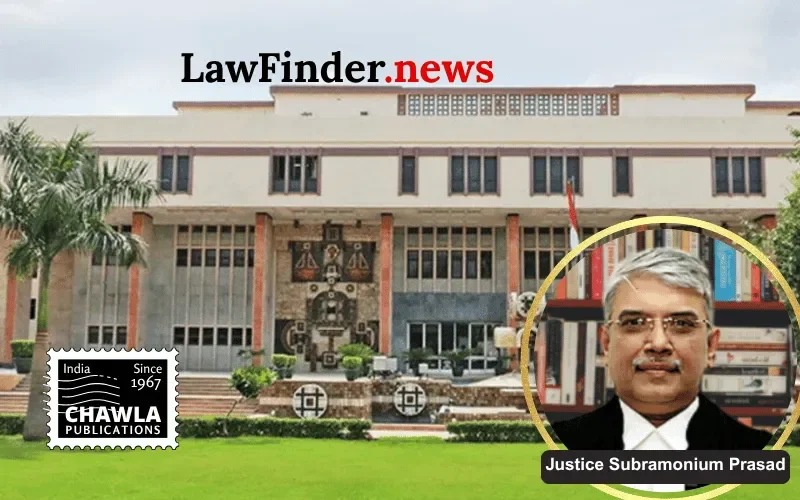
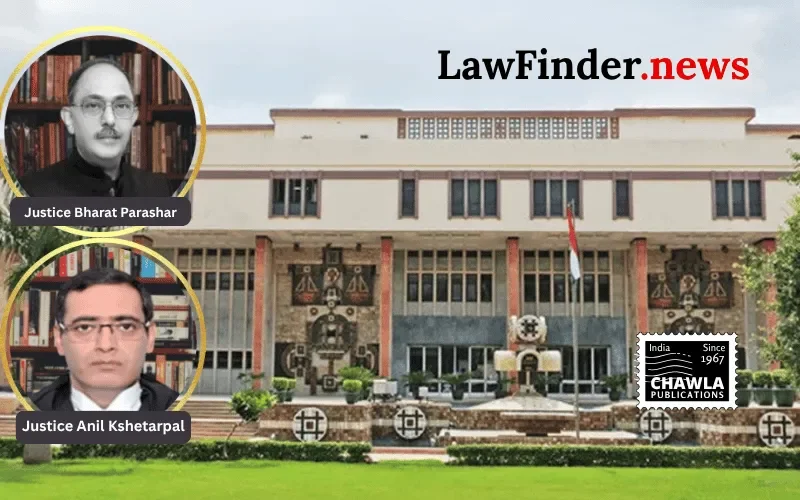
In a significant judgment delivered on October 9, 2026, the Delhi High Court (Division Bench of Justices Anil Kshetarpal and Bharat Parashar) disposed of a writ petition filed by Om Shankar Metal, challenging an ex-parte assessment order under Section 74 of the Central Goods and Services Tax (CGST) Act, 2017. The petitioner had contended that the impugned order was passed without granting an opportunity of personal hearing and was thus violative of the principles of natural justice. Additionally, the petitioner disputed the imposition of a 100% penalty under Section 74(1), arguing that tax, interest, and a 15% penalty had already been deposited before the issuance of the show cause notice.
The Court acknowledged that writ petitions are maintainable where there is an alleged breach of natural justice, and the petitioner's grievance regarding denial of personal hearing was prima facie maintainable. However, the Court distinguished maintainability from the exercise of writ jurisdiction, emphasizing that where the controversy involves disputed questions of fact-such as the service of hearing notices, registration particulars, and email addresses-these should be adjudicated by the statutory Appellate Authority under Section 107 of the CGST Act rather than in writ jurisdiction.
The Court noted that the Department claimed the notices for personal hearing were sent to the petitioner's registered email address, but the petitioner produced contrary evidence showing a different email address registered with the GST portal. Since the question of service was essentially factual and required detailed examination of records, the Court declined to decide the issue in the writ petition.
Regarding the penalty, the Court observed that the impugned order had recorded the deposit of tax, penalty at 15%, and interest amounts but still confirmed a penalty equivalent to 100% of the tax on the ground of non-payment of total interest. The Court found that the order failed to apply Sections 74(5) to 74(7) correctly, did not quantify the interest payable on the deposited tax, nor reconcile the 15% penalty with the 100% penalty imposed. It also noted that no specific finding of fraud or willful misstatement was recorded, which is a precondition for imposing the higher penalty under Section 74(1).
The Court held that these issues involved examination of audit memos, statutory forms, and other documents, which amounted to disputed questions of fact better suited for the Appellate Authority's consideration.
Consequently, the Court dismissed the writ petition, directing the petitioner to avail the statutory remedy of appeal under Section 107 of the CGST Act. The Court further permitted the petitioner to file an application under Section 14 of the Limitation Act, 1963, for exclusion of the period during which the writ petition was pending. The judgment explicitly clarified that the observations made were confined to maintainability and did not express any opinion on the merits of the case.
This decision underscores the judiciary's approach to balancing the protection of natural justice with procedural propriety by ensuring that factual disputes under tax statutes are resolved through the specialized appellate mechanisms rather than writ proceedings.
Bottom Line:
GST - Writ petition challenging ex-parte assessment order under Section 74 of CGST Act on ground of denial of personal hearing - Though writ is maintainable where breach of natural justice is alleged, High Court may still decline to exercise jurisdiction where dispute regarding service of hearing notice and other objections involves disputed questions of fact capable of adjudication by Appellate Authority under Section 107 - Petitioner relegated to statutory appeal.
Statutory provision(s):
Article 226, Constitution of India; Sections 74, 75(4), 107 of the Central Goods and Services Tax Act, 2017; Section 14 of the Limitation Act, 1963