Court Directs Pursuit of Civil Suit for Disputed Compensation Arising from Vehicle Scrapping
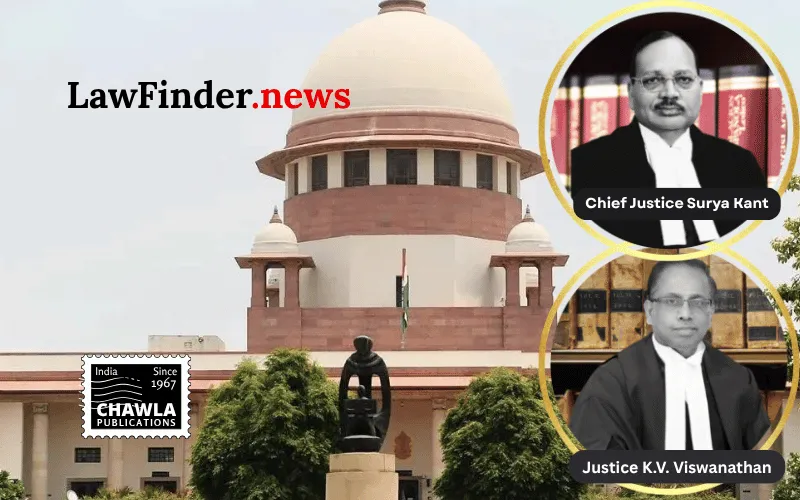
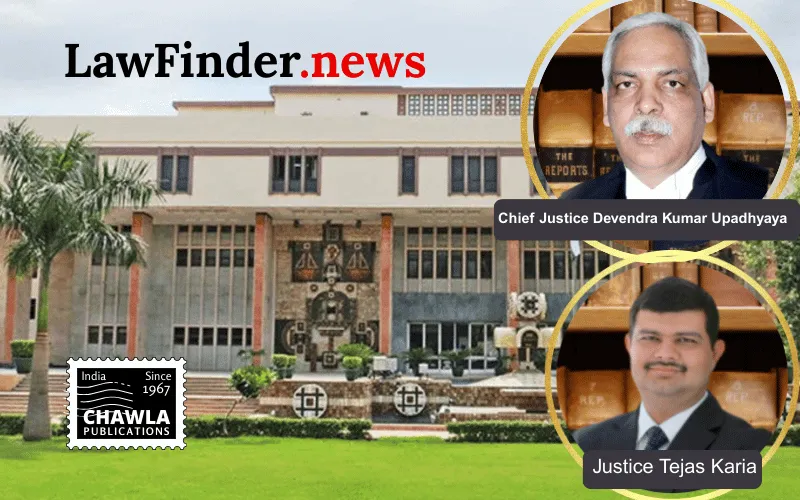
In a significant ruling, the Delhi High Court dismissed the writ petition filed by Nitin Sarna, seeking compensation for the seizure and scrapping of his vehicle. The Division Bench, comprising Chief Justice Devendra Kumar Upadhyaya and Justice Tejas Karia, upheld the decision of the Single Judge, emphasizing that the determination of compensation involves disputed questions of fact that cannot be resolved under writ jurisdiction.
The case arose when Sarna's eighteen-year-old vehicle, parked on a public street, was seized by the Department of Transport, labeling it an "End of Life Vehicle" under the Motor Vehicle (Registration and Functions of Vehicle Scrapping Facility) Rules, 2021. Sarna argued that the seizure violated his constitutional rights, as the vehicle had not been used for years and was kept as a sentimental family possession. He contended that the action was arbitrary and sought Rs. 14,344,500 in compensation for the alleged mental agony and harassment caused by the seizure.
The High Court, however, noted that the legality of the seizure and subsequent scrapping must be assessed based on evidence, which requires adjudication in a civil court. The Bench highlighted that the statutory framework governing the scrapping of vehicles under the RVSF Rules, 2021, and the Guidelines for Handling End of Life Vehicle in Public Place, 2024, necessitates a factual determination that is inappropriate for writ proceedings.
The court observed that Sarna had not demonstrated efforts to utilize the mechanisms available for the release of the vehicle as per the guidelines. Furthermore, the compensation claim extended beyond the vehicle's scrap value, encompassing damages for mental distress and reputational injury, which require evidence and detailed factual examination.
While acknowledging the jurisdiction of High Courts to award public law compensation in cases of constitutional rights violations, the Bench reiterated that such discretion must be exercised judiciously based on the case's specifics. The court concluded that the civil suit remains the appropriate avenue for resolving the factual disputes and determining the compensation quantum.
The ruling underscores the principle that writ jurisdiction is not a substitute for civil remedies, especially in cases involving complex factual issues requiring evidence and thorough adjudication.
Bottom Line:
Compensation for seizure and scrapping of a vehicle under the Motor Vehicle (Registration and Functions of Vehicle Scrapping Facility) Rules, 2021 cannot be adjudicated under writ jurisdiction if it involves disputed questions of fact - The remedy lies in a civil suit.
Statutory provision(s): Constitution of India, Article 226, Articles 14, 21, and 300A; Motor Vehicle (Registration and Functions of Vehicle Scrapping Facility) Rules, 2021; Guidelines for Handling End of Life Vehicle in Public Place, 2024.
Nitin Sarna v. Department of Transport, (Delhi)(DB) : Law Finder Doc id # 2966441