Court rejects calls for new investigation, compensation, and guidelines; emphasizes existing frameworks and ongoing proceedings.
The Delhi High Court has dismissed a series of petitions filed in connection with the 2019 Jamia Millia Islamia University incident, where police action during anti-CAA protests had raised significant public and legal concerns. The petitions sought various reliefs, including the establishment of an independent judicial commission, compensation for injured students, and new guidelines for police action within educational institutions.
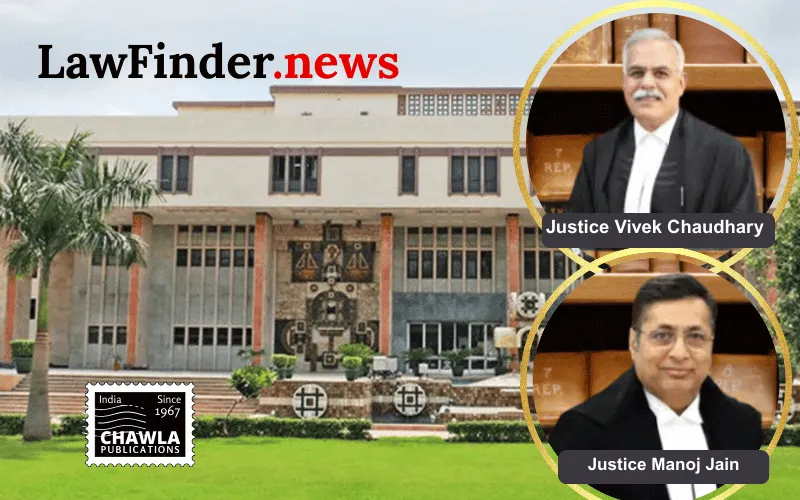
A division bench comprising Justices Vivek Chaudhary and Manoj Jain ruled that the extraordinary powers of the court to order an independent investigation are to be exercised sparingly and only in rare cases. The court noted that FIRs had already been registered, investigations were conducted by a Special Investigation Team (SIT) of the Crime Branch, and charge-sheets had been filed. Additionally, the National Human Rights Commission (NHRC) had independently inquired into the matter, making several recommendations.
The court emphasized that mere dissatisfaction with existing processes is not a valid ground to direct a parallel inquiry. It also declined the petitioners' request for compensation, citing disputed questions of fact and the petitioners' failure to pursue remedial measures recommended by the NHRC.
Regarding the call for new guidelines on police actions in educational institutions, the court held that the existing constitutional and statutory frameworks already govern such actions based on necessity, restraint, and proportionality. The judges highlighted the importance of adhering to these principles, noting that the facts of the Jamia incident, which arose from a rapidly developing law-and-order situation, could not serve as a basis for prescribing uniform guidelines for all educational settings.
The decision underscores the court's stance on maintaining the integrity of existing legal frameworks and judicial restraint, particularly in matters where processes have already been initiated and are pending before competent authorities.
Bottom Line :
Constitutional writ jurisdiction - Incidents at Jamia Millia Islamia during anti-CAA protests - Prayer for independent judicial commission/SIT, compensation and fresh guidelines regulating police action in educational institutions - Rejected - Held, extraordinary power to order independent investigation is to be exercised sparingly and only in rare and exceptional cases - Here, FIRs had already been registered, investigation was conducted by SIT of Crime Branch, charge-sheets were filed, NHRC had independently inquired into matter and made recommendations, and Section 156(3) proceedings initiated by University had also culminated - Mere dissatisfaction with existing processes is no ground to direct parallel inquiry - Compensation in writ jurisdiction also declined as claims involved disputed questions of fact and petitioners had not pursued remedial measures flowing from NHRC recommendations - No fresh guidelines required since existing constitutional and statutory framework already governs police action on touchstones of necessity, restraint and proportionality.
Statutory provision(s): Articles 19(1)(a), 19(1)(b), 226 of the Constitution of India; Sections 143, 147, 148, 149, 186, 353, 332, 308, 427, 435, 323, 341, 120B, 34 of the Indian Penal Code, 1860; Sections 3 and 4 of the Prevention of Damage to Public Property Act, 1984; Section 156(3) of the Cr.P.C.; Section 144 of the Cr.P.C.
Manoj Dhiryan v. Union of India, (Delhi)(DB) : Law Finder Doc id # 2990829