Court Emphasizes Adherence to CGST Act's Appellate Procedure, Denies Claims of Natural Justice Violation
In a recent judgment, the Delhi High Court dismissed a writ petition filed by Sodexo India Services Private Limited, challenging an adjudication order under the Central Goods and Services Tax Act, 2017 (CGST Act). The court reinforced the importance of utilizing the statutory appellate mechanism provided under Section 107 of the CGST Act, emphasizing that writ jurisdiction under Article 226 of the Constitution should be exercised with restraint unless exceptional circumstances are demonstrated.
The case arose from an Order-in-Original dated March 24, 2026, which demanded approximately Rs.8.75 crores from Sodexo, citing GST liabilities on catering services and pre-packaged food products. Sodexo contended that the adjudicating authority violated principles of natural justice by allegedly disregarding replies and supporting documents.
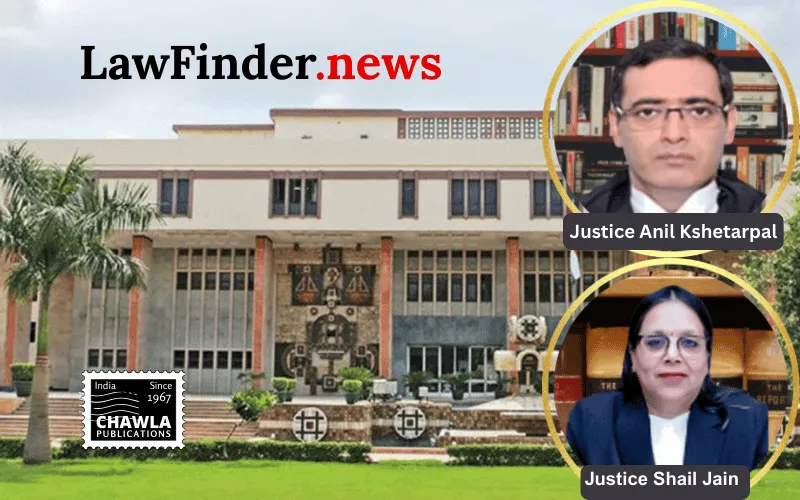
However, the court, presided by Justices Anil Kshetarpal and Shail Jain, ruled that Sodexo was afforded adequate opportunity to present its case during the proceedings. The court noted that the petitioner actively participated, submitting detailed replies and attending personal hearings. Consequently, the court found no exceptional circumstances to warrant bypassing the statutory appellate route.
The judgment underlined that questions regarding the sufficiency of documents or adequacy of replies fall within the purview of the statutory appellate authority and should not be entertained under writ jurisdiction. The court also clarified that the existence of an alternative statutory remedy does not create an absolute bar to writ jurisdiction but must be considered with judicial discretion.
The court's decision aligns with previous Supreme Court rulings, emphasizing that writ petitions may be entertained in cases involving breach of fundamental rights, violation of principles of natural justice, jurisdictional excess, or challenges to the vires of a statute. However, Sodexo's petition did not demonstrate any such exceptional circumstances.
The court dismissed the petition, directing Sodexo to avail itself of the statutory remedy under Section 107 of the CGST Act. Additionally, the court ensured that the time spent during the writ proceedings would not be counted towards the limitation period for filing an appeal, thus allowing Sodexo to pursue its case further.
Bottom line:-
Writ petition under Article 226 of the Constitution is not maintainable when a complete, efficacious, and comprehensive statutory appellate remedy under Section 107 of the CGST Act is available, unless exceptional circumstances such as breach of fundamental rights, violation of principles of natural justice, or jurisdictional excess are demonstrated.
Statutory provision(s): Article 226 of the Constitution, Section 107 of the CGST Act, 2017, Section 74 of the CGST Act, 2017
Sodexo India Services Private Limited v. Union of India, (Delhi)(DB) : Law Finder Doc id # 2941065