Court says pre-trial defamation injunctions must balance reputation and free speech, and cannot impose a blanket restraint wider than necessary
The Delhi High Court has modified a trial court order that had completely restrained the sale, distribution and circulation of the book “Yes Man: The Untold Story of Rana Kapoor”, holding that a blanket pre-trial ban on the entire work was excessive.
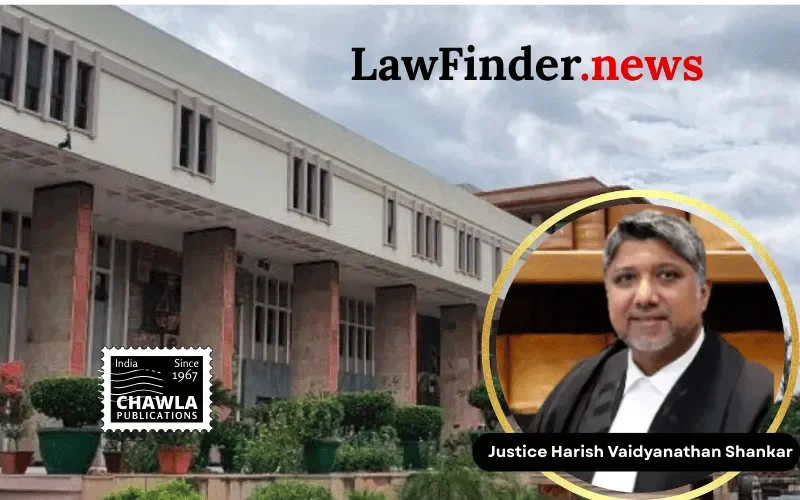
Justice Harish Vaidyanathan Shankar, deciding appeals filed by publisher Harper Collins Publishers India Pvt. Ltd. and author Pavan Chand Lall, ruled that while some passages in the book were prima facie defamatory or derogatory, the injunction should be limited only to those specific portions and not the whole book.
The dispute arose from a civil suit filed by former Yes Bank co-founder and ex-CEO Rana Kapoor, who alleged that the book, along with two articles and an interview connected to it, contained defamatory material that harmed his reputation, invaded his privacy and could prejudice ongoing criminal proceedings against him.
The trial court had, on 10 July 2024, barred the defendants from selling or circulating the entire book during the pendency of the suit. It had also restrained publication of the related interview and articles and directed their removal from websites and YouTube channels.
On appeal, the High Court examined the legal standards governing pre-publication and pre-trial injunctions in defamation matters. It stressed that courts must carefully balance the right to reputation under Article 21 of the Constitution with the right to freedom of speech and expression under Article 19(1)(a). The court said neither right can automatically override the other.
The High Court noted that the trial court had itself found only three statements in the book to be prima facie defamatory and one additional statement to be derogatory. The remaining passages challenged by Kapoor were not held to be defamatory. In such circumstances, the High Court said, extending the restraint to the entire book was disproportionate.
The four passages identified by the court included one describing Kapoor as an “arrogant, erstwhile tycoon” whose “own actions” led Yes Bank toward collapse; one suggesting that family influence helped him secure a job at Bank of America; one stating that subordinates could “intellectually run circles around him”; and another alleging that he organized credit approvals without managerial sanction and bypassed banking protocols.
Justice Shankar held that, at the interlocutory stage, there was no reason to disturb the trial court’s prima facie findings on these passages. However, he emphasized that the existence of a few objectionable statements did not justify suppressing an entire literary work, especially when the book had already been published in December 2020 and had remained in circulation for a substantial period.
The court also considered delay as a relevant factor in assessing the balance of convenience. While noting Kapoor’s explanation that he was incarcerated for a considerable period and came to know of the book later, the court observed that the passage of time and the absence of demonstrated injury during circulation were still important circumstances against a total ban.
Relying on principles laid down in Bloomberg Television Production Services India (P) Ltd. v. Zee Entertainment Enterprises Ltd., Khushwant Singh v. Maneka Gandhi and Swami Ramdev v. Juggernaut Books Pvt. Ltd., the High Court reiterated that injunctions against books, journalism and other expressive works should be granted with exceptional caution. It said courts should avoid stifling public debate before trial unless the restraint is clearly necessary and proportionate.
The court finally modified the impugned order and held that the injunction would operate only against the specific portions of the book containing the four disputed statements. The rest of the book would remain free from restraint.
At the same time, the High Court clarified that its observations were only for deciding interim relief and would not affect the final trial. Questions of truth, justification, fair comment and other defences raised by the publisher and author will be decided during the suit.
The appeals were disposed of with no order as to costs.
Bottom Line:
Pre-trial injunction against publication of a book containing alleged defamatory statements concerning a public figure requires careful balancing of the right to reputation under Article 21 and the right to freedom of speech and expression under Article 19(1)(a) of the Constitution of India - Injunction must be no wider than necessary and confined to specific defamatory passages rather than the entire work.
Statutory provision(s): Order XLIII Rule 1(r) CPC, Sections 104 CPC, 151 CPC, Order XXXIX Rules 1 and 2 CPC, Section 9 CPC, Article 19(1)(a) of the Constitution of India, Article 21 of the Constitution of India, Article 19(2) of the Constitution of India, Sections 499 IPC, 500 IPC, Section 199 CrPC
Harper Collins Publishers India Pvt. Ltd. v. Mr. Rana Kapoor, (Delhi) : Law Finder Doc id # 3015251