Despite Serious Terror Funding Allegations, Court Holds Statutory Bail Restrictions Under UAPA Not Absolute and Orders Release on Stringent Conditions after Over Five Years of Custody
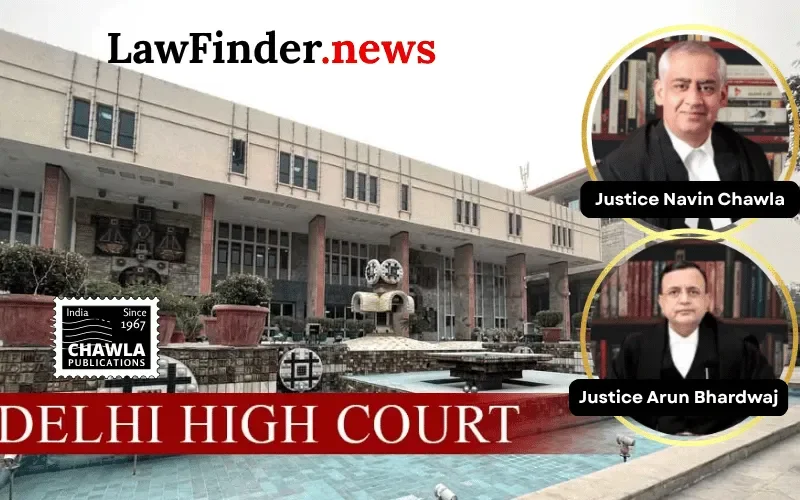
In a significant judgment delivered on October 1, 2026, the Division Bench of the Delhi High Court, comprising Justice Mr. Navin Chawla and Justice Arun Bhardwaj, granted bail to Mohd. Shahzad Kamal, accused under the Unlawful Activities (Prevention) Act (UAPA), who had been in judicial custody for over five years. The decision highlights the constitutional mandate of a speedy trial and the interplay between statutory bail restrictions and fundamental rights under Article 21 of the Constitution of India.
Mohd. Shahzad Kamal was arrested on August 31, 2021, in connection with an extensive investigation by the National Investigation Agency (NIA) into a terrorist conspiracy involving the ISIS-affiliated group Harkat-Ul-Harb-E-Islam. The prosecution alleged that Kamal played a pivotal role in arranging funds to facilitate terrorist activities. The case involved 161 prosecution witnesses, with the trial having reached the examination of only the 42nd witness, indicating a prolonged and uncertain trial trajectory.
The appellant's counsel argued that despite the gravity of charges, prolonged incarceration without a timely trial infringed upon his constitutional right to liberty and a speedy trial. They pointed to the absence of direct evidence conclusively linking Kamal to incriminating chats recovered from co-accused devices and highlighted discrepancies in witness testimonies. The counsel further noted that co-accused Mohd. Saqib Iftekhar, allegedly involved in similar conduct, had already been granted bail.
The Special Public Prosecutor for NIA contended that statutory restrictions under Section 43D(5) of UAPA barred bail unless the court was satisfied of the accused's innocence or non-risk, emphasizing the serious nature of the allegations and the ongoing trial's progress. The prosecution also objected to the appellate court's consideration of witness statements recorded after the trial court's bail rejection.
The High Court, after detailed scrutiny, reaffirmed that while UAPA imposes stringent bail conditions, these do not eclipse constitutional safeguards. Citing landmark Supreme Court precedents, including Gulfisha Fatima v. State and Union of India v. K.A. Najeeb, the court underscored that prolonged pre-trial detention without a reasonable prospect of trial completion infringes Article 21 rights. The court recognized that bail under UAPA requires a nuanced inquiry balancing national security and individual liberty.
Importantly, the court held that the appellate court has jurisdiction to consider facts arising post the trial court's bail order, including witness statements recorded during the appeal. Denying this would frustrate justice, especially given the lengthy pendency of the appeal and trial.
On the merits, the court noted the absence of positive evidence conclusively tying the appellant to incriminating chats or the funding alleged. The testimonies examined did not justify continued incarceration, especially considering the trial's slow progress and the appellant's role relative to others.
Consequently, the court set aside the trial court's order rejecting bail and directed the appellant's release on bail subject to stringent conditions including personal bond, surrender of passport, restrictions on travel and communication, regular reporting to NIA, and prohibitions against influencing witnesses or tampering with evidence. The court clarified that this bail order does not comment on the merits of the case.
This judgment reinforces the principle that statutory restrictions under special security laws must be harmonized with constitutional rights, particularly the right to a fair and speedy trial. It also clarifies the appellate court's role in considering evolving trial records when adjudicating bail.
Bottom Line:
UAPA - Bail - Prolonged incarceration of more than 5 years and no likelihood of trial concluding soon - Even in cases under Section 43D(5) UAPA, constitutional courts can grant bail on Article 21 grounds - Appellate Court can also consider statements of witnesses recorded after rejection of bail by Trial Court.
Statutory provision(s):
Unlawful Activities (Prevention) Act, 1967 Section 43D(5), National Investigation Agency Act, 2008 Section 21(4), Constitution of India Article 21
Mohd Shahzad Kamal v. National Investigation Agency, (Delhi)(DB) : Law Finder Doc Id # 2989587