Court says “bail is the rule and jail is the exception”, holds prolonged custody unjustified as charge-sheet is filed and investigation is substantially complete
The Delhi High Court has granted regular bail to Dr. Vinod Kumar Ranga and Dr. Vatsala Aggarwal in a high-profile corruption case linked to alleged cartelisation and irregularities in the procurement of medicines, surgical items, equipment and linen by the Central Procurement Agency (CPA) under the Directorate General of Health Services (DGHS), Government of NCT of Delhi.
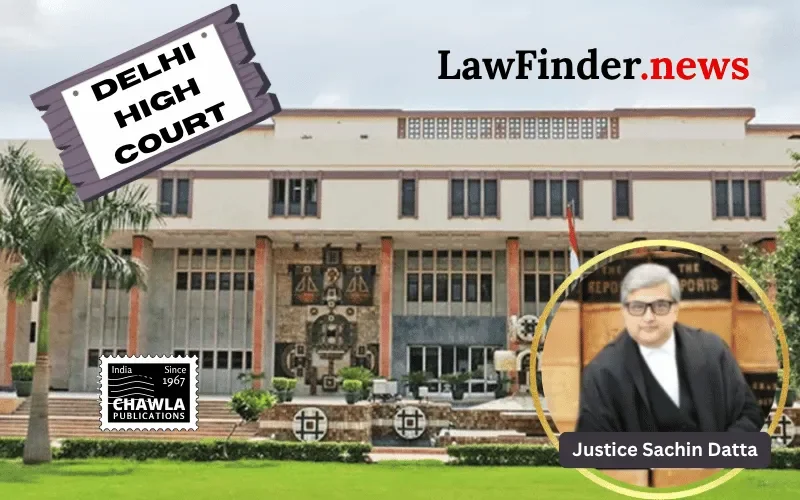
Justice Sachin Datta passed the order on November 6, 2026, while hearing two bail applications arising out of FIR No. 07/2026 registered by the Anti-Corruption Branch (ACB). The case involves allegations under the Prevention of Corruption Act, 1988 and the Bharatiya Nyaya Sanhita, 2023, including criminal conspiracy, cheating, disappearance of evidence and public servant misconduct.
According to the prosecution, tender conditions were allegedly tailored to favour firms linked to co-accused Rajeev Kumar, also known as Rajiv Arora or Rajiv Rangeela, resulting in payments of about ?841.58 crore to five firms. The State also alleged that key tender files went missing and may have been destroyed, and that the accused failed to produce relevant mobile phones and passwords during investigation.
Dr. Ranga, who served as Head of Office, CPA, was arrested on June 18, 2026 and had remained in custody for 141 days. Dr. Aggarwal, the then Director General, DGHS, was arrested on June 27, 2026 and had spent 105 days in custody, excluding a brief period of interim medical bail.
The charge-sheet, filed on September 16, 2026, runs to around 12,000 pages and names five accused, with 84 witnesses cited. Sanction for prosecution under the Prevention of Corruption Act was granted on September 29, 2026, and cognisance was taken by the trial court. The trial court had earlier rejected their bail pleas on October 17, 2026.
Before the High Court, the applicants argued that the investigation had substantially concluded, the charge-sheet had already been filed, and no direct monetary trail had been found in their personal bank accounts. They also pointed out that custodial interrogation had not been sought for months and that the trial, involving voluminous records and dozens of witnesses, would take considerable time.
Dr. Aggarwal additionally relied on her age and medical condition. The court noted that she is around 61 years old and suffers from systemic hypertension, diabetes, lower back pain, bronchial asthma and sleep-related respiratory complications. The medical records placed before the court showed repeated admissions to the jail’s Medical Inspection Room and treatment with a C-PAP machine.
Opposing bail, the ACB argued that the case involved a large-scale economic offence affecting public funds, that crucial tender files were missing, and that further investigation was still underway. The prosecution also claimed that release of the accused could hamper the ongoing probe, influence witnesses and lead to tampering with evidence.
However, the High Court held that the seriousness of the allegations alone could not justify indefinite pre-trial detention. Relying on several Supreme Court rulings, including Sanjay Chandra v. CBI, Manish Sisodia v. Directorate of Enforcement, P. Chidambaram v. Directorate of Enforcement and Kalvakuntla Kavitha v. Directorate of Enforcement, the court reiterated that “bail is the rule and jail is the exception”.
The court found that the case rests largely on documentary, electronic and official records that have already been seized by the prosecution, reducing the likelihood of evidence tampering. It also observed that the further investigation mainly concerns forensic analysis of already seized devices, scrutiny of GeM data, banking records and investigation into other accused persons and firms, none of which required continued custody of the two applicants.
On the issue of missing tender files, the court described it as the most serious allegation but said continued incarceration would not aid recovery, especially when the files had remained untraced despite months of custody, police interrogation and multiple searches. The court also noted that the non-availability of the files predated the arrests and had not prevented the filing of a detailed charge-sheet based on other records.
The High Court further took note of the prosecution’s own position that no direct transfer had been shown in Dr. Ranga’s personal bank account, and that no money trail had been traced to Dr. Aggarwal either. It said these issues, along with allegations of connivance and destruction of evidence, would ultimately be tested during trial.
Granting bail, the court directed both accused to furnish personal bonds of ?50,000 each with one surety of the like amount. It imposed strict conditions, including surrender of passports, restriction on leaving the NCR without prior permission, a ban on entering CPA or DGHS premises without court approval, regular cooperation with investigation, no contact with prosecution witnesses or officials connected with the case, and monthly reporting to the concerned SHO.
The court also clarified that its observations were limited to deciding the bail applications and should not influence the merits of the trial.
Bottom Line:
Bail granted under the principles that bail is the rule and jail is the exception, even in cases involving alleged economic offences and large-scale corruption, subject to stringent conditions to ensure cooperation with investigation and prevent tampering with evidence.
Statutory provision(s): Prevention of Corruption Act, 1988 Sections 7A, 13(1), 13(2), 19; Bharatiya Nyaya Sanhita, 2023 Sections 61(2), 238, 316(5), 318(4); Bharatiya Nagarik Suraksha Sanhita, 2023 Sections 84, 183, 193(9), 480, 483, 528; Code of Criminal Procedure, 1973 Sections 437, 439, 482, 173(8)
Dr. Vinod Kumar Ranga v. State (NCT of Delhi), (Delhi) : Law Finder Doc id # 3019180