Court Recognizes Distinct Nature of Personality Rights, Restricts AI-Generated Deepfake Content, Impersonation, and Obscene Material While Protecting Legitimate Expression
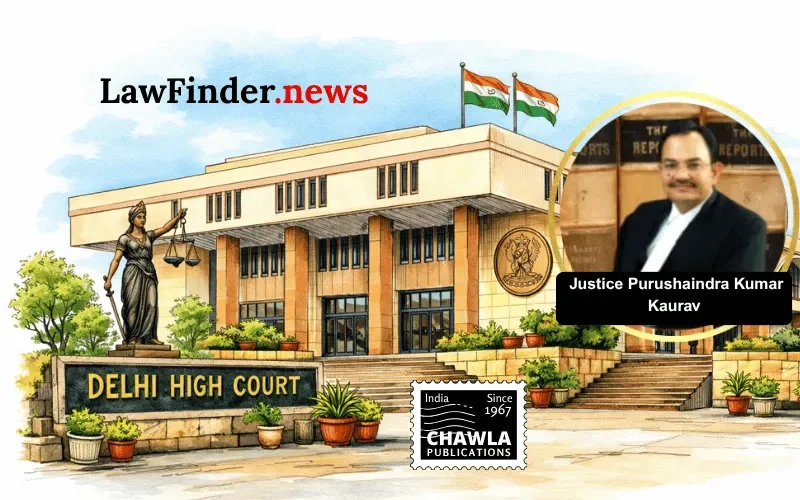
In a landmark judgment delivered on October 29, 2026, the Delhi High Court, presided over by Mr. Justice Purushaindra Kumar Kaurav, granted limited ad interim relief to Bollywood actress Kriti Sanon in her suit against BBE Marketing Inc. and others for unauthorized use of her name, image, likeness, and voice on various digital platforms. The suit highlighted the growing challenges of protecting "personality rights" in the age of artificial intelligence and social media.
Kriti Sanon, the plaintiff, alleged that multiple defendants were misusing her identity through fake social media accounts, AI-generated and morphed sexually suggestive images, synthetic voice models, chatbots impersonating her, pornographic deepfakes, and unauthorized merchandise sales. The suit sought to protect her right of publicity and privacy, asserting that these unauthorized uses were causing irreparable harm to her reputation and dignity.
The Court emphasized that "personality rights" is not a monolithic legal concept but an umbrella term encompassing several distinct legal claims, including the right of publicity, the right to privacy, passing off, defamation, and statutory rights under intellectual property laws. It clarified that the right of publicity protects the commercial value of an individual's identity and can be licensed or assigned, whereas rights concerning privacy and dignity are personal and non-assignable.
Rejecting the plaintiff's plea for a broad omnibus injunction, the Court held that relief must be specific, identifying the precise nature of infringement and the corresponding defendant-wise and content-wise claims. It recognized that the use of celebrity names and images for legitimate purposes such as news reporting, criticism, satire, parody, caricature, and fan expression is protected under the fundamental right to freedom of speech and expression guaranteed by Articles 19(1)(a) and 21 of the Constitution of India.
Given the rapid proliferation of AI-generated content and impersonation causing irreparable harm, the Court granted an interim arrangement limited to identified URLs and specific categories of harmful content. It directed intermediary platforms (defendants 3, 7, 10, and 12) to take down or disable access to URLs hosting objectionable content, including sexually explicit deepfakes, morphed images, impersonating accounts, and synthetic voice/chatbot models presented as the plaintiff. Government authorities (defendants 18 and 19) were instructed to issue blocking orders against websites disseminating pornographic deepfakes.
The Court also restrained defendants 1, 2, 4 to 6, 8, 9, 11, 13 to 17, and others from uploading or generating further similar materials, including false representations of association with the plaintiff and merchandise infringing her personality rights. Importantly, the order explicitly preserved lawful expressive content, ensuring that satire, parody, criticism, and artistic works remain unhampered by these interim restrictions.
The judgment further clarified the role of intermediaries under Section 79 of the Information Technology Act, 2000, and the Information Technology (Intermediary Guidelines and Digital Media Ethics Code) Rules, 2021, noting that intermediaries are protected from liability for third-party content unless they fail to act expeditiously upon receiving actual knowledge via court orders. The present order thus constitutes "actual knowledge," triggering their obligation to comply.
Rejecting the requirement for pre-litigation mediation under Section 12A of the Commercial Courts Act, 2015, given the urgent nature of the relief sought, the Court registered the suit and issued summons to the defendants, with pleadings to be completed by December 21, 2026.
This judgment is significant as one of the first comprehensive judicial recognitions of the complexities surrounding personality rights in India's digital age, especially concerning AI-generated content and deepfakes. It balances the protection of individual dignity and commercial interests of celebrities with the constitutional right to free expression, carving a nuanced path for future disputes in this emerging domain.
Bottom Line:
Personality rights - Right of publicity, privacy and passing off are distinct causes of action - No omnibus injunction can be granted under a single label of "personality rights" - At ad interim stage, Court granted limited protection against impersonation, sexually explicit/morphed/deepfake content, AI chatbots/voice models presented as plaintiff, and directed intermediaries/Government authorities to take down and block identified URLs/websites - Legitimate news, criticism, satire, parody, caricature and fan expression protected.
Statutory provision(s):
Constitution of India Articles 19(1)(a), 21; Information Technology Act, 2000 Section 79; Information Technology (Intermediary Guidelines and Digital Media Ethics Code) Rules, 2021 Rules 3(1)(b), 3(1)(d), 3(2)(b); Commercial Courts Act, 2015 Section 12A; Code of Civil Procedure, 1908 Order 39 Rules 1 and 2
Kriti Sanon v. BBE Marketing Inc, (Delhi) : Law Finder Doc Id # 3012523