Court Orders Restraint on AI-Generated Deepfakes of Renowned Journalist Rajat Sharma and Unauthorized Use of INDIA TV Trademarks; Directs Google and Meta to Remove Infringing Content
In a landmark judgment addressing the growing menace of deepfake technology and intellectual property infringement in the digital age, the Delhi High Court has issued a decree of permanent injunction against multiple defendants for unauthorized use of AI-generated deepfake videos featuring renowned journalist Rajat Sharma and infringement of INDIA TV's registered trademarks and copyrights.
The Case and Key Issues
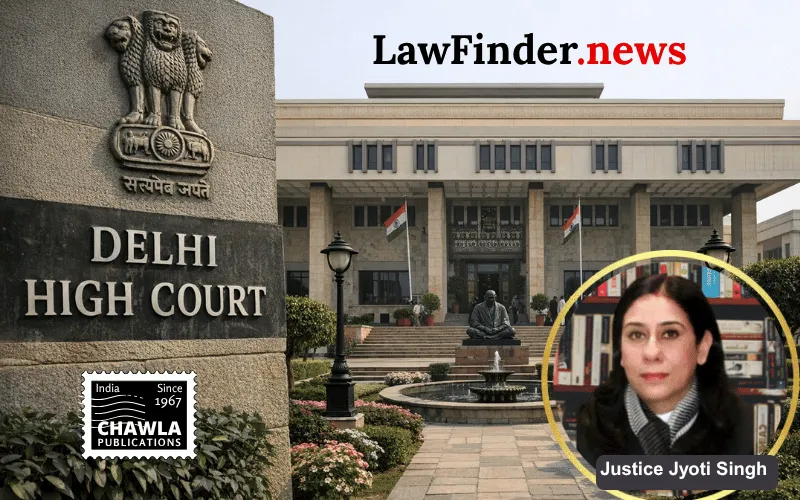
Justice Jyoti Singh of the Delhi High Court, in her order dated 24.08.2026, decreed the suit filed by Rajat Sharma (Plaintiff No. 1) and INDIA BROADCAST PRIVATE LIMITED (Plaintiff No. 2) against Defendants No. 1 to 3, 5 to 8, 14, and 16. The case centered on three primary issues: infringement of personality and publicity rights through the creation and dissemination of deepfake videos, unauthorized use of registered INDIA TV trademarks, and violation of copyright and broadcasting rights.
Plaintiff No. 1, Rajat Sharma, is a celebrated journalist with over two decades of experience in Indian television. He has hosted India's longest-running television show "Aap Ki Adalat" for 29 years and is a recipient of the prestigious Padma Bhushan award in 2015, recognizing his contributions to literature and education. Plaintiff No. 2, INDIA BROADCAST PRIVATE LIMITED, owns and operates the INDIA TV channel with associated registered trademarks, goodwill, and copyrights.
The Defendants' Activities
The defendants engaged in a coordinated campaign of gross misinformation by creating doctored videos using artificial intelligence technology. These deepfake videos featured distorted, modified, and modulated images and voice of Rajat Sharma, unauthorized use of INDIA TV trademarks, and violated copyright protections. Defendants No. 13 to 16 operated YouTube channels specifically dedicated to circulating these deepfake videos that unauthorized exploited Rajat Sharma's personality attributes.
Court's Findings and Orders
The Court found merit in the Plaintiffs' contentions and issued an ex parte ad interim injunction on 18.12.2024, restraining Defendants No. 1 to 8 and 12 from infringing the personality and publicity rights of Plaintiff No. 1 and the intellectual property rights of Plaintiff No. 2. Subsequently, when YouTube channels (Defendants No. 13 to 16) were discovered circulating the same infringing content, they were impleaded in the suit.
On 07.11.2025, the Court directed Defendant No. 17 (Google LLC, which operates YouTube) to take down YouTube channels operated by Defendants No. 14 and 16 within 36 hours and to disclose all available Broadband Service Infrastructure (BSI) logs, IP addresses, and contact details of the account holders. Google complied by terminating the accounts of Defendants No. 13 and 15, while taking action against Defendants No. 14 and 16.
Key Legal Recognitions
The judgment establishes crucial legal precedent recognizing personality and publicity rights as distinct intellectual property protections in the digital age. The Court acknowledged that misuse of an individual's image, voice, and other personality traits—particularly through emerging AI technology—constitutes actionable infringement. This is particularly significant given the rapid advancement of deepfake technology, which can create hyper-realistic but entirely fabricated videos.
The Court also recognized the inextricable link between an individual's reputation and their publicity rights, emphasizing that the unauthorized commercial exploitation of a public figure's persona through technological manipulation violates established legal principles.
Platform Responsibilities
The judgment imposes significant responsibilities on digital platforms. Meta Platforms Inc. (Facebook/Instagram) was directed to block and remove infringing content and disclose details of violating accounts. Google LLC (YouTube) was tasked with removing infringing channels and providing technical logs to identify perpetrators. The Department of Telecommunications (DoT) and Ministry of Electronics and Information Technology (MeitY) were directed to issue notifications to all Telecom Service Providers (TSPs) and Internet Service Providers (ISPs) to block websites, telephone numbers, and social media accounts engaged in infringement.
Future Mechanism for Enforcement
Recognizing the ongoing nature of the threat, the Court established a forward-looking mechanism for continued protection. The Plaintiffs are granted liberty to approach Meta and Google with details of any subsequently discovered URLs or content infringing Rajat Sharma's personality and publicity rights or Plaintiff No. 2's intellectual property rights. Upon submission of a detailed affidavit with supporting documents, the platforms must acknowledge the request within 24 hours and take action within 36 hours. If platforms fail to comply, the Plaintiffs may approach the Court for additional directions.
Trademark Declaration Reserved
While granting permanent injunction, the Court did not decide on whether INDIA TV trademarks qualify as "well-known trademarks" under Section 2(1)(zg) of the Trade Marks Act, 1999. The Court granted the Plaintiffs liberty to seek such declaration in a subsequent suit, effectively preserving this important remedy for future proceedings.
Implications and Significance
This judgment represents a critical development in Indian legal jurisprudence, addressing the intersection of emerging technologies and traditional personality rights. It recognizes that technological advancement cannot be leveraged to violate fundamental rights to privacy, dignity, and publicity. The decision provides robust protection mechanisms against deepfake technology, a growing concern globally.
The judgment also underscores the responsibility of digital platforms in protecting users' rights and preventing misuse of their services. By establishing time-bound response requirements and making platforms accountable for their inaction, the Court has created practical enforcement mechanisms.
Statutory Provisions Applied
The Court's order rested on legal principles protecting personality rights, publicity rights, intellectual property, trademarks, and copyright—though the specific statutory citations in the judgment include the Trade Marks Act, 1999.
Bottom Line:
Right to Publicity and Personality Rights - Misuse of an individual's image, voice, and other personality traits, including the use of AI technology for creating deepfake videos, constitutes an infringement of personality and publicity rights. Defendants can be restrained from such acts through a decree of permanent injunction.
Statutory Provision(s)
Trade Marks Act, 1999 – Section 2(1)(zg)
Rajat Sharma v. Tamara Doc, (Delhi) : Law Finder Doc Id # 2977163