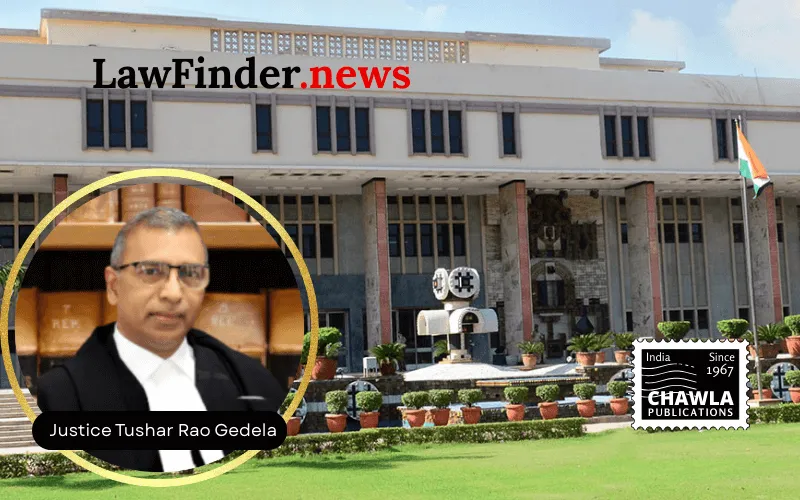
Court Seeks CFSL Analysis to Determine Authenticity of Disputed Recording Amidst Claims of AI-Generated Voice Manipulation
In a significant development in the ongoing legal battle between BPTP Limited and Nitin Naresh, the Delhi High Court has directed a forensic examination of a disputed audio recording alleged to contain extortionate content. The plaintiff, BPTP Limited, accused defendant Nitin Naresh of violating a previous court injunction based on a recorded phone conversation. However, Naresh countered that the recording could be an AI-generated clone of his voice, necessitating scientific validation.
Presiding over the matter, Justice Tushar Rao Gedela ordered that the audio file, currently stored on an iPad, be transferred to a pen drive, sealed, and sent to the Central Forensic Science Laboratory (CFSL) at the CBI Headquarters in New Delhi for a thorough analysis. This step aims to verify the authenticity and integrity of the recording and determine its hash value, a digital fingerprint confirming its originality.
The decision stems from an application filed under Order XXXIX Rule 2A of the Code of Civil Procedure, 1908. The plaintiff's counsel, Mr. Rajiv Nayar, insisted the recording was a clear violation of the court's order dated September 3, 2026, suggesting it contained extortion demands. However, Naresh, representing himself, argued that without a Section 65B certificate under the Indian Evidence Act, 1872, the recording should not be admissible as evidence. He further proposed sending it for forensic analysis to substantiate his claims of AI manipulation.
Acknowledging the gravity of the allegations and the potential implications for both parties, the court emphasized the necessity of establishing the recording's veracity before reaching any conclusions. The CFSL has been tasked with expediting the examination and submitting a report within four weeks.
Meanwhile, in a strategic move, Naresh voluntarily agreed to a gag order, committing to refrain from discussing the suit's subject matter publicly until the next court date set for November 2, 2026. This interim measure aims to maintain the status quo and prevent any further escalation of the dispute.
The court's directive underscores the increasing challenges posed by advanced AI technologies in legal proceedings, particularly regarding the authenticity of digital evidence. As the case unfolds, the outcome of the forensic analysis could set a precedent for handling similar disputes in the future.
Bottom Line :
Code of Civil Procedure, 1908 - Order XXXIX Rule 2A - Alleged breach of injunction/interim order by way of recorded phone conversation - Where defendant disputes authenticity of electronic recording and alleges possibility of AI-generated cloned voice, Court may direct forensic examination by CFSL/FSL of the recording, original device and hash value before forming any conclusion on contemptuous/disobedient conduct - Defendant's voluntary statement accepted and gag order directing him to maintain silence on subject matter of suit till next date.
Statutory provision(s): Code of Civil Procedure, 1908 - Order XXXIX Rule 2A, Section 151, Indian Evidence Act, 1872 - Section 65B
BPTP Limited v. Nitin Naresh, (Delhi) : Law Finder Doc id # 2989277