Father-in-law’s challenge to trial court order allowing daughter-in-law entry into his Pitampura house leads to interim rent arrangement, status quo on rented flat, and transfer of case to another Bench
The Delhi High Court has passed interim directions in a domestic violence-related housing dispute, asking a 91-year-old father-in-law to deposit six months’ rent to enable alternate accommodation for his daughter-in-law, while also directing maintenance of status quo over a previously rented flat until the factual position on possession is clarified.
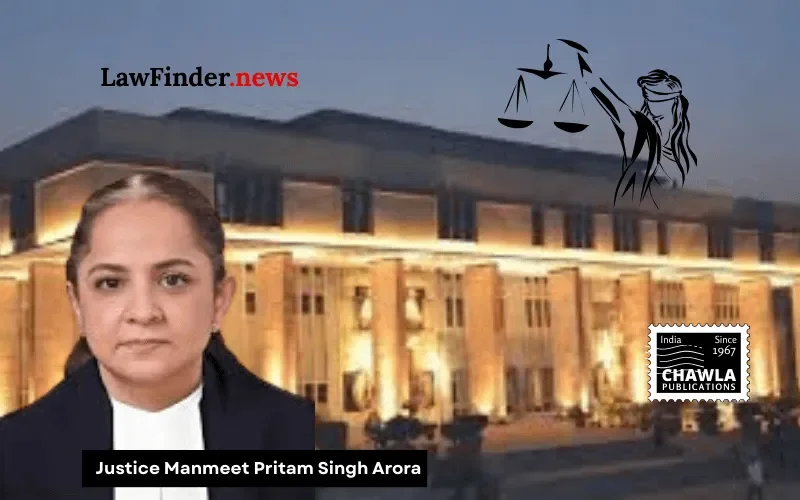
Justice Manmeet Pritam Singh Arora was hearing a petition filed by Arjun Dev Bhatia, who sought to quash a trial court order dated 23 October 2026. The trial court had allowed respondent no. 2, the petitioner’s daughter-in-law, to enter House No. 20, Chander Lok Enclave, Pitampura, as alternate accommodation. The petitioner claimed he was the absolute owner of the property and objected to the direction permitting her entry.
According to the petitioner, respondent no. 2 and his son, respondent no. 3, had stopped living in the Pitampura house in February 2010 and had since resided separately in different cities, including Bangalore and Mumbai. It was further submitted that the couple had been residing at Flat No. 156, Dhundiyal Apartment, Madhuban Chowk, Pitampura, from April 2013 until October 2026, while respondent no. 3 currently lives in Pune. The petitioner also told the Court that after the impugned order, the daughter-in-law entered the Pitampura house on 24 October 2026 along with her two children.
Counsel for the daughter-in-law informed the High Court that the monthly rent for Flat No. 156 was Rs. 27,500. The Court noted that the husband had stopped paying rent after 25 September 2025, resulting in an eviction decree in favour of the landlord. The decree had been passed under Order 12 Rule 6 of the Code of Civil Procedure on the husband’s admission.
During the hearing, the High Court explored whether the petitioner was willing to fund rented accommodation for the daughter-in-law instead of her occupying his house. After taking instructions, senior counsel for the petitioner stated that his client was ready to pay rent at the rate of Rs. 27,500 per month and also deposit an advance amount equivalent to six months’ rent within 24 hours. It was suggested that the payment could be used to clear arrears and secure continued residence in the same flat or another flat of similar standard.
However, the hearing took a contentious turn when counsel for the daughter-in-law first stated that she had vacated Flat No. 156 and handed over the keys to the landlord, Manjit Singh Sahni. This claim was disputed by counsel for the husband. The daughter-in-law’s counsel then further submitted that she did not wish to return to rented accommodation even if rent was paid.
In view of the conflicting submissions, the High Court directed the petitioner to deposit six months’ rent with the Court. It also ordered respondent no. 3, if any rent arrears were due to the landlord, to deposit that amount in Court within two days. The Court issued notice to the landlord and directed him to remain present so that the Court could verify the true status of possession of Flat No. 156.
The Court specifically ordered the landlord to maintain status quo regarding possession of the flat. Later in the hearing, counsel for the daughter-in-law changed his stand and stated that the keys had in fact not been handed over to the landlord and remained with respondent no. 2. The Court expressed displeasure over the repeated change in position on such a crucial fact, observing that it was “extremely unfortunate” that the stand regarding handover of possession was being altered despite specific judicial queries.
In a separate and strongly worded part of the order, the High Court censured the conduct of the daughter-in-law’s counsel, Mr. R.K. Tarun, for remarks made in open court after the order had been dictated. The Court recorded that the advocate loudly said, “I cry my beloved justice system” four times, waved his hands in the air, and began walking out of the courtroom in the middle of the hearing to express dissatisfaction with the order.
Justice Arora said the apology offered thereafter was not genuine and described the conduct as “reckless, reprehensible and amount to misconduct.” The Court observed that such behaviour undermined the dignity of the judicial process and noted concern that the counsel might attempt to influence his client or instigate frivolous allegations against the judge and the judicial system.
To preserve the dignity of the court, the judge directed that the matter be transferred to another Bench, while keeping intact the interim directions relating to the rent deposit, landlord’s presence, and status quo over the rented flat. The matter was ordered to be listed on 5 November 2026, subject to orders of the Judge-in-Charge (Criminal Side).
The High Court also directed the State’s counsel to inform the SHO having jurisdiction over Flat No. 156 so that the landlord could be notified to appear before the Court.
Bottom Line:
Domestic Violence Act, 2005 - Order permitting wife to reside in husband's father's property as alternate accommodation challenged - Court directs petitioner (property owner) to deposit six months' rent to facilitate alternate arrangement for respondent wife and directs status quo to be maintained regarding possession of previously rented premises until clarification is obtained. Misconduct by counsel during proceedings censured.
Statutory provision(s): Section 19 of the Domestic Violence Act, 2005, Order 12 Rule 6 of the Code of Civil Procedure, 1908
Arjun Dev Bhatia v. State NCT of Delhi, (Delhi) : Law Finder Doc id # 3017441