Court Declares NHAI’s Termination of Contract Illegal, Upholds Contractor’s Unpaid Work and Profit Claims, but Sets Aside Awards on Overhead, Prolongation Costs, and Confiscated Machinery Due to Procedural and Legal Irregularities
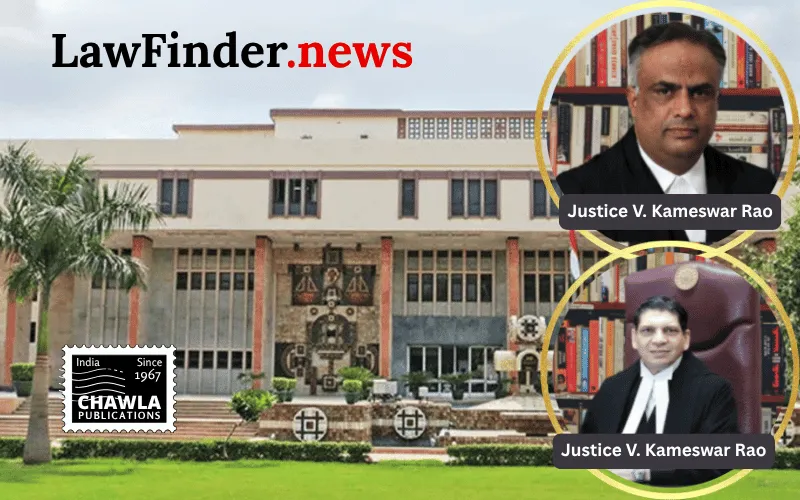
In a significant judgment delivered on June 18, 2026, the Delhi High Court, in a Division Bench comprising Justices V. Kameswar Rao and Vinod Kumar, pronounced a detailed verdict in the arbitration dispute between the National Highways Authority of India (NHAI) and Progressive Constructions Limited concerning a highway widening project in Assam.
The dispute arose from the termination of a contract awarded to Progressive Constructions for widening and strengthening a 30 km section of NH-31 C under the National Highways Development Programme. The contractor claimed multiple heads of damages including unpaid work, escalation, overheads for prolongation, increased rates for extra stay, confiscated machinery costs, and loss of profit due to alleged illegal termination by NHAI.
The Arbitral Tribunal had passed an award on February 20, 2019, allowing most claims of the contractor partially while rejecting some. NHAI challenged parts of the award under Section 34 and 37 of the Arbitration and Conciliation Act, 1996.
Key Findings of the Court:
1. Illegal Termination of Contract:
The Court upheld the Tribunal’s conclusion that the termination by NHAI was illegal and void. The termination was premised on grounds such as negligible progress by the contractor from 2012 to 2016 and failure to furnish bank guarantees. However, the Tribunal found that NHAI failed to grant multiple extensions of time (EOTs) recommended by the Engineer for over 3.5 years, did not fix a revised completion date, and the termination letter was not signed by the authorized signatory as per contract terms. The Court agreed that time was set at large and termination was unjustified.
2. Claim No. 1 – Unpaid Work Including Escalation:
Despite procedural objections by NHAI regarding amendment of claims and opportunity to be heard, the Court upheld the Tribunal’s award allowing payment for work done approximating 76.41% completion, based on contemporaneous documents filed by NHAI itself. The claim included unpaid amounts and price escalation, totaling over Rs. 31 crore. The Court rejected NHAI’s contention that the claim was based on surmises and lacked evidence.
3. Claims Nos. 6, 7, and 8 – Overheads and Prolongation Costs:
These claims pertained to overhead charges and costs due to prolonged project duration beyond the scheduled completion. The Tribunal awarded Rs. 35.15 crore for overheads using the Hudson formula and Rs. 77.11 crore for idling machinery costs. However, the Court set aside these awards, holding that the Tribunal failed to consider the Engineer’s recommendations that rejected prolongation costs due to concurrent delays caused by the contractor. The Court emphasized principles of acquiescence and waiver since the contractor did not challenge these recommendations timely. The Hudson formula was deemed inapplicable without proper evidence and in concurrent delay scenarios, making the awards illegal and contrary to public policy.
4. Claim No. 9 – Cost of Confiscated Machinery:
The Tribunal awarded Rs. 7.70 crore based on a “fair assessment” despite absence of evidence on depreciated or salvage value and no bills proving ownership. The Court held the award to be perverse and illegal due to lack of evidence and violation of natural justice principles, and accordingly set it aside.
5. Claim No. 11 – Loss of Profit on Balance Work:
Following the illegal termination finding, the Court upheld the award allowing the contractor 10% profit on the balance work of approximately Rs. 51.5 crore (around Rs. 4.63 crore after mitigation deduction). This claim was recognized as valid and supported by contract provisions and the Ministry of Road Transport and Highways Standard Data Book.
6. Limitation and Procedural Observations:
The Court observed that claims for prolongation costs and overheads (Claims 6 and 8) were within limitation since cause of action arose only when claims were rejected and arbitration commenced, and not at earlier EOT approvals. It also noted that the appellant was given ample opportunity to file amended defenses, but failed to do so, negating claims of violation of natural justice.
7. Scope of Judicial Review:
The Court reiterated the narrow scope of judicial interference under Sections 34 and 37 of the Arbitration Act, emphasizing that interference is only warranted if awards are arbitrary, perverse, or shock the conscience, and that courts do not sit in appeal over findings of fact by the arbitral tribunal.
Implications:
This judgment clarifies that while contractors are entitled to claims for unpaid work and loss of profit due to illegal termination, claims for prolongation costs and overheads require careful consideration of concurrent delay and the contractor’s conduct, including waiver and acquiescence to Engineer’s decisions. It also highlights the necessity of proper authorization for termination notices and adherence to contractual and procedural safeguards in arbitration.
The judgment is expected to influence arbitration disputes involving public infrastructure contracts, especially those under NHAI and similar authorities, emphasizing strict compliance with contract terms and the importance of timely challenge to Engineer’s decisions.
Bottom line:-
Arbitration and Conciliation Act - The arbitral tribunal's award on claims relating to contract termination, unpaid work, overheads, prolongation costs, confiscated machinery and loss of profit in a National Highways Authority of India project was partially upheld and partially set aside on limited grounds of perversity and natural justice.
Statutory provision(s):
Arbitration and Conciliation Act, 1996 Sections 34, 37; National Highways Authority of India Act, 1988; Contract Agreement Clauses (COPA and GCC) including Clauses 10.2, 42.2, 46.1, 53.4, 60.1, 63.1, 63.2, 63.3
This news report synthesizes the judgment’s elaborate analysis on contract termination and related claims, presenting the outcome and legal reasoning in a concise, accessible manner for public and professional readers.