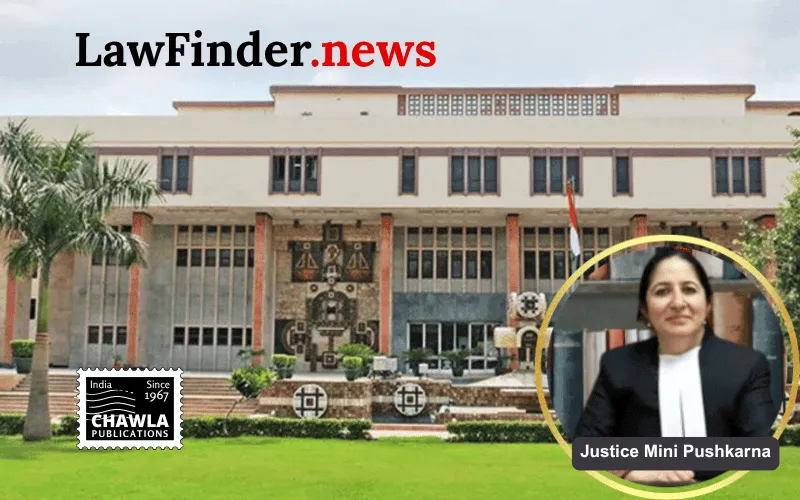
Court balances statutory compliance with urgency of saving life in landmark judgment
In a remarkable decision, the Delhi High Court has permitted a minor to donate a part of his liver to his father, who is suffering from advanced chronic liver disease and liver cancer. The judgment was delivered by Ms. Mini Pushkarna, J., in the case of Pratik Shaw v. Union of India and others, where the petitioner, a minor represented by his mother, sought permission for organ donation under the Transplantation of Human Organs and Tissues Act, 1994, and its accompanying rules.
The court emphasized the importance of adhering to the statutory framework that regulates organ donation by minors, which is generally prohibited except under exceptional medical conditions. The petitioner's father, Mr. Uttam Kumar Shaw, was diagnosed with life-threatening liver conditions, making liver transplantation the only viable treatment option. After evaluating all potential family donors, the petitioner was identified as the sole suitable match.
Highlighting the minor’s willingness and physical fitness, the court acknowledged the natural bond of love and affection motivating the donation. The court noted that the petitioner fits the definition of a "near relative" under the THO Act, being the biological son of the recipient.
The court's decision was further supported by the approval from the Lieutenant Governor of Delhi and the appropriate authority, as indicated in a letter dated June 29, 2026. This approval was crucial in ensuring compliance with legal and ethical protocols.
In its judgment, the court reiterated the necessity of following all legal, ethical, and clinical protocols to safeguard the health and safety of the minor donor. The hospital involved, ILBS in Vasant Kunj, New Delhi, has been instructed to expedite the procedure following the court's order.
The decision underscores the judiciary's role in balancing statutory requirements with humanitarian considerations, particularly when a life is at stake. By allowing the petition, the court has set a precedent for handling similar cases in the future, ensuring that exceptional circumstances are met with appropriate legal discretion.
The case serves as a significant example of how legal frameworks can adapt to accommodate urgent medical needs while maintaining ethical standards.
Bottom line:-
Donation of organs by minors is permissible only in exceptional medical circumstances as per the Transplantation of Human Organs and Tissues Act, 1994 and Rules, 2014, with prior approval from the appropriate authorities.
Statutory provision(s): Transplantation of Human Organs and Tissues Act, 1994 Section 9(1B), Transplantation of Human Organs and Tissues Rules, 2014 - Rule 5(3)(g), Article 226 of the Constitution of India
Pratik Shaw v. Union of India, (Delhi) : Law Finder Doc id # 2931818