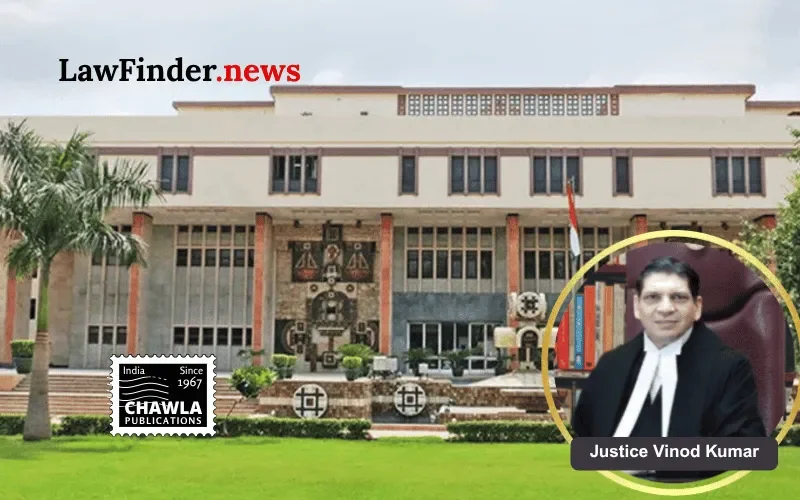
Court emphasizes adherence to procedural safeguards under 2025 VC Rules to ensure fair examination and cross-examination of witnesses residing abroad
In a significant judgment dated November 6, 2026, the Delhi High Court, presided over by Justice Vinod Kumar, allowed the recording of evidence of two senior citizen respondents residing abroad through video conferencing in a probate petition under the Indian Succession Act, 1925. The case, Mohindar Mohan Khanna v. State Govt. of NCT of Delhi, involved the grant of probate relating to the alleged Will of the late Mr. Surender.
The respondents, aged 79 and 77, residing in the United Kingdom and the United States respectively, sought permission to record their evidence remotely due to their advanced age, health concerns, and the severe air pollution typically experienced in Delhi during the proposed period of examination (October 2026 to January 2027). They cited the risk that travel and exposure to Delhi’s climatic conditions might pose to their health.
The petitioner opposed this request, raising concerns about possible tutoring of witnesses during remote examination, availability and presentation of documents, signature authentication of transcripts, time zone differences, and potential delays in proceedings.
After considering the submissions, the Court relied heavily on the Delhi High Court Electronic Evidence and Video Conferencing Rules, 2025 (“VC Rules, 2025”), which provide detailed procedural safeguards to address such concerns. Notably, Rules 10, 13, and 14 of the VC Rules prescribe measures against witness coaching, regulate the transmission and exhibition of documents during examination, and outline procedures for obtaining signatures on transcripts recorded via video conferencing.
The Court also referenced the precedent set in Phillips 66 Company v. Raaj Unocal Lubricants Limited (2022 SCC Online Del 3268), which recognized the utility of video conferencing for recording evidence of overseas witnesses, provided the fairness and rigour of trial are preserved.
Addressing the petitioner’s concerns, the Court underscored the role of the Local Commissioner appointed to conduct the evidence recording. The Commissioner is tasked with ensuring the integrity of the process, including witness identification, preventing tutoring, and overseeing compliance with the VC Rules.
In terms of logistics, the Court designated the High Commission of India in London and the Consulate General of India in New York as the “Remote Points” for recording the evidence of the two respondents. The “Court Point” was fixed at the Delhi High Court premises where the Local Commissioner would supervise the proceedings. The Court also ordered the appointment of an IT officer to facilitate the video conferencing infrastructure and imposed a composite fee of Rs. 1 lakh to be equally borne by the respondents.
To accommodate time zone differences, the Local Commissioner was empowered to schedule the examination at mutually convenient times, ensuring orderly conduct. The respondents were to remain available throughout the examination, and the petitioner was guaranteed full and effective cross-examination rights, including reference to relevant documents.
The Court held that recording evidence through video conferencing would avoid unnecessary delays that would arise if the respondents were required to appear physically in India in February or March 2027. However, the permission was strictly conditional on compliance with the VC Rules and ensuring fairness, transparency, and reliability in recording testimony.
This ruling marks a progressive step in integrating technology with judicial processes, particularly for witnesses residing abroad or facing health and travel challenges. It balances the convenience and safety of witnesses with the procedural rigour necessary to uphold the rights of all parties in litigation.
Bottom Line:
Recording of evidence through video conferencing for witnesses residing abroad is permissible under the Delhi High Court Electronic Evidence and Video Conferencing Rules, 2025, provided procedural safeguards are strictly adhered to, ensuring fairness in examination and cross-examination.
Statutory provision(s):
Indian Succession Act, 1925 Section 276, Civil Procedure Code, 1908 Order XVIII, Delhi High Court Electronic Evidence and Video Conferencing Rules, 2025 (Rules 10, 13, 14)
Mohindar Mohan Khanna v. State Govt. of NCT of Delhi, (Delhi) : Law Finder Doc Id # 3129668