Assessment order passed without considering petitioner's reply and denying requested VC hearing; Court mandates AO to reconsider submissions and conduct fresh assessment in fair manner
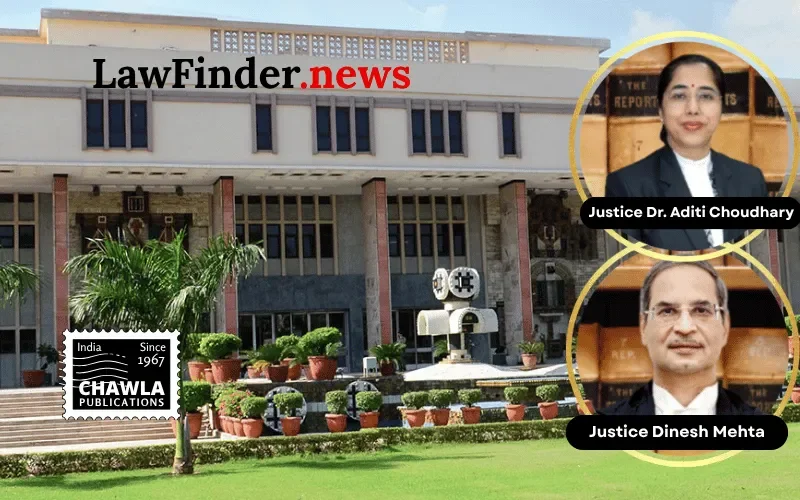
In a significant ruling on October 14, 2026, the Delhi High Court (Division Bench comprising Justices Dinesh Mehta and Dr. Aditi Choudhary) quashed an income tax assessment order passed against Sunil Verma by the National Faceless Assessment Centre (NFAC), citing violation of principles of natural justice. The petitioner challenged the assessment order dated March 6, 2026, passed under Sections 144 and 144B of the Income Tax Act, 1961, primarily on the ground that the Assessing Officer (AO) did not consider his reply submitted before the order and denied a requested video conferencing (VC) hearing.
The petitioner received a notice under Section 142(1) on July 24, 2025, to which he filed a detailed reply on August 20, 2025, albeit without requesting a hearing. The AO remained silent for over six months before issuing a show-cause notice with a detailed questionnaire on February 4, 2026, demanding a reply within an extremely short period of four days. The petitioner sought an adjournment on February 9, 2026, but did not receive a response from the AO and ultimately filed his reply on March 3, 2026. The AO viewed this reply on March 4 but proceeded to pass the assessment order on March 6 without considering the new submissions or granting a VC hearing, despite the petitioner's request for the same in his reply.
The Court acknowledged that the petitioner failed to request an adjournment within the stipulated deadline of February 8, 2026, which could justify the AO's initial refusal to entertain the late reply. However, the Court emphasized that the AO did not formally close the petitioner's right to file a reply nor communicated any such closure. Given that the AO had actually viewed the petitioner's late reply before passing the order, principles of justice, equity, and good conscience required that the reply be considered. Moreover, the petitioner's request for a VC hearing was to be granted to ensure a fair hearing, especially since the assessment was not time-barred at the time.
The Court held that the AO, as a quasi-judicial authority, must act objectively and dispassionately, dealing with all material on record and providing the assessee an opportunity to be heard. The impugned assessment order was therefore quashed and set aside. The AO and NFAC were directed to fix a hearing date, provide the petitioner with a VC link, consider the petitioner's reply dated March 3, 2026, and any oral submissions before passing a fresh order in accordance with law. The Court clarified that it expressed no opinion on the merits of the petitioner's contentions and that the AO remained free to take an independent view.
This judgment reinforces the fundamental requirement that tax authorities must adhere strictly to principles of natural justice, especially in faceless assessment proceedings, and provide taxpayers a fair opportunity to present their case, including through modern modes like video conferencing.
Bottom Line:
Income Tax - Assessment order passed without considering assessee's reply filed before passing of order and without granting VC hearing - Though assessee sought adjournment after due date, Assessing Officer having neither closed right to file reply nor intimated closure, and having viewed reply before passing order, was required as a quasi-judicial authority to consider such reply - Assessment order quashed and matter remanded for fresh decision after hearing.
Statutory provision(s):
Income Tax Act, 1961 - Sections 142(1), 144, 144B