Court Highlights Discrepancies in Applicant's Commercial Transaction Explanation and Necessity for Custodial Interrogation to Trace Funds and Verify Electronic Evidence
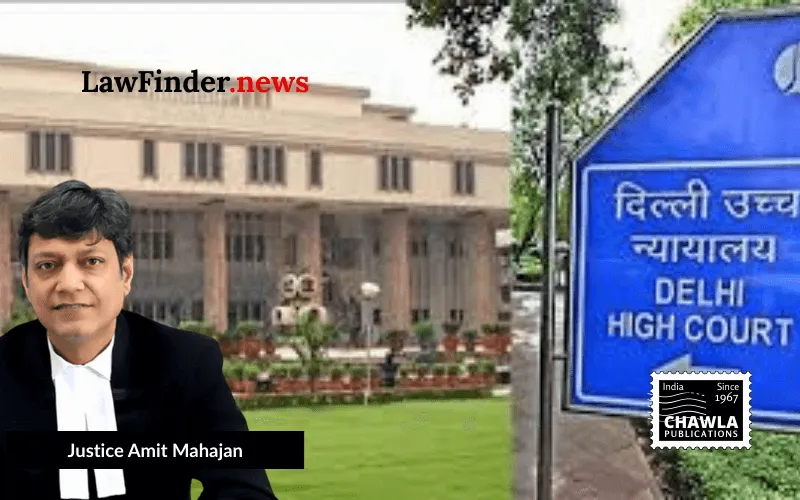
In a significant ruling on October 1, 2026, the Delhi High Court, presided over by Justice Sanjeev Narula, dismissed the anticipatory bail application filed by Himanshu, implicated in a large-scale digital arrest fraud case. The case revolves around a senior citizen who was duped of INR 2.65 crore by persons impersonating officials from TRAI, Mumbai Police, and the CBI, who coerced the victim into transferring substantial sums to various accounts.
Himanshu was not accused of directly communicating with or threatening the complainant. However, the investigation traced INR 5.31 lakh from one of the primary beneficiary entities, Waveland Comestible Pvt. Ltd., to the petitioner's bank account. The State alleged that the amount was rapidly withdrawn or utilized, raising suspicion about the petitioner's involvement in the fraudulent scheme.
The petitioner contended that the credited amount was a genuine commercial transaction related to the sale of mobile phones. He presented invoices and claimed cooperation with the investigation, even offering to deposit the disputed amount as a gesture of good faith. However, the Court noted serious discrepancies in this explanation. The purchase price for the phones was allegedly paid only after the receipt of the disputed credit, with no written agreements or contemporaneous communications to support the transaction. Crucial commercial records such as GST returns, income tax returns, stock registers, ledgers, and delivery challans were absent. Moreover, the bill book submitted appeared suspicious, with inconsistencies in handwriting and ink, and the usual electronic records like WhatsApp chats or phone numbers of involved parties were missing.
The petitioner's claim of cooperation was also found wanting. He failed to appear before the Investigating Officer after the Sessions Court rejected his earlier anticipatory bail application, switched off his phone, and forced the issuance of non-bailable warrants. Even after joining the investigation under court protection, he did not provide electronic devices for forensic examination and evaded service of notices.
The Court emphasized that in digital arrest fraud cases, tracing the money trail and identifying individuals who receive or dissipate funds is as critical as identifying those who directly defraud victims. Custodial interrogation was deemed necessary to confront the petitioner with banking trails, call detail records (CDR), IMEI data, and to verify the genuineness of the alleged commercial transaction. The offer to deposit the amount did not obviate the need for such investigation.
Further, the Court reiterated the principle against entertaining successive anticipatory bail applications on substantially the same material without any change in circumstances. The petitioner's prior anticipatory bail plea was withdrawn without liberty to file a fresh application, and no new material justified reconsideration.
In conclusion, the Delhi High Court held that the petitioner failed to establish a prima facie case for anticipatory bail under Section 482 of the Bharatiya Nagarik Suraksha Sanhita, 2023. The application was accordingly dismissed, with all observations made being prima facie and without prejudice to the ongoing investigation and trial.
This judgment underscores the judiciary's firm stance against digital frauds and the importance of thorough investigation in cases involving complex money trails and electronic evidence.
Bottom Line:
Anticipatory bail in digital arrest fraud can be refused where money trail leads to applicant's account, explanation of alleged commercial transaction appears doubtful, cooperation is incomplete, and custodial interrogation is necessary to trace funds, verify electronic evidence and identify links with mule accounts. Successive anticipatory bail application without change in circumstances is also liable to be declined.
Statutory provision(s):
Bharatiya Nagarik Suraksha Sanhita, 2023 Section 482; Indian Penal Code, 1860 Sections 419, 420, 384, 120B
Himanshu v. State GNCT of Delhi, (Delhi) : Law Finder Doc Id # 2990490