Court Orders Defendants to Provide Specifics Before Initiating Legal Proceedings, Protecting TVS's Reputation and Goodwill
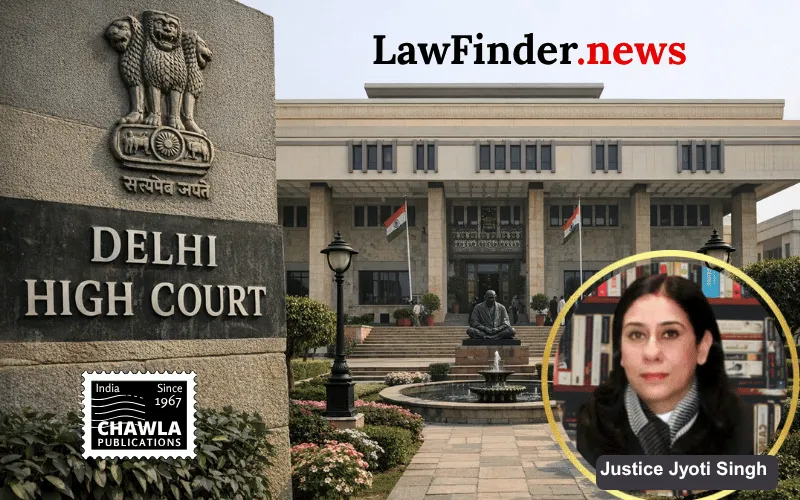
In a significant ruling, the Delhi High Court has granted an interim injunction in favor of TVS Motor Company Limited, preventing Ram Chandra Maurya and others from issuing groundless threats of legal proceedings related to alleged copyright infringement. The court's decision, delivered by Justice Jyoti Singh, underscores the importance of protecting businesses from vague and unsubstantiated claims that can harm their reputation and goodwill.
The case, registered as CS(COMM) 767 of 2026, was brought by TVS Motor Company, a leading manufacturer of two-wheelers and three-wheelers, against the defendants who claimed copyright over certain engine and mechanical works. The dispute revolves around two copyright registrations held by the defendants, which they alleged were being infringed by TVS's manufacturing activities.
The court found that the defendants had repeatedly failed to substantiate their claims of copyright infringement in various legal forums, including the Intellectual Property Appellate Board (IPAB) and the Supreme Court of India. Despite these setbacks, the defendants issued a cease-and-desist notice to TVS in April 2026, demanding the cessation of manufacturing activities and the payment of royalties.
Justice Singh noted that the notice lacked specifics on how TVS allegedly infringed the copyright and highlighted the defendants' history of unsuccessful litigation on the matter. The court held that such vague threats could cause irreparable harm to TVS's reputation and goodwill, particularly given its standing as a global manufacturer with operations in 80 countries.
The court granted TVS an interim injunction, restraining the defendants from issuing any further threats without prior notice. The defendants are required to provide a detailed notice at least seven days before initiating any legal proceedings, allowing TVS time to respond adequately.
This ruling reinforces the legal principle that groundless threats of legal action, particularly in intellectual property disputes, must be substantiated with clear specifics to avoid misuse of the legal system. It also highlights the court's role in safeguarding the interests of businesses against unjustified legal harassment.
Bottom line:-
Groundless threats of legal proceedings related to copyright infringement can be restrained under Section 60 of the Copyright Act, 1957, especially when the threats lack specifics of infringement and risk reputation and goodwill of the affected party.
Statutory provision(s): Section 60 of the Copyright Act, 1957, Civil Procedure Code, 1908 Order XXXIX Rule 1 and 2, Section 12A of the Commercial Courts Act, 2015, Section 151 CPC, Section 149 CPC, Section 21(1) of the Patents Act, 1970.
Tvs Motor Company Limited v. Ram Chandra Maurya, (Delhi) : Law Finder Doc id # 2947368