Court directs authorities to frame transparent, comprehensive guidelines ensuring fairness, transparency, and merit-based allotment for cultural festivities from 2027 onwards
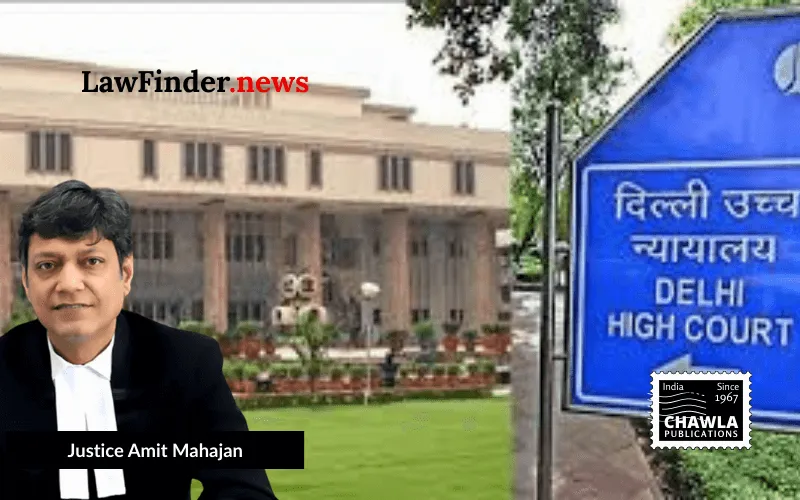
In a significant judgment delivered on October 8, 2026, the Delhi High Court, presided over by Justice Amit Mahajan, addressed the contentious issue of allotment of public grounds for organizing the annual Ramleela Dussehra Mahotsav. The petitioner, Rays of New Beginning Foundation, challenged the rejection of its application for allotment of Chunk-C Ground, Shivaji Place, Raja Garden, New Delhi, for the 2026 festivities, alleging unfair allotment in favor of another organization based on a "first come first serve" policy.
The Court scrutinized the "first come first serve" policy adopted by the respondent authorities, primarily the Delhi Urban Shelter Improvement Board (DUSIB), and held that such a criterion-while seemingly objective-lacks constitutional reasonableness and does not satisfy principles of fairness and transparency. The Court noted that the policy was never publicly notified with clear application windows or eligibility criteria, leading to unequal opportunities for applicants and potential monopolization of public grounds.
Rejecting the respondent's stance that the allotment was justified as per High-Level Coordination Committee (HLCC) guidelines, the Court pointed out that the absence of any prior publication or announcement specifying the booking process and timeline rendered the "first come first serve" approach arbitrary and disadvantageous to many applicants. The Court further observed that this policy incentivizes a race for privileged information and premature applications without adequate planning for safety, crowd management, and compliance with statutory requirements.
While acknowledging that societies with prior experience organizing Ramleela events may be given some preference, the Court emphasized that such continuity should not lead to a de facto monopoly. The petitioner had organized the Ramleela at the same ground in 2023 and 2024 and was entitled to limited preference, but automatic allotment without merit-based comparative assessment was impermissible.
Given that the festivities for 2026 were imminent, the Court refrained from altering the existing allotment to avoid disruption. However, it issued detailed directions for future allotments, mandating that the authorities frame comprehensive annual guidelines for allotment of public grounds. The directions include:
- Publishing an annual site-allocation notice at least 90 days before events, detailing available grounds, application timelines, eligibility criteria, and booking procedures.
- Ensuring all applications are received within a fixed window with provisions for supplementary windows for unallocated sites.
- Conducting a common eligibility assessment for applicants, including verification of legal authorization and compliance with safety and operational plans.
- Implementing a transparent comparative assessment through predetermined published criteria or scoring matrices when multiple eligible applicants compete.
- Limiting preference for previous organizers to a maximum of two consecutive years to avoid monopolies.
- Establishing grievance redressal mechanisms and ensuring timely completion of the allotment process well before event dates.
The Court's directions aim to ensure that public grounds, a vital resource for cultural and religious events, are allocated in a manner that is constitutionally fair, transparent, and based on objective, well-publicized criteria.
This judgment reiterates the principle that public authorities must exercise their powers with fairness and transparency, especially when allocating public resources for community events. It also highlights the need for proper administrative procedures to prevent arbitrary decisions and foster equal opportunities among competing applicants.
Bottom Line:
Allotment of public grounds for Ramleela and similar cultural or religious events cannot be made merely on a first come first serve basis without a clear, published and constitutionally fair policy - Authorities must frame comprehensive annual guidelines with advance notice, uniform application window, eligibility criteria, comparative assessment and grievance redressal mechanism - No immediate interference with existing allotment when festivities are about to commence.
Statutory provision(s):
Delhi Urban Shelter Improvement Board guidelines, DDA Standard Operating Procedure (SOP) dated 01.09.2026, High-Level Coordination Committee guidelines referenced in the judgment.