Court holds that marriage to an Indian citizen does not guarantee visa conversion; visa decisions remain under immigration authority's discretion
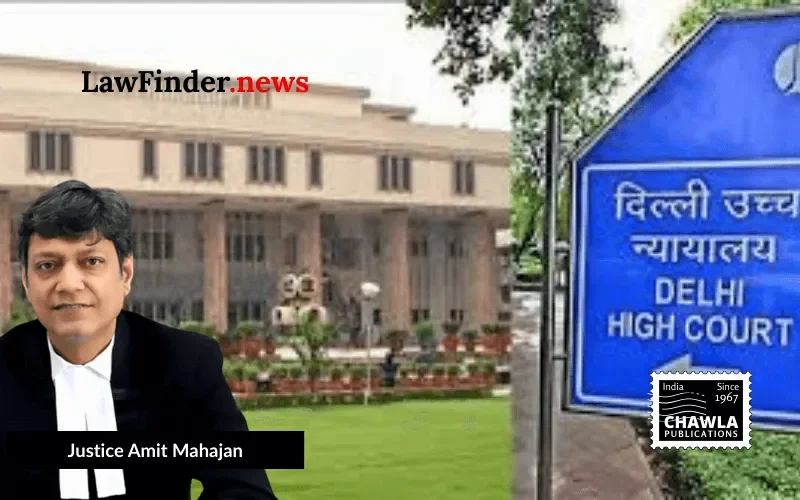
In a significant judgment delivered on November 17, 2026, the Delhi High Court dismissed the petition filed by Lisa Hall Srivastava, a U.S. citizen, who sought a direction for conversion of her existing e-Tourist Visa into an Entry (X-1)/Spouse Visa on the basis of her marriage to an Indian citizen, Mohd. Wasim Akram. The Court emphasized that marriage to an Indian national does not confer an automatic or indefeasible right to visa conversion or residence in India.
The petitioner, married under Muslim rites in December 2025 and subsequently registered under the Special Marriage Act, 1954, contended that her visa conversion application was unjustly rejected by the Foreigners Regional Registration Office (FRRO), Delhi. Despite submitting relevant documents, she faced prolonged scrutiny and alleged arbitrary treatment, including questions about the age difference with her spouse.
The Court, however, noted that the competent immigration authority had exercised its sovereign discretion considering several factors: the petitioner’s prior marriages (three in total), her previous attempts to obtain immigration benefits through matrimonial visas, cancellation of her Overseas Citizen of India (OCI) card following her first marriage dissolution, and inconsistencies regarding her prolonged stay and sources of income in India. It was highlighted that the petitioner had been residing in premises owned by her current husband even before their marriage and that the present marriage was prima facie suspected to be one of convenience, possibly to facilitate immigration benefits.
Referencing the Immigration and Foreigners Act, 2025, the Court underscored that visa issuance, conversion, and extension fall exclusively within the sovereign domain of the authorities and are not enforceable rights. The Court reiterated the Supreme Court’s principle from Louis De Raedt v. Union of India (1991) that fundamental rights of foreigners are confined to protection of life and liberty under Article 21 of the Constitution and do not extend to the right to reside or settle in India.
The Court further clarified that a marriage certificate, including one issued under the Special Marriage Act, does not preclude immigration authorities from scrutinizing the circumstances surrounding the visa application. It also observed the absence of any affidavit or corroboration from the petitioner’s husband as a factor in assessing the genuineness of the marital relationship for immigration purposes.
Importantly, the Court held that it was not its role to substitute its own assessment for that of the immigration authorities in matters of admission and stay of foreign nationals and that judicial review under Article 226 of the Constitution is limited to instances where a legal right is violated.
The petition was accordingly dismissed, with the Court noting that the authorities would continue to decide any pending or future representations in accordance with the law.
This judgment clarifies the legal position that foreign nationals cannot claim unconditional rights to reside in India or insist upon visa conversions solely based on matrimonial ties, reinforcing the sovereign discretion vested in immigration authorities.
Bottom Line:
A foreign national cannot claim an unconditional right to reside in India or insist upon the grant of a particular category of visa merely on the basis of a matrimonial relationship. The grant, conversion, or extension of visas is a matter of sovereign discretion and not an enforceable right.
Statutory provision(s):
Immigration and Foreigners Act, 2025; Special Marriage Act, 1954; Article 21 of the Constitution of India; Article 226 of the Constitution of India
Lisa Hall Srivastava v. Union of India and Another, (Delhi) : Law Finder Doc Id # 3211383