Court Holds Right to Information Act Does Not Mandate Public Authorities to Create or Collate Records That Are Not Maintained or Held
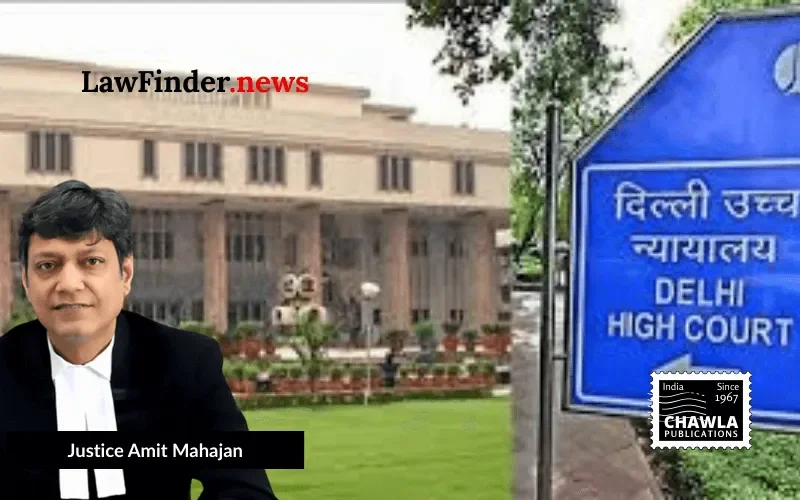
In a significant judgment delivered on October 29, 2026, the Delhi High Court, presided over by Justice Amit Mahajan, quashed an order passed by the Central Information Commission (CIC) directing the Public Information Officer (PIO) of the Delhi High Court to locate and furnish information regarding cases in which judgments were reserved but not pronounced within two months. The petition arose from an RTI request filed by P.D. Gupta, a former judicial officer, seeking details of delayed judgments specifically related to cases heard by a particular Judge.
The respondent had sought complete details of all cases heard by the Hon'ble Judge, either singly or in a Division Bench, where judgments were pronounced more than two months after arguments concluded. The PIO consistently maintained that no such data was compiled or maintained in any accessible form by the Court or its administrative officers. The CIC, however, assumed that such information "should be available" due to a practice of Court Masters submitting monthly sealed-cover lists of reserved judgments to the Chief Justice for administrative oversight. The CIC ordered the PIO to locate and provide copies of these reports for the preceding two years.
Justice Mahajan's judgment meticulously examined the scope and limitations of the Right to Information Act, 2005 (RTI Act). The Court emphasized that the RTI Act grants access only to information that is already in existence and held by or under the control of the public authority. It cannot be used as a tool to compel public authorities to locate, collect, collate, or create information that is not maintained or held as a record.
The Court referred to the definition of "right to information" under Section 2(j) of the RTI Act, which restricts the right to information that is accessible under the Act and already held by the public authority. Sections 2(f) and 3 further reinforce that only existing records or material in any form held by the authority can be accessed.
The judgment also highlighted the Supreme Court's ruling in Central Board of Secondary Education v. Aditya Bandopadhyay (2011), which clarified that public authorities are not obligated to create or collate information to satisfy an RTI request if the information does not already exist. Further, the Court noted that the sealed-cover lists sent monthly to the Chief Justice, pursuant to an Office Order following the Supreme Court's directions in Anil Rai v. State of Bihar (2001), were for confidential administrative purposes only and were neither required to be preserved nor compiled judge-wise.
The Court dismissed the argument that public interest in timely delivery of judgments could compel disclosure or creation of such data, stating that public interest considerations only arise where the requested information exists. The Court rejected the CIC's premise that the information should be available merely because such lists are periodically prepared and sent in sealed covers to the Chief Justice.
The Court underlined the practical impossibility and disproportionate diversion of resources that would be involved in manually examining all cases heard by a judge over several years to determine delays in judgment delivery. This would amount to a requirement to create new information, which the RTI Act does not mandate.
Since the petitioner had maintained from the outset that the information was not maintained, and the respondent did not contest this through any counter affidavit, the Court found no reason to interfere with this stand.
Consequently, the Delhi High Court allowed the writ petition filed by the Public Information Officer, setting aside the CIC's order dated May 26, 2011. The Court's ruling clarifies the limits of the RTI Act in the context of judicial administrative data and affirms that RTI cannot be used to compel the creation of information or records not maintained by a public authority.
Bottom Line:
Right to Information Act, 2005 - Public authority is obliged to furnish only such information as is held by or under its control and already exists - CIC cannot direct public authority to locate, collect or collate non-maintained information merely on assumption that it should be available - Monthly sealed-cover lists regarding reserved judgments furnished to Chief Justice for administrative purposes are not required to be preserved or compiled judge-wise and cannot be directed to be disclosed when such compiled record does not exist.
Statutory provision(s):
Right to Information Act, 2005 Sections 2(f), 2(j), 3, 8(1)(e), 19
Public Information Officer v. P.D. Gupta, (Delhi) : Law Finder Doc Id # 3007040