Order VII Rule 11 CPC Requires Court to Confine to Pleadings; Complex Mixed Questions of Fact and Law on Limitation and Acknowledgment of Debt Must Be Decided After Evidence
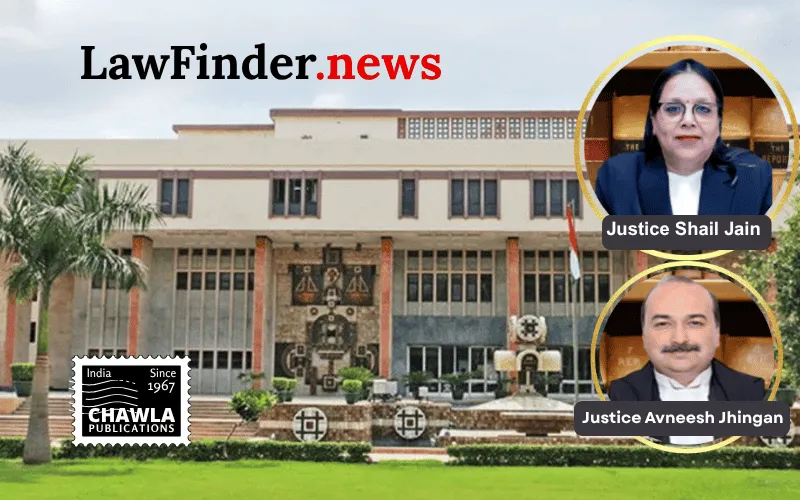
In a significant judgment dated 30th September 2026, the Division Bench of the Delhi High Court, comprising Justices Avneesh Jhingan and Shail Jain, allowed the appeal filed by M/s Vasundhara Sales Corporation against the order of the Commercial Court, Central District, Tis Hazari Courts. The Commercial Court had earlier rejected the plaint filed by the appellant on the ground that the suit for recovery was barred by limitation.
The appellant had filed a suit against M/s SSS Designtek Pvt. Ltd. and its director for recovery of an outstanding amount arising from regular business transactions conducted on a credit basis. The Commercial Court had accepted the defendant's application under Order VII Rule 11 of the Code of Civil Procedure (CPC), holding that the suit was time-barred since the last invoice dated 31.01.2016 stipulated payment by 15.02.2016, whereas the suit was filed much later on 23.10.2021.
However, the Delhi High Court took a contrary view, emphasizing that under Order VII Rule 11 CPC, the court deciding an application for rejection of plaint must confine itself strictly to the averments in the plaint and accept them as correct at this threshold stage. The Court cited binding Supreme Court precedents including P. Kumarakurubaran v. P. Narayanan (2025), Uma Devi v. Anand Kumar (2025), and Shakti Bhog Food Industries Ltd. v. Central Bank of India (2020), which establish that limitation is ordinarily a mixed question of fact and law that cannot be adjudicated summarily without evidence.
The appellant's pleadings indicated a running account between the parties, with part payments made in subsequent financial years (Rs. 1 lakh on 17.11.2017 and Rs. 11 lakhs on 08.06.2018 and 18.09.2018), and production of ledger accounts as well as issuance of C-forms under the Central Sales Tax (CST) Act, 1956. The issuance of the C-form, the Court noted, constitutes a certified acknowledgment of transaction between registered dealers, which could potentially affect the limitation period under Section 18 of the Limitation Act, 1963.
The Court pointed out that the Commercial Court erred in going beyond the pleadings and deciding complex questions such as the effect of part payments, the nature of the account, the impact of C-forms on acknowledgment of debt, and the extension of limitation during the Covid-19 period, without permitting the parties to lead evidence. It held that such factual and legal complexities require trial, not summary rejection of the plaint.
Highlighting the Supreme Court's suo motu extension of limitation during the Covid-19 pandemic, the High Court underscored the necessity of factoring this extension into limitation calculations, which the Commercial Court failed to do.
Accordingly, the Delhi High Court set aside the impugned order and restored the suit for trial. The judgment reiterates the strict and limited scope of Order VII Rule 11 CPC and safeguards the right of litigants to have their claims adjudicated on merits when limitation involves mixed questions of fact and law.
This judgment is a reminder that courts must exercise caution while rejecting plaints on limitation grounds at the threshold and must ensure that such decisions are not based on premature appreciation of evidence beyond the pleadings.
Bottom Line:
Order VII Rule 11 CPC - Rejection of plaint on ground of limitation - While deciding application under Order VII Rule 11, Court must confine itself to averments in plaint - Limitation, nature of running account, effect of part-payments, issuance of C-form under CST Act and applicability of Section 18 of Limitation Act are mixed questions of fact and law requiring evidence - Commercial Court erred in rejecting plaint as time-barred.
Statutory provision(s):
Order VII Rule 11 CPC, Section 18 Limitation Act 1963, Section 12A Commercial Courts Act 2015, Central Sales Tax Act 1956