Assessment based on third-party statement and seized slip quashed as Assessing Officer failed to provide effective opportunity for cross-examination despite Court's prior directions
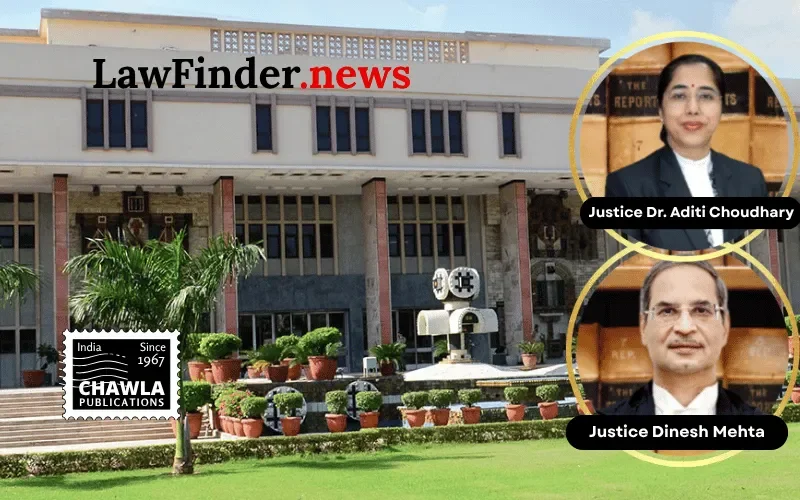
In a significant ruling delivered on October 13, 2026, the Delhi High Court (Division Bench comprising Justices Dinesh Mehta and Dr. Aditi Choudhary) set aside an Income Tax assessment order passed against petitioner Mr. Baleshwar Sharma by the Deputy Commissioner of Income Tax. The Court held that the assessment order, dated September 22, 2026, violated principles of natural justice by denying the petitioner an effective opportunity to cross-examine key witnesses whose statements formed the basis of the addition to his income.
The controversy arose from an earlier assessment order dated March 31, 2026, which made an addition of Rs. 1 crore to the petitioner's income based on a slip recovered from a third party, Pradeep Kumar Sehgal. The slip initially showed an amount of Rs. 10,000 but the witness allegedly stated that three zeros were intentionally omitted, thereby implicating the petitioner in unaccounted income. The petitioner challenged this addition on the ground that he was not given a chance to cross-examine Mr. Sehgal.
The High Court had earlier quashed the March assessment order in April 2026, explicitly directing the Assessing Officer (AO) to provide the petitioner an opportunity to cross-examine the witness before passing any fresh order. The Court mandated that the AO fix a date between May 18 and May 20, 2026, giving at least seven days' notice to the petitioner and the witness.
Following these directions, the AO issued a notice fixing May 19, 2026 for cross-examination. However, the petitioner could not attend on time as he was engaged in another High Court matter and arrived at the AO's office shortly after the witness had left. Despite the petitioner's request, the AO initially refused to recall the witness. Subsequently, upon intervention, the AO agreed to a fresh date of May 26, 2026. On this date, the petitioner and his counsel appeared, but the witnesses failed to show up.
The new AO who took charge thereafter passed the impugned assessment order, holding that the petitioner had failed to avail the opportunity on the original date and that the Court's directions were complied with. The petitioner challenged this order, contending that the AO had breached natural justice principles by not facilitating cross-examination.
The Court noted the petitioner's negligence in not appearing on the original date but emphasized that since the AO had granted a second opportunity at the petitioner's request, he could not now rely on the petitioner's initial default to deny a fair hearing. The Court found that the assessment order was based solely on the witness's statement and the seized slip, making the right to cross-examination indispensable.
Balancing the equities, the Court allowed the writ petition and set aside the assessment order. It directed the AO to fix a fresh hearing date between November 16 and 30, 2026, with at least seven days' prior notice to the petitioner and the witnesses, Pradeep Kumar Sehgal and Yogesh Jain. The AO was also directed to ensure the presence of the witnesses. If the witnesses fail to appear thrice, the AO may proceed in accordance with law.
Importantly, the Court ordered the petitioner to pay Rs. 25,000 as costs to each witness at the time of their appearance for cross-examination, underscoring that witnesses' time is valuable and should not be wasted. The fresh assessment must be passed only after due regard to the cross-examination.
This judgment reiterates the foundational principle of natural justice that no adverse order can be passed without giving the affected party an effective opportunity to confront and cross-examine the evidence against them, especially when the entire case hinges on third-party statements.
Bottom Line:
Income Tax - Assessment order based on third-party statement and seized slip - Where earlier order of Court had mandated cross-examination, fresh assessment without effective opportunity of cross-examination violates principles of natural justice - Though assessee was negligent on first date, once Assessing Officer granted another opportunity, he could not later deny cross-examination on basis of earlier default - Assessment order set aside with costs payable by assessee to witnesses.
Statutory provision(s):
Income Tax Act, 1961 - Section 143(3)
Baleshwar Sharma v. Deputy Commissioner of Income Tax, (Delhi)(DB) : Law Finder Doc Id # 2998076