Court emphasizes that statements under Section 164 Cr.P.C. and police statements are not substantive evidence; strong suspicion cannot replace proof
In a significant judgment delivered on September 28, 2026, the Delhi High Court upheld the acquittal of Om Parkash @ Kallu, who was accused of rape, reiterating the legal principle that in the absence of substantive evidence, a conviction cannot be sustained merely on suspicion or circumstantial material.
The case stemmed from an alleged incident on May 29, 2006, where the victim, a young woman, was reportedly raped by the respondent in her jhuggi while her family members were away or at work. The victim, traumatized by the incident and the ensuing social stigma, tragically committed suicide before she could testify in court. She left behind a suicide note citing shame as the reason for her drastic step.
During the trial, the prosecution relied heavily on the victim's statements given to the police and recorded under Section 164 of the Criminal Procedure Code (Cr.P.C.), a suicide note, medical evidence indicating sexual assault, and testimonies of the victim's father and brother. However, the victim's direct testimony before the court was absent due to her untimely death.
The trial court acquitted the accused, and the State challenged this verdict in the High Court. The appellant argued that the statements under Section 164 Cr.P.C., the suicide note, and the medical reports should be considered collectively as substantive evidence to uphold the conviction. However, the defense counsel contended that these statements cannot substitute the victim's in-court testimony, which is the substantive evidence. He also highlighted contradictions and the absence of conclusive forensic evidence linking the accused to the crime.
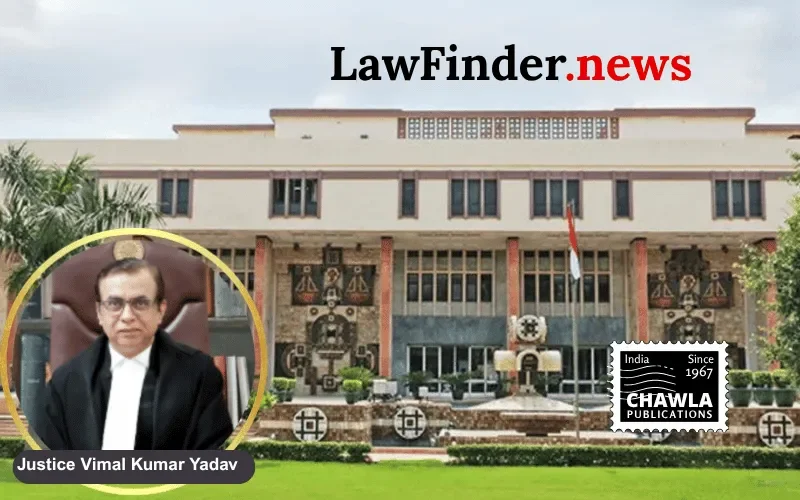
Justice Vimal Kumar Yadav, presiding over the case, underscored the psychological trauma and social ostracization faced by victims of rape, which sometimes leads to such tragic outcomes. Despite acknowledging the strong possibility of the accused's involvement based on the victim's pre-recorded statements and medical evidence, the Court emphasized the strict legal standards governing evidence.
The Court held that under Section 3 of the Indian Evidence Act, 1872, "evidence" includes only statements made before the court by witnesses and documents produced for inspection. Statements under Section 164 Cr.P.C. and police statements do not qualify as substantive evidence and are admissible only for the limited purpose of corroboration or contradiction.
Furthermore, the Court reiterated established Supreme Court precedents that appellate courts may interfere with an acquittal only if the trial court's decision is perverse, based on a misreading or omission of material evidence, and no two reasonable views are possible. Here, the trial court's acquittal was a plausible and reasonable view given the absence of the victim's deposition.
The medical evidence of injuries and a torn hymen, while corroborative, could not alone establish guilt without the victim's testimony. The Court concluded that a strong possibility, however grave, cannot replace the proof required for conviction.
Consequently, the High Court declined the State's appeal and upheld the trial court's acquittal, emphasizing the presumption of innocence and the necessity of substantive evidence for criminal conviction.
This judgment highlights the judiciary's adherence to the principles of evidence law and the challenges faced in prosecuting sexual assault cases when victims are unable to testify due to trauma or fatal consequences.
Bottom Line:
Appeal against acquittal in rape case - Statement of victim under Section 164 Cr.P.C. and statement to police are not substantive evidence and can ordinarily be used only for contradiction or corroboration - In absence of victim's deposition before Court, even strong suspicion or possibility cannot substitute proof - Acquittal upheld as trial court view was not perverse.
Statutory provision(s):
Indian Penal Code Section 376, Criminal Procedure Code Section 164, Indian Evidence Act Sections 3, 6, 32
State v. Om Parkash @ Kallu, (Delhi) : Law Finder Doc Id # 2988226