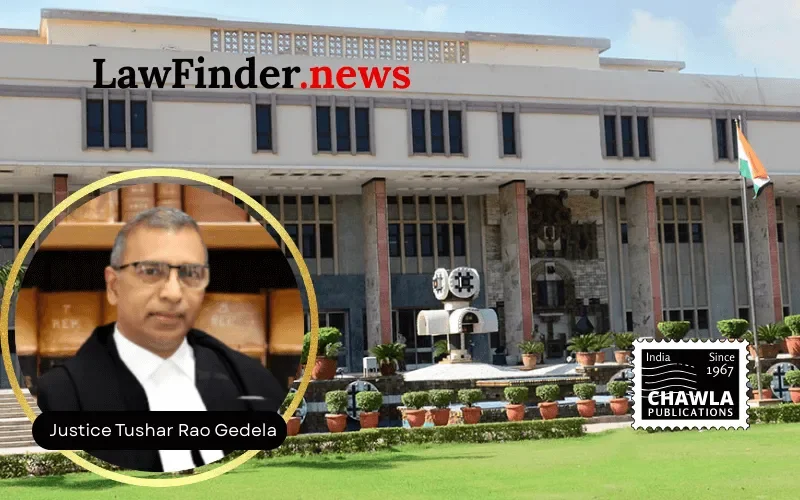
Court Dismisses NHAI's Challenge Against Arbitral Award Extending Concession Period Due to COVID-19 and Settlement Agreement
In a significant ruling, the Delhi High Court has dismissed the petition filed by the National Highways Authority of India (NHAI) challenging an arbitral award favoring Atlanta Infra Assets Limited. The case concerned a dispute over the extension of a concession period for a highway project affected by the COVID-19 pandemic and a prior settlement agreement.
Justice Tushar Rao Gedela presided over the case, which involved the interpretation of the Arbitration and Conciliation Act, 1996, specifically Section 34. The court reaffirmed the limited grounds on which an arbitral award can be challenged, emphasizing that re-appraisal of evidence or findings of fact by the Arbitral Tribunal is impermissible unless the award is patently illegal or perverse.
The dispute arose from a Concession Agreement dated December 9, 2005, between NHAI and Atlanta Infra (formerly Balaji Tollways Limited) for upgrading a section of NH-6 in Maharashtra. Due to the COVID-19 pandemic, Atlanta Infra sought an extension of the concession period by 53 days, of which only 25 days were granted by NHAI. The Arbitral Tribunal, however, awarded the full 53 days extension, taking into account both the complete suspension and partial reduction in toll collection.
NHAI contended that the Tribunal erred by misapplying a policy letter dated May 26, 2020, which provided relief for toll collection losses due to the pandemic. NHAI argued that the policy applied only to projects under the Model Concession Agreement, not to their agreement with Atlanta Infra.
The court found that the Arbitral Tribunal acted within its jurisdiction, aligning the policy letter's intent with the Concession Agreement's force majeure clause. The Tribunal's interpretation aimed to provide relief for the unforeseen pandemic, ensuring concessionaires were not unduly disadvantaged.
Additionally, the court upheld the Tribunal's dismissal of NHAI's counterclaim for a refund related to de-scoping work. The Tribunal concluded that the matter was settled in a previous arbitration, and reopening it would undermine the settlement's finality.
The judgment highlights the judiciary's deference to arbitral autonomy, reinforcing that awards will not be overturned unless they violate substantive laws or the fundamental policy of India. This decision underscores the importance of finality in arbitration, particularly when parties have previously settled disputes.
Bottom line:-
Arbitration and Conciliation Act, 1996 Section 34 Limited grounds for challenging arbitral awards - Courts cannot re-appraise evidence or re-write contractual terms unless the award is perverse or patently illegal.
Statutory provision(s): Arbitration and Conciliation Act, 1996, Section 34