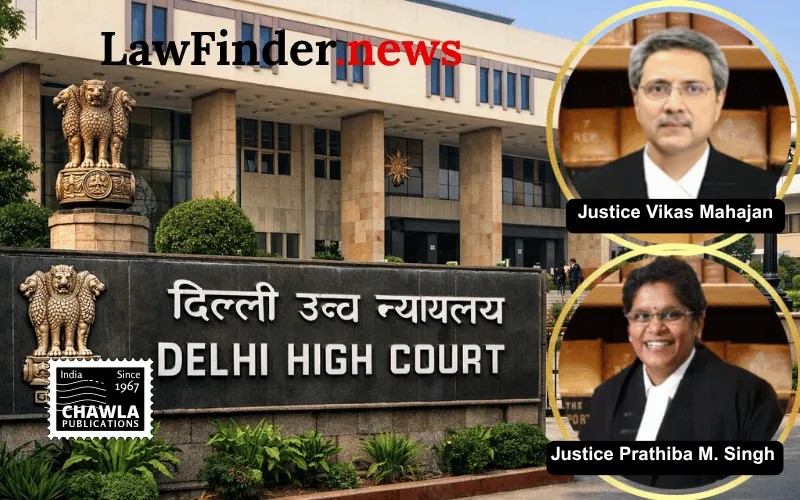
Accused in UAPA Case Granted Bail Despite NIA's Objection; Additional Restrictions Imposed by High Court to Safeguard Against Potential Threats
In a significant development, the Delhi High Court has upheld the bail granted to Khurram Parvez and Irfan Mehraj, both of whom are accused under the Unlawful Activities (Prevention) Act, 1967 (UAPA), for their alleged involvement in promoting a secessionist agenda and supporting proscribed terrorist organizations. The judgment, delivered by a bench comprising Justices Prathiba M. Singh and Vikas Mahajan, emphasized the need for stringent conditions to accompany the bail, ensuring that the accused do not engage in similar activities that could potentially threaten national security.
The case, investigated by the National Investigation Agency (NIA), revolves around allegations that the accused misused their positions in the Jammu & Kashmir Coalition of Civil Society (JKCCS), an unregistered NGO, to conduct secessionist activities and funnel foreign funds to terrorist organizations. The NIA contended that the bail granted by the trial court overlooked crucial documentary evidence and was based solely on oral testimony, thereby failing to meet the statutory requirements under Section 43D(5) of the UAPA.
Despite the NIA's objections, the High Court decided not to stay the trial court's order, citing the lack of a prima facie conclusion on the innocence of the accused by the lower court. However, the High Court imposed additional bail conditions to prevent any recurrence of the alleged activities. These conditions include regular reporting to the NIA, restrictions on participating in activities related to the charges, and prohibitions on international communication with individuals involved in similar activities.
The High Court's decision reflects a careful balance between the rights of the accused to bail and the imperative of national security. Both respondents have been in custody since March 2023, and the trial is expected to be prolonged, given that charges are yet to be framed.
The judgment also highlighted procedural lapses by the trial court, which failed to discuss documentary evidence in its bail order. While the High Court allowed the trial court's order to operate, it stressed that the decision should not serve as a precedent for future cases.
The case will continue to be monitored closely, with the next hearing scheduled for August 24, 2026. The proceedings underscore the complexities of adjudicating cases involving national security and individual rights, particularly under stringent anti-terrorism laws.
Bottom Line:
Bail granted to the accused under stringent conditions in a case involving allegations of promoting secessionist agenda and supporting proscribed terrorist organizations. The High Court added further conditions for bail without staying the trial court's order.
Statutory provision(s):Unlawful Activities (Prevention) Act, 1967 Sections 43D(5), Indian Penal Code Sections 120B, 124A, Criminal Procedure Code, 1973 Section 439
National Investigation Agency v. Khurram Parvez, (Delhi)(DB) : Law Finder Doc id # 2944598