Court Emphasizes Strict Liability under Railways Act, 1989, and Orders Reassessment of Compensation in Phooli Devi v. Union of India
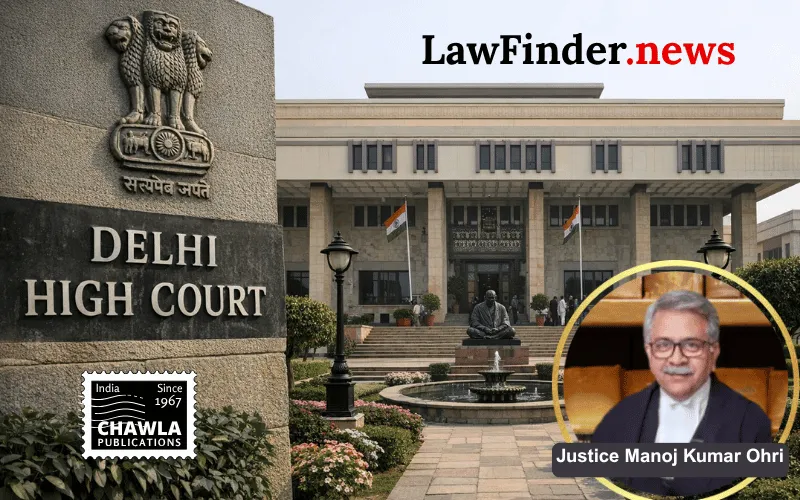
In a significant judgment delivered on September 21, 2026, the Delhi High Court, presided over by Justice Manoj Kumar Ohri, overturned a Railway Claims Tribunal decision that had dismissed a compensation claim filed by Phooli Devi for the death of her son, Ramesh Meena, who died after falling from a moving train. The Court underscored the statutory scheme of strict liability under Section 124-A of the Railways Act, 1989, and directed the Tribunal to reassess the compensation payable to the claimant.
The case arose from a tragic incident on November 13, 2019, when the deceased, Ramesh Meena, was traveling with his brother-in-law, Babulal, from Jatusana to Kund via Rewari. Both had a valid ticket issued for two adult passengers. While Babulal deboarded at Kund, the deceased was later found dead near the railway line between Rewari and Khori. The Railway Claims Tribunal had dismissed the claim, citing the absence of eyewitnesses, no contemporaneous report by railway staff, and the non-recovery of the ticket from the deceased’s person.
Justice Ohri, however, found that the Tribunal had adopted an unduly strict approach. The Court held that the mere absence of a ticket on the deceased’s body does not negate his status as a bona fide passenger, especially when the ticket was verified from the issuing station and produced by his traveling companion. The Court also noted that the testimony of Babulal, though a related witness, could not be discarded solely based on his relationship with the deceased, given the corroborating evidence.
Importantly, the Court emphasized that accidental falls from moving trains are not always witnessed or immediately reported, and the lack of direct evidence should not be construed as evidence against the claim. The Court relied on precedents including the Supreme Court’s ruling in Union of India v. Prabhakaran Vijaya Kumar (2008), which clarified that Section 124-A of the Railways Act imposes strict liability and is a beneficial legislation intended to provide compensation irrespective of fault.
The judgment further stressed that the claim should be adjudicated on the preponderance of probabilities. Since no cogent material was presented to suggest an alternate cause of death, the Court found that the claim of accidental fall could not be dismissed on the grounds cited by the Tribunal.
Consequently, the Court set aside the Tribunal’s order and remanded the matter for fresh assessment and disbursement of compensation within two months. The case has been listed before the Tribunal on October 15, 2026, for further proceedings.
This judgment reaffirms the protective intent of the Railways Act to safeguard passengers and ensures that compensation claims arising from railway accidents are treated with a liberal and purposive interpretation.
Bottom Line:
Railways Act - Claim for compensation on death in railway accident - Valid journey ticket for two passengers having been verified, non-recovery of ticket from body of deceased by itself does not negate status as bona fide passenger - Absence of eyewitness, alarm-chain pulling, or contemporaneous report by railway staff cannot by itself defeat claim of accidental fall - Claim under Section 124-A to be examined on touchstone of preponderance of probabilities keeping in view beneficial and strict liability scheme - Order dismissing claim set aside and matter remanded for assessment of compensation.
Statutory provision(s):
Railways Act, 1989 Sections 123(c), 124-A; Railway Claims Tribunal Act, 1987 Section 23
Phooli Devi v. Union of India, (Delhi) : Law Finder Doc Id # 2982694