Legal Representatives Can Challenge Arbitral Awards Post-Death of Party, Rules Court
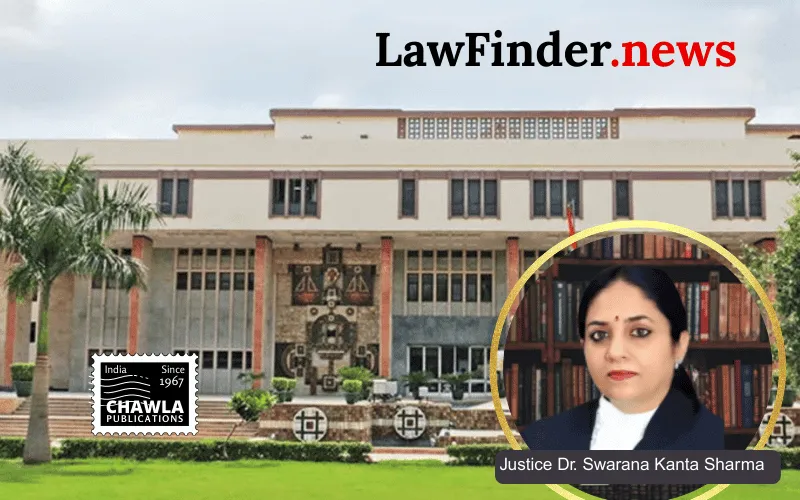
In a significant ruling, the Delhi High Court, presided over by Dr. Swarana Kanta Sharma, J., addressed the complex issue of arbitration proceedings continuing despite the absence of all legal heirs of a deceased party. The case, titled "Faisal Ahmed v. Asian Hotels North Ltd.," revolved around the arbitration proceedings initiated concerning disputes related to Shop No. U-72 at the Hyatt Regency Shopping Arcade, New Delhi, following the death of the original party, Sultan Ahmed.
The petitioner, Faisal Ahmed, a legal heir of the deceased Sultan Ahmed, sought the High Court's intervention, arguing that the arbitration proceedings were being pursued without the participation and consent of all legal heirs. The petitioner contended that such exclusion violated the principles of natural justice, specifically under Section 18 of the Arbitration and Conciliation Act, 1996, and challenged the exclusion of other heirs from the proceedings.
The court, however, found that the arbitration proceedings could validly continue with one legal representative, Mujeeb Ahmed, representing the estate of the deceased. It was noted that any relief granted in the arbitration would benefit the estate rather than the individual representative. The court emphasized that legal representatives have the statutory right to challenge arbitral awards under Section 34 of the Arbitration and Conciliation Act, 1996, even if they did not participate in the arbitration proceedings.
The judgment further clarified that the High Court's jurisdiction under Articles 226 and 227 of the Constitution is limited and should only be exercised in exceptional circumstances where a party is left without a remedy under the Arbitration Act or where there is clear evidence of bad faith. The court concluded that the petitioner was not without remedy, as the statutory framework allowed for a challenge to the arbitral award, thereby dismissing the petition.
The ruling underscores the judiciary's approach to uphold the continuity of arbitration proceedings while safeguarding the rights of legal heirs, ensuring that they have recourse under the arbitration act to challenge outcomes that affect their interests.
Bottom Line:
Arbitration proceedings do not abate upon the death of a party. The legal representative pursuing the proceedings represents the estate of the deceased, and any relief granted is held in that representative capacity. A legal representative claiming under the deceased has the right to challenge the arbitral award under Section 34 of the Arbitration and Conciliation Act, 1996.
Statutory provision(s): Arbitration and Conciliation Act, 1996 Sections 2(1)(g), 18, 34, 40; Constitution of India, 1950 Articles 226, 227
Faisal Ahmed v. Asian Hotels North Ltd., (Delhi) : Law Finder Doc id # 2973743