Court sets aside CIC order directing disclosure of Special Flight Returns, emphasizing that security exemptions under Sections 8(1)(a) and 8(1)(g) of RTI Act protect information critical to PM's safety
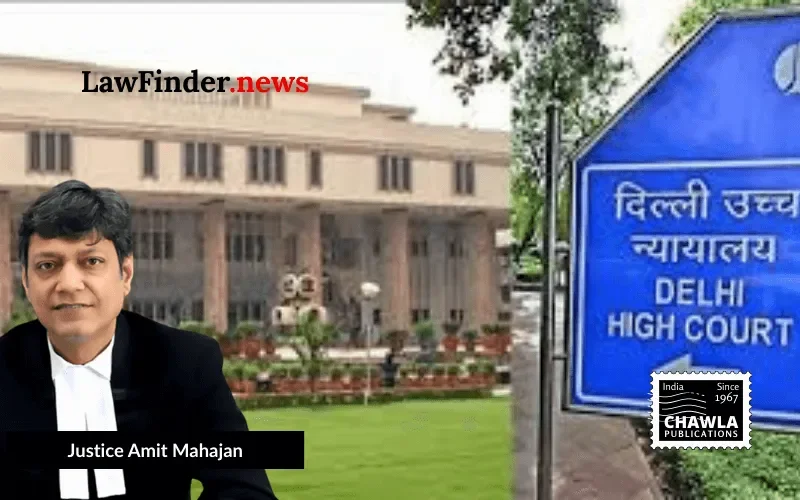
In a significant ruling on 15th October 2026, the Delhi High Court, presided over by Justice Amit Mahajan, dismissed an appeal against the Central Public Information Officer (CPIO) of the Indian Air Force, thereby upholding the denial of information sought under the Right to Information (RTI) Act concerning the Special Flight Returns (SFR-II) for the Prime Minister's foreign visits.
The case arose when Commodore Lokesh K Batra (Retd.) filed an RTI application requesting detailed information about all foreign visits of Prime Ministers Dr. Manmohan Singh and Narendra Modi undertaken on Indian Air Force aircraft from April 2013 onwards. While the petitioner provided some general travel information, access to the detailed SFR-II reports, which include sensitive information such as designations, appointments, identification numbers, flight details, passenger strength, and security personnel particulars, was denied. The petitioner cited exemptions under Sections 8(1)(a) and 8(1)(g) of the RTI Act, arguing that disclosure could compromise national security and endanger the life and safety of the Prime Minister and associated personnel.
The Central Information Commission (CIC), however, directed partial disclosure after redacting names and identifying details of security personnel, reasoning the public interest in transparency outweighed the exemption claims. The petitioner challenged this order before the Delhi High Court.
The Court carefully examined the statutory provisions under Section 8 of the RTI Act, which balances the right to information with necessary exemptions for protecting sovereignty, security, and individual safety. Citing precedents including the Supreme Court's judgment in CBSE v. Aditya Bandopadhyay and Supreme Court of India v. Subhash Chandra Agarwal, the Court reiterated that the right to information is not absolute and must be harmonized with other public interests, especially confidentiality of sensitive security information.
The judgment emphasized that the SFR-II documents contain interconnected sensitive details, which even after redaction could be pieced together with publicly available information to reveal security arrangements, patterns, and personnel deployment. The Court held that the subjective satisfaction of the competent security agencies regarding risks to national security and physical safety is decisive, and neither the CIC nor the Court should substitute their judgment in such matters.
Importantly, the Court rejected the argument that the use of public funds on the PM's foreign visits constituted a larger public interest justifying disclosure. It held that mere expenditure of public money does not override the critical need to maintain confidentiality where disclosure could jeopardize security.
Consequently, the Delhi High Court set aside the CIC's order and upheld the exemption invoked by the Indian Air Force, affirming that the protection of national security and personal safety under Sections 8(1)(a) and 8(1)(g) of the RTI Act takes precedence over disclosure demands in this context.
This decision reinforces the principle that while transparency is essential in democratic governance, it must be balanced against the imperatives of safeguarding the nation's security and the safety of its highest office holders.
Bottom Line:
Right to Information Act, 2005 - Information relating to Special Flight Returns (SFR-II) of Prime Minister's foreign visits by Indian Air Force aircraft - Disclosure can be denied where it may prejudicially affect security of State and endanger life or physical safety of persons concerned - CIC cannot substitute its assessment over subjective satisfaction of competent security agencies - Mere use of public funds does not by itself establish larger public interest warranting disclosure.
Statutory provision(s): Right to Information Act, 2005 Sections 8(1)(a), 8(1)(e), 8(1)(g), 8(2); Constitution of India Articles 226, 227