Court Rules Mandamus to Include Medical Condition Beyond Judicial Scope; Emphasizes Expert Committee's Role in Disability Classification
In a significant judgment delivered on October 14, 2026, the Delhi High Court dismissed a petition seeking to include Mayer-Rokitansky-Küster-Hauser (MRKH) Syndrome Type-II as a specified disability under the Rights of Persons with Disabilities Act, 2016 (RPwD Act). The petitioner, Anu Aravind P, who suffers from MRKH Syndrome Type-II - a congenital condition involving absence of the uterus and upper part of the vagina along with right renal agenesis - had sought judicial intervention directing the Central Government to notify her condition as a specified disability, thereby enabling her to claim benefits under the RPwD Act, including reservation in medical admissions.
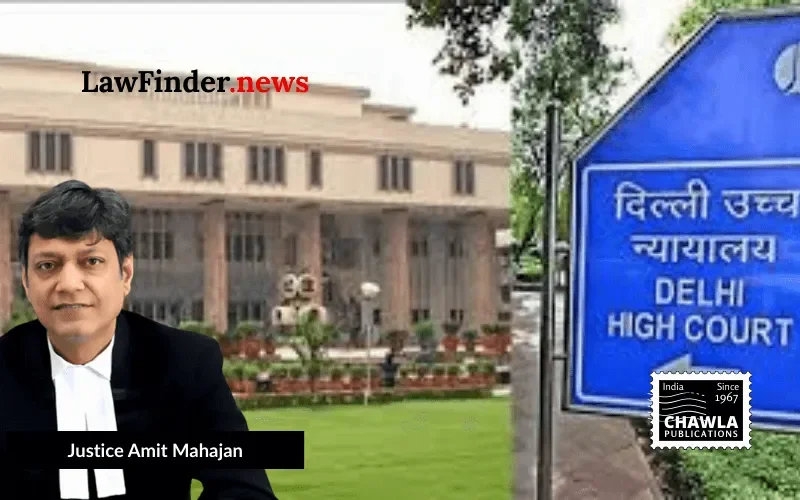
The Court, presided over by Justice Amit Mahajan, reiterated the well-established legal principle that courts cannot issue mandamus to the legislature or executive to enact laws or exercise delegated legislative powers in a particular manner. The inclusion of new disabilities in the Schedule to the RPwD Act falls within the exclusive domain of the Central Government, based on expert medical assessment and policy considerations.
The petitioner's prior efforts included obtaining a 50% disability certificate from the Kerala State Disability Assessment Board and representation to the Ministry of Social Justice and Empowerment, which was recommended for consideration by the Kerala State Human Rights Commission. Despite this, the Central Government's High-Powered Inter-Departmental Committee, comprising medical experts from institutions such as AIIMS, DGHS, ICMR, and Lady Hardinge Medical College, assessed the condition and concluded that MRKH Syndrome Type-II constitutes a congenital anomaly that does not impede daily functioning and therefore does not qualify as a disability under the statutory definition.
The Court observed that the RPwD Act's definition of "person with disability" under Section 2(s) requires that a long-term physical, mental, intellectual, or sensory impairment must interact with societal barriers to hinder full and effective participation on an equal basis. The Committee found that MRKH Syndrome Type-II does not affect the petitioner's daily life activities. Furthermore, the Court noted that if the condition manifests in the future as an impairment restricting daily functions, it is already covered under existing specified disabilities.
Justice Mahajan emphasized the distinction between a medical condition and a disability as recognized by the RPwD Act and held that the Committee's decision was neither arbitrary nor discriminatory. The Court sympathized with the petitioner's hardships and social stigma but clarified that sympathy alone cannot override the statutory framework or judicial limits.
The judgment also highlighted that the petitioner remains free to submit fresh representations if new medical evidence emerges. However, the Court is constrained to respect the legislative and executive prerogative in disability classification, limiting its review to the legality and arbitrariness of the decision rather than its policy merits.
This ruling reaffirms the boundaries of judicial review concerning policy decisions on disability classification and underscores the role of expert bodies in interpreting the law's application to medical conditions.
Bottom Line:
Rights of Persons with Disabilities Act, 2016 - High Court cannot issue mandamus directing Central Government to include a medical condition as a specified disability in the Schedule - Scope of judicial review is limited to examining arbitrariness or illegality in decision of expert committee/Government - Rejection of request to include MRKH Syndrome Type-II as specified disability upheld, as expert committee found that condition does not affect daily functioning and, if it later manifests into impairment restricting daily life, it is already covered under appropriate specified disability.
Statutory provision(s):
Article 226, Constitution of India, 1950; Sections 2(c), 2(r), 2(s), 2(zc), 32, 56, 57, 58 of the Rights of Persons with Disabilities Act, 2016; Clause 6 of the Schedule to the RPwD Act, 2016