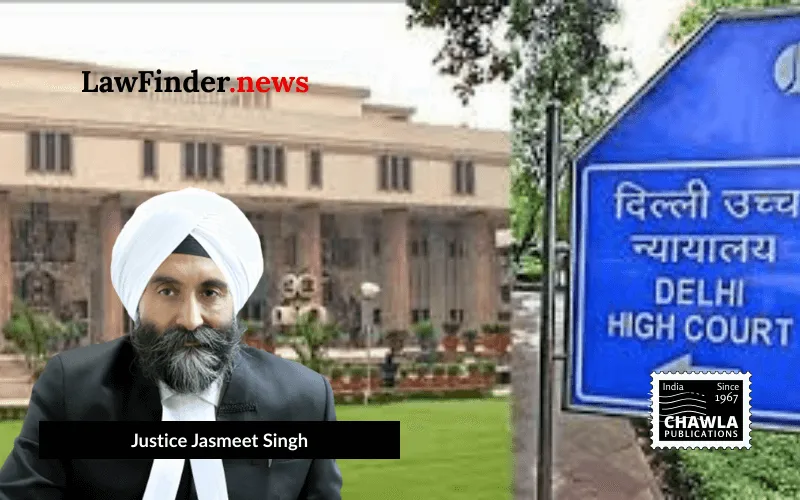
Co-accused Denied Right to Challenge Pardon, Court Emphasizes Trial as the Stage for Contesting Approver's Testimony
In a recent judgment, the Delhi High Court, presided over by Mr. Jasmeet Singh, J., ruled against the application filed by M/s NKG Infrastructure Ltd., a co-accused in a money laundering case, seeking to recall the order that granted pardon to the main accused, Tajinder Pal Singh. The court clarified that a co-accused does not possess a statutory or legal right to be heard during the consideration of a pardon application under Sections 306 and 307 of the Code of Criminal Procedure, 1973, or Section 528 of the Bharatiya Nagarik Suraksha Sanhita, 2023.
The case stemmed from a money laundering investigation initiated by the Directorate of Enforcement (ED), based on a predicate offense registered by the CBI. The ED alleged that the applicant NKG Infrastructure Ltd. was involved in securing a tender through fraudulent means, generating proceeds of crime amounting to over Rs. 10 crore.
The court evaluated whether the application for recalling the pardon order could be entertained under procedural grounds, differentiating between substantive and procedural review as per Section 362 of the CrPC. Although the court acknowledged its ability to revisit judgments on procedural lapses, it concluded that the applicant did not have a legal right to intervene at this stage, thus dismissing the application for lack of procedural impropriety or violation of natural justice principles.
The judgment emphasized that the co-accused's right to challenge the approver's testimony arises solely during the trial phase, where the credibility of the approver can be contested through cross-examination. The court reaffirmed that granting pardon is an act between the court and the accused, aimed at securing evidence against other offenders without directly prejudicing the co-accused.
Referencing prior judgments, the court highlighted that the statutory framework does not mandate the inclusion of co-accused during pardon proceedings, underscoring the judiciary's role in determining the necessity and benefit of an approver's evidence in the interest of justice.
This ruling clarifies the procedural stance on pardons in criminal proceedings, reinforcing the trial stage as the appropriate forum for co-accused to contest the implications of a granted pardon.
Bottom line:-
A co-accused does not have a statutory or legal right to be heard at the stage of consideration of an application for tender of pardon under Sections 306 and 307 of the Code of Criminal Procedure, 1973, or under Section 528 of Bharatiya Nagarik Suraksha Sanhita, 2023. Such a right arises only at the stage of trial, where the co-accused may cross-examine the approver.
Statutory provision(s):
Sections 306, 307, 362, 401, 482 of the Code of Criminal Procedure, 1973; Section 528 of Bharatiya Nagarik Suraksha Sanhita, 2023; Article 227 of the Constitution of India.
Tajinder Pal Singh v. Directorate of Enforcement, (Delhi) : Law Finder Doc id # 2935234