Court Declines to Grant Relief on Financial Grounds, Emphasizes Legislative Domain for Policy on Indigent Support in Arbitration
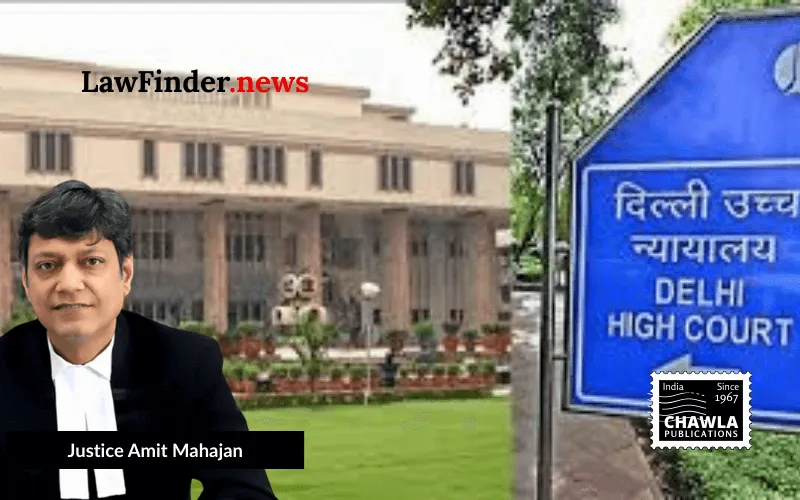
In a significant ruling dated September 21, 2026, the Delhi High Court, presided over by Justice Amit Mahajan, dismissed two writ petitions filed by Rajesh Kumar and M/s. Sri Export Co., seeking waiver or deferment of arbitral fees under the Arbitration and Conciliation Act, 1996. The petitioners approached the court after arbitral proceedings before the Delhi International Arbitration Centre (DIAC) were terminated or counter-claims dropped due to their failure to pay the requisite arbitral fees and administrative charges.
The petitioners contended that their indigency and financial incapacity to pay the arbitral fees created a barrier to accessing justice, violating their fundamental rights under Articles 14 and 21 of the Constitution of India. They sought directions to waive or defer their share of fees, or alternatively, for the framing of rules or policies to provide financial or structural support for indigent claimants and counter-claimants in arbitration.
Justice Mahajan examined Section 38 of the Arbitration and Conciliation Act, 1996, which mandates equal payment of deposits by parties toward arbitration costs and empowers the arbitral tribunal to suspend or terminate proceedings if the deposit is not paid. The court emphasized that the statute explicitly contemplates termination of arbitration in case of non-payment and does not provide any exception or waiver on the ground of financial incapacity or indigency.
The court referred to the Supreme Court’s decision in Harshbir Singh Pannu v. Jaswinder Singh (2025 SCC OnLine 2742), which upheld the authority of arbitral tribunals to terminate proceedings for non-payment of fees under Section 38. Accordingly, the Delhi High Court ruled that no exceptions could be carved out to allow continuation of arbitration without payment of fees.
On the petitioners’ plea for issuance of directions to the Union of India and other authorities to formulate policies or rules to support indigent parties in arbitration, the court held that such policy matters fall within the legislative and executive domain and cannot be directed by the High Court under its writ jurisdiction. The court further noted that the constitutional validity of Section 38 was not challenged in the petitions, and therefore, no relief could be granted.
Consequently, the court dismissed the petitions and disposed of all pending applications, affirming that the Arbitration and Conciliation Act, 1996’s provisions regarding payment of arbitral fees must be adhered to strictly, irrespective of a party’s financial condition.
This judgment clarifies the limits of judicial intervention in matters of arbitration fees and the non-existence of statutory provisions for fee waivers based on indigency, reinforcing the need for legislative or policy-level reforms to address financial barriers in arbitration access.
Bottom Line:
Arbitration and Conciliation Act, 1996 Section 38(2) Nonpayment of arbitral fees/deposit - Arbitral Tribunal may suspend or terminate proceedings in respect of claim or counter-claim - No exception or waiver can be carved out by Court on ground of financial incapacity or indigency when statute does not provide such exception - Prayer for directions to frame policy/rules for financial support to indigent parties in arbitration cannot be granted in writ jurisdiction as it falls within legislative/policy domain.
Statutory provision(s):
Arbitration and Conciliation Act, 1996 Section 38(2); Constitution of India Articles 14, 21, 226; Delhi International Arbitration Centre (DIAC) Rules, 2023 Rule 33.5
Rajesh Kumar v. Union of India, (Delhi) : Law Finder Doc Id # 2982688