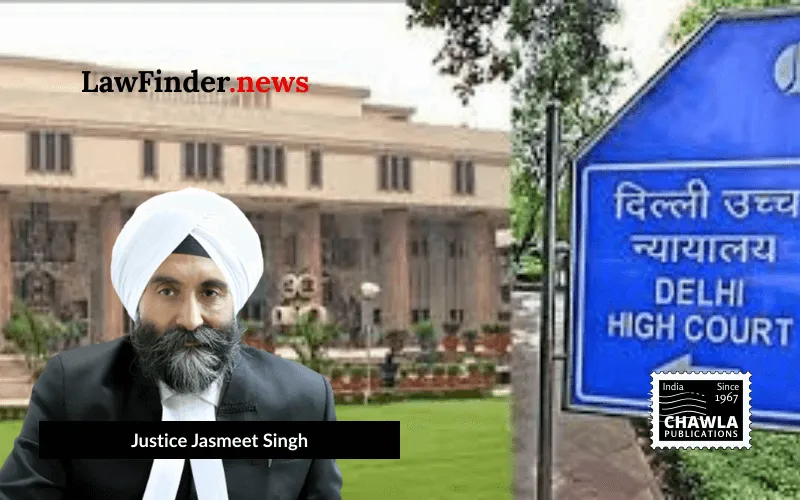
Court prioritizes green space maintenance over temporary cultural events, citing residents' welfare
In a significant ruling, the Delhi High Court has dismissed a petition by Shri Sanatan Dharam Ramleela Samiti challenging the cancellation of their booking to hold the annual Ramlila at Chintoo Park, Naraina. The decision was delivered by Mr. Jasmeet Singh, J., emphasizing the necessity of maintaining the park as a green and recreational space for the welfare of local residents, in compliance with previous court directives.
The petition, W.P.(C) 14360 of 2026, was filed under Article 226 of the Constitution of India, seeking to overturn the Delhi Development Authority's (DDA) cancellation of the Samiti’s online booking. The DDA had cited High Court directions as the reason for the cancellation. The petitioner argued that past permissions for conducting Ramlila should permit them to continue their annual event in the park.
The court, however, held that the need to preserve Chintoo Park as a green area and recreational space outweighed the petitioner’s claim for temporary use. The judgment referred to previous orders in W.P.(C.) No. 36/2026, which directed the park's restoration and maintenance as a green area, prohibiting any encroachments or unauthorized use. The High Court emphasized that earlier permissions do not supersede the current requirement to maintain the park for the community's benefit.
Justice Jasmeet Singh noted that allowing the event would involve temporary occupation and installation of structures, conflicting with the park's intended purpose. He further stated that while the Ramlila is a temporary event, it does not align with the park's maintenance requirements as prescribed by earlier court orders.
The court balanced the cultural significance of the Ramlila against the public interest in preserving green spaces. In this case, the welfare of Naraina Vihar residents and the need to maintain the park as a green area were deemed more critical.
The judgment also mentioned that alternative grounds are available for conducting the Ramlila, suggesting that the petitioner explore other venues for their event.
This decision reinforces the judiciary's role in safeguarding public spaces for community welfare, even at the cost of traditional cultural events. The court's ruling underscores the importance of adhering to environmental and community-focused directives, setting a precedent for similar cases in the future.
Bottom Line :
Public park/green area - Temporary permission to conduct Ramlila in park can be refused where prior High Court directions require restoration and maintenance of the land as a green and recreational space for welfare of local residents - Earlier permissions or past use do not override subsequent court directions.
Statutory provision(s): Article 226 of the Constitution of India