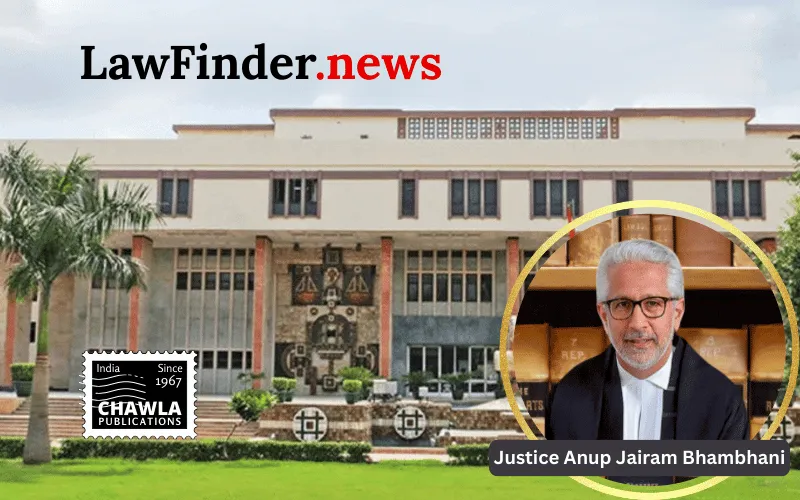
Court emphasizes need for trial to determine reckless disregard for truth in defamation suits involving public officials.
In a significant ruling, the Delhi High Court addressed the complexities involved in defamation cases involving public officials, underscoring the need for a trial to ascertain whether the publication was made with reckless disregard for the truth. The case, titled Shri Naresh Kumar v. The Wire, involved allegations of defamation against the online news portal, The Wire, by Shri Naresh Kumar, a former Chief Secretary of Delhi.
The court, presided by Justice Anup Jairam Bhambhani, highlighted the delicate balance between freedom of speech and the right to reputation, particularly for public officials. The court referenced the Supreme Court's landmark judgment in R. Rajagopal v. State of T.N., which delineates the limited grounds on which public officials can claim damages for defamation concerning their official duties.
Justice Bhambhani noted that while the article in question related to Kumar's official duties, it was necessary to determine if the publication was made with reckless disregard for the truth or was actuated by malice. The court emphasized that such determinations can only be made after a full trial.
In response to the plaintiff's application for an interim injunction, the court upheld the earlier directive to remove the contentious article from The Wire’s website and related social media posts. However, the court vacated a previous order that broadly prohibited The Wire from publishing any similar content, citing the need to avoid presumptive or hypothetical restrictions on free speech.
The judgment also clarified the role of intermediaries, such as social media platforms and search engines, reiterating that they cannot be held liable for user-generated content unless specific court orders direct them to take down identified material.
The court's decision underscores the necessity for media platforms to exercise due diligence and verify facts before publication, especially when reporting on public officials. It also reinforces the judicial commitment to protect the right to free speech while safeguarding individuals' reputations against unwarranted attacks.
Bottom line:-
Defamation - Suit maintainable by a public official if the publication is made with reckless disregard for the truth or is false and actuated by malice or personal animosity - A public official cannot claim damages for acts related to official duties unless such exceptions are proven.
Statutory provision(s):
Order XXXIX Rules 1 and 2, Code of Civil Procedure, 1908; Section 151, Code of Civil Procedure, 1908; Section 2(1)(w), Information Technology Act, 2000; Section 79, Information Technology Act, 2000
Shri Naresh Kumar v. The Wire, (Delhi) : Law Finder Doc id # 2943658