Court says Section 12(5) of the Arbitration Act can be waived only by an express written agreement after disputes arise; participation in arbitration or self-appointment is not enough.
The Delhi High Court has dismissed an appeal filed by M/s Ahluwalia Contracts (India) Limited (ACIL) and upheld the setting aside of an arbitral award passed in favour of the company, holding that the sole arbitrator had been appointed in violation of Section 12(5) of the Arbitration and Conciliation Act, 1996.
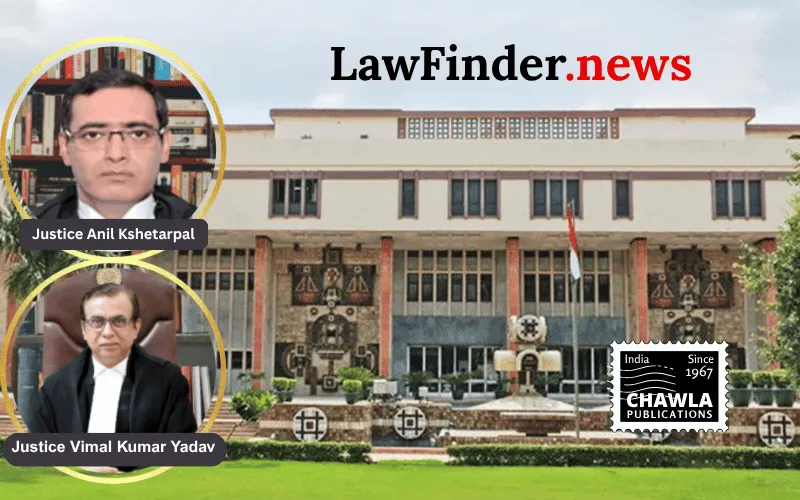
A Division Bench comprising Justice Anil Kshetarpal and Justice Vimal Kumar Yadav ruled that the appointment of the sole arbitrator by the Airports Authority of India (AAI) was invalid because there was no express agreement in writing between the parties, entered into after the disputes had arisen, waiving the statutory bar under Section 12(5).
The dispute arose out of a 2009 contract for work awarded by AAI to ACIL. After compensation was levied by AAI in 2015, ACIL invoked the contractual dispute resolution mechanism and later sought arbitration. AAI appointed a sole arbitrator in May 2019, and both parties participated in the proceedings for nearly four years. The arbitrator delivered an award in August 2023, partly allowing ACIL’s claims and rejecting AAI’s counter-claims.
AAI challenged the award under Section 34 of the Act. Although it did not specifically raise the issue of the arbitrator’s appointment in its petition, the Single Judge examined the validity of the tribunal’s constitution and set aside the award, relying on Supreme Court and Delhi High Court precedents, including Bhadra International, Bharat Broadband, Titagarh Rail Systems, and Mahavir Prasad Gupta.
Before the Division Bench, ACIL argued that AAI itself had appointed the arbitrator and had participated in the proceedings without objection, and therefore could not later challenge the appointment. The company also contended that the Single Judge had gone beyond the scope of the Section 34 petition.
Rejecting these arguments, the High Court held that Section 12(5) requires a waiver only through an express agreement in writing after the dispute has arisen. The Court said such waiver cannot be inferred from conduct, acquiescence, participation in arbitration, or the fact that the appointing party itself made the appointment. It further held that even if the objection was not specifically pleaded in the Section 34 petition, the court could still examine the issue because it went to the root of the tribunal’s jurisdiction.
The Bench concluded that once the arbitrator’s appointment was contrary to the mandatory requirements of Section 12(5), the award could not stand. Finding no merit in ACIL’s appeal, the Court dismissed it and affirmed the order setting aside the award.
Bottom Line :
Arbitration and Conciliation Act, 1996 - Section 12(5) proviso - Unilateral appointment of sole arbitrator by one party after disputes have arisen is invalid in absence of an express agreement in writing waiving Section 12(5) - Such waiver cannot be inferred from appointment by the party itself, participation in arbitral proceedings, or failure to object earlier - Objection to invalid constitution of tribunal can be considered at Section 34 stage and award so rendered is liable to be set aside.
Statutory provision(s): Section 12(5), Section 34, Section 37, Arbitration and Conciliation Act, 1996