Court rules that refusal of No Objection Certificate by CARA in Delhi forms integral part of cause of action, dismissing jurisdictional objection by Punjab authorities
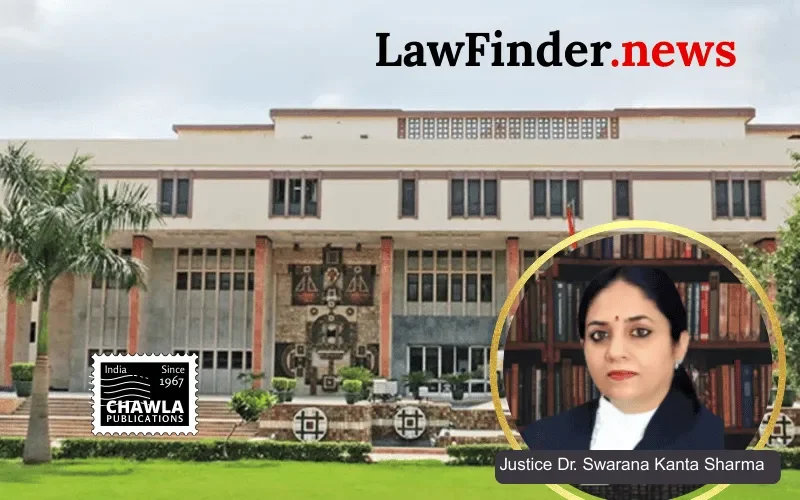
In a significant judgment delivered on November 19, 2026, the Delhi High Court, presided over by Justice Dr. Swarana Kanta Sharma, clarified the territorial jurisdiction of High Courts under Article 226 of the Constitution of India in the context of adoption-related disputes. The case, Harpreet Kaur and Another v. Union of India and Others, addressed whether the Delhi High Court had jurisdiction to entertain a writ petition seeking a No Objection Certificate (NOC) from the Central Adoption Resource Authority (CARA) for relocating an adopted minor child to Australia.
The petitioners, Indian-origin Australian citizens, had adopted a child in Punjab and sought the NOC from CARA, which is headquartered in New Delhi, to facilitate the child's relocation and passport issuance. The respondents, including the Union of India and passport authorities in Amritsar, raised a preliminary objection claiming the Delhi High Court lacked territorial jurisdiction because all material events such as adoption deed execution, birth record updates, and passport application occurred in Punjab.
The Court, however, rejected the objection, holding that the refusal by CARA, a statutory authority with its seat in Delhi, to issue the NOC was a material and integral part of the cause of action. The Court emphasized that the cause of action need not arise entirely within the territorial limits of the High Court for it to exercise jurisdiction; a substantial part of it suffices under clause (2) of Article 226. The execution and registration of the adoption deed and related acts in Punjab were deemed background facts incidental to the principal grievance against CARA in Delhi.
Justice Sharma noted that CARA had not challenged the Court's territorial jurisdiction and had contested the petition on merits. Additionally, the Court declined to invoke the doctrine of forum conveniens to transfer the matter to Punjab, highlighting the risk of undue delay and prejudice to the minor child. The Court also observed that the passport authorities' refusal to issue a passport was consequential upon CARA's non-issuance of the NOC, further linking the relief sought to the Delhi-based authority.
This ruling aligns with precedents such as the Supreme Court’s decisions in Oil and Natural Gas Commission v. Utpal Kumar Basu and Alchemist Ltd. v. State Bank of Sikkim, which clarify that territorial jurisdiction depends on where material and integral facts arise, not merely on where background or incidental facts occur. The Delhi High Court’s decision reinforces that statutory authorities’ location and the nexus of the cause of action with their decisions are crucial factors in determining jurisdiction.
The Court allowed the writ petition to proceed in Delhi and set a date for hearing on the merits, leaving all other contentions open for adjudication. This judgment provides clarity for litigants in adoption and similar matters involving multiple jurisdictions, ensuring that the principal authority's location and actions form a valid basis for filing petitions in that High Court.
Bottom Line:
Territorial jurisdiction of a High Court under Article 226 - If a material and integral part of the cause of action arises within the territorial limits of a High Court, it has jurisdiction to entertain the writ petition, even if other parts of the cause of action occur outside its jurisdiction.
Statutory provision(s):
Article 226 of the Constitution of India, Hindu Adoptions and Maintenance Act, 1956, Adoption (Amendment) Regulations, 2021, Adoption Regulations, 2022
Harpreet Kaur v. Union of India, (Delhi) : Law Finder Doc Id # 3212111