Court Emphasizes the Pursuit of Truth and Justice Over Procedural Formalities, Allowing Re-examination of Witness Even After Trial Reserved for Judgment
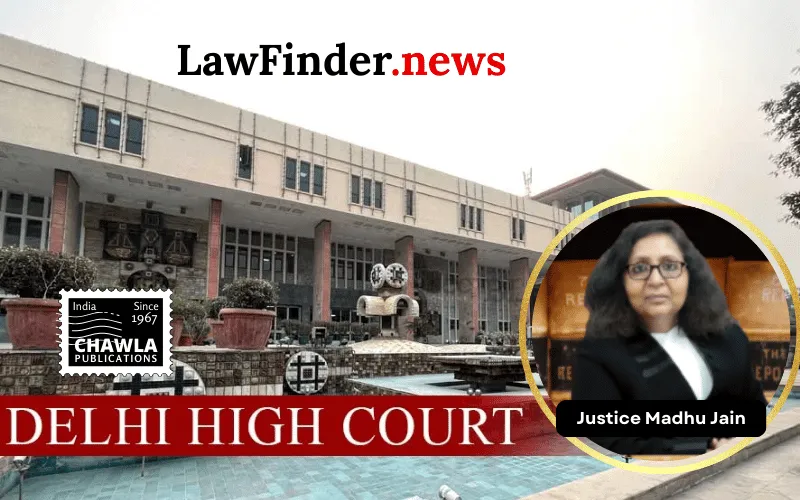
In a significant judgment delivered on August 13, 2026, the Delhi High Court, presided over by Justice Madhu Jain, upheld the authority of trial courts to exercise powers under Section 311 of the Code of Criminal Procedure, 1973 (CrPC) even after a case has been reserved for judgment. The case, Raman Soni v. Central Bureau of Investigation, arose from a criminal trial concerning alleged encroachment on public land and related conspiracy charges involving the petitioner, Raman Soni, and others.
The petitioner, a senior citizen and the sole surviving accused, challenged the trial court’s order dated July 8, 2026, which permitted the Central Bureau of Investigation (CBI) to recall a witness under Section 311 CrPC after the matter had been reserved for judgment. The petitioner argued that once a trial is reserved for judgment, the court becomes functus officio and loses jurisdiction to summon or recall witnesses, thus rendering the trial court’s order unlawful.
Rejecting this contention, the High Court clarified that the expression “at any stage” in Section 311 CrPC broadly empowers courts to summon or recall witnesses whenever the court deems the evidence essential for a just decision. The court observed that reservation of a matter for judgment marks only the conclusion of the ordinary trial process but does not preclude the court from exercising jurisdiction expressly conferred by law to ensure justice is served.
Justice Jain emphasized that procedural technicalities cannot override the fundamental objective of criminal proceedings—to arrive at the truth and administer justice fairly. Citing authoritative Supreme Court precedents, including Pooja Pal v. Union of India and Zahira Habibulla Sheikh v. State of Gujarat, the court underscored the active role that courts must play in eliciting all relevant evidence, not merely acting as passive recorders.
The judgment also addressed the petitioner’s objection that the CBI’s application for recalling the witness was based on “inadvertence” and lacked sufficient justification. The court held that the exercise of power under Section 311 CrPC is a judicial function not strictly contingent upon the sufficiency of reasons in the application and can be exercised suo motu if the court considers the evidence necessary for justice.
The court further pointed out that the recalled witness’s testimony did not introduce new material but was intended to clarify ambiguities in prior evidence, thereby ensuring a just and fair adjudication without causing prejudice to the accused.
In conclusion, the Delhi High Court dismissed the petition and confirmed that the trial court’s exercise of power under Section 311 CrPC at this belated stage was justified and essential for a just decision. The judgment reinforces the principle that courts must prioritize substantive justice over procedural formalism and remain proactive in the administration of criminal justice.
Bottom Line:
The power under Section 311 CrPC can be exercised by a Trial Court even after the matter has been reserved for pronouncement of judgment, provided such exercise is essential for the just decision of the case.
Statutory provision(s): Section 311, Criminal Procedure Code, 1973
Raman Soni v. Central Bureau of Investigation, (Delhi) : Law Finder Doc Id # 2972977