New Delhi, Sep 3 The Delhi High Court on Thursday ruled that booth level agents of political parties cannot be held liable for false details in enumeration forms that cannot be verified during the Special Intensive Revision of electoral rolls.
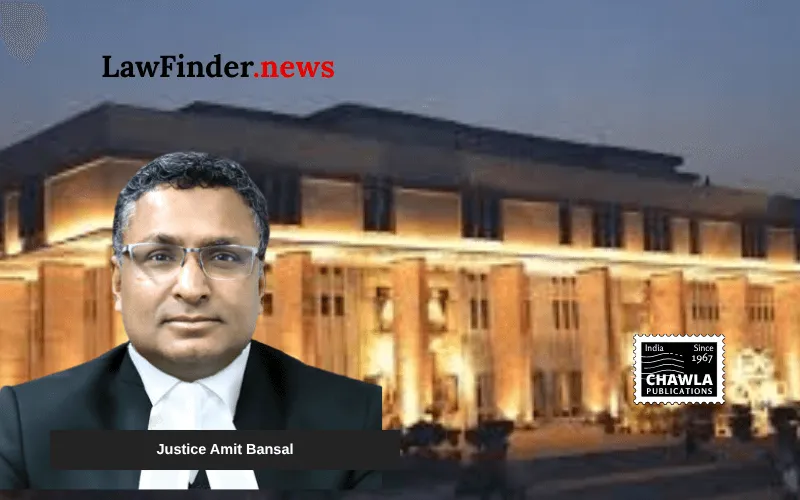
Justice Amit Bansal said booth level agents (BLAs) are liable only for verifiable information like the elector's photograph.
"In the opinion of this court, BLA can only be made liable in terms of Section 31 of the Representation of People Act for information that can be verified by the BLA, i.e., the photograph on the enumeration form matches with the identity of the elector," the judge said.
Section 31 states that making false declarations with respect to the preparation, revision or correction of an electoral roll is punishable with imprisonment for a term which may extend to one year, or with fine, or with both.
The judge passed the judgement on a petition by the Delhi Pradesh Congress Committee (DPCC) president Devender Yadav and the chairman of the DPCC's booth management committee.
The petitioners challenged the mandate requiring BLAs of political parties to give a personal undertaking certifying they have personally verified all details in the enumeration forms.
It was argued that since the information to be filled in the enumeration form is within the elector's exclusive knowledge and the BLA's role is limited to providing assistance, he could not be made to personally authenticate all such details.
The Election Commission of India (ECI) informed the court that it permitted all registered political parties to appoint their own BLAs to participate in the process of SIR to dispel any impression of supporters of any specific party being deliberately left out by the booth level officers (BLOs) in a partisan manner.
The requirement of BLAs furnishing undertaking while submitting applications and forms on behalf of the electors was part of ECI's standing instructions and the Manual of Electoral Rolls, 2023, it stated.
In the judgement, the court observed that under the SIR framework, the responsibility for verification and undertaking rested with the BLOs, and therefore, there was no justification for requiring BLAs to furnish personal undertakings certifying the correctness of the particulars in the enumeration form.
It added that although BLAs would have full responsibility for the forms of dead or shifted voters, as they are filled by them based on information gathered by them, they cannot be held liable for all the unverifiable information pertaining to other electors.
"The BLA cannot be made liable for all the information, which is contained in the Enumeration Form as there is no way a BLA could be in a position to verify the same. The said information would be exclusively within the knowledge of the concerned elector," the court said.
The court also said that the copies of 2002 electoral roll and the final 2025 roll was available on the ECI website and can be downloaded or physically sought from the ECI.
The petitioners would be free to apply for physical copies of the electoral rolls up till May 2026, based on which the SIR is being conducted, and subject to payment of requisite fees, the same would be supplied to the petitioners, it added.
Senior advocate Sakal Bhushan, along with lawyers Sunil Kumar, Vasu Bhushan, Prateek Kumar Sinha and Nipun Bhushan appeared for the petitioner.
According to the petitioner, neither the Representation of the People Act nor the Registration of Electors Rules contain any provision empowering the Election Commission to ask the representatives of political parties to give such an undertaking.
"The requirement of a personal undertaking from BLAs is directly contrary to the statutory scheme of verification prescribed under Section 23 of the Representation of the People Act, 1950, which mandates that the inclusion of any name in the electoral roll shall be made by the Electoral Registration Officer, and only after 'proper verification of facts in such manner as may be prescribed'," the petition had said.
"The prescribed manner of verification under the Rules is to be conducted by statutory officers, not by private individuals or party representatives. The imposition of an undertaking of personal verification upon BLAs amounts to an unlawful delegation of a statutory function to private actors," it added.
Devender Yadav v. Election Commission of India, (Delhi) : Law Finder Doc Id # 2972292