New Delhi, Oct 19 The punishment of dismissal from service is no less than a death penalty for a government servant, the Supreme Court observed as it directed the reinstatement of a deputy registrar of Periyar University in Tamil Nadu who was sacked for allegedly possessing assets disproportionate to known sources of income.
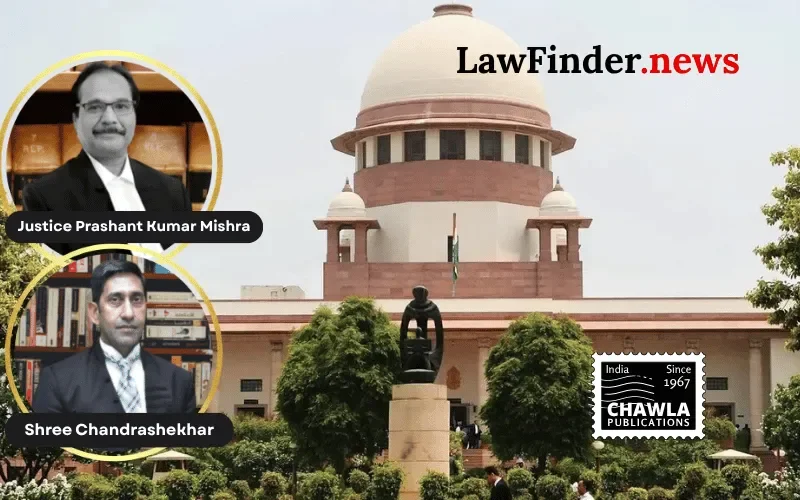
A bench of Justices Prashant Kumar Mishra and Shree Chandrashekhar set aside the order of a division bench of the Madras High Court and upheld the decision of the single-judge bench restoring the services of R Saravanan.
The top court said the inquiry report by the one-man commission constituted by the university showed that the appellant has been pronounced guilty without evidence and what could be a worse kind of injustice to him than to "hang him only on hearsay".
It said the division bench interfered with the single-judge bench's decision without any cogent and justifiable reason.
"The award of punishment of dismissal or removal from service is the harshest measure of punishment and no less than a death penalty for the government servant. It has cascading effects and touches even the family of the employee," the bench said in its October 16 order.
It said such order of punishment of termination of service entails forfeiture of all service-linked benefits accrued to the government servant who is then rendered penniless.
"If such are the drastic consequences, the writ court should not be a mute spectator. In appropriate cases, the writ court is required to come out of the self-imposed bar and entertain the challenge laid to an order of punishment," the bench said.
It rejected the contention of the university that the single-judge bench in its writ jurisdiction was barred from examining the case as an alternative remedy was available under the Tamil Nadu service rules for the accused.
The top court said the single-judge bench does not require a reference of any case law that the powers of the writ court are not restricted by any fetters except for some self-imposed restrictions.
"These powers are though discretionary, the High Court can exercise its jurisdiction under Article 226 of the Constitution in furtherance of justice, equity and good conscience.
"The powers of judicial review are also exercised by the High Court to examine the legality, irrationality or procedural impropriety in an order passed by the departmental authority," it said.
The bench said sometimes it may be a sound exercise of discretion to refuse to interfere with the order of the departmental authority because there is a legal remedy available to the government servant.
"But then, the rule of exhaustion of statutory remedy is a rule of convenience and not a rule of rigid application. It is a self-imposed limitation and does not create a bar or prohibition on exercise of the powers by the writ court," it said.
The bench said that the single-judge bench rightly held that no document or evidence was produced before the one-man commission constituted by the university to look into the allegations against its deputy registrar.
It said there was a complete lack of essential evidence to record a finding of guilt against Saravanan and the order of removal from service does not record any reason why the Syndicate of the University accepted the report of the one-man commission.
"The disciplinary authority by accepting the report of the one-man commission, completely overlooked that the findings recorded thereunder are based on conjectures and surmises," it said, adding that the report draws inferences which legally cannot be held against the appellant.
The top court said the disciplinary authority, while imposing punishment of removal from service without any legally admissible evidence, acted in breach of natural justice and the single-judge bench of the high court was right in examining the findings recorded in the report of the one-man commission.