New Delhi, Aug 18 The Uddhav Thackeray-led faction of the Shiv Sena told the Supreme Court on Tuesday that the Election Commission's (EC) determination as to which group constitutes the political party should come after a decision on the disqualification proceedings against the MLAs who have deserted their camp.
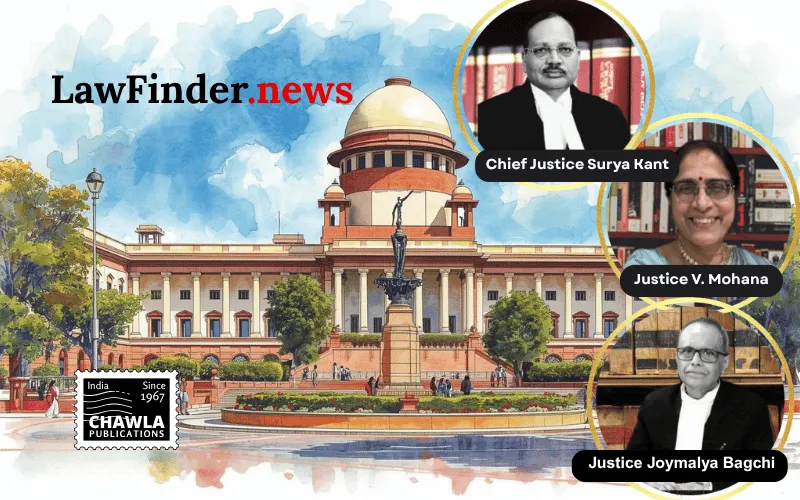
The submissions to this effect were made by senior advocate Kapil Sibal, representing the Thackeray faction, before a bench of Chief Justice of India (CJI) Surya Kant and Justices Joymalya Bagchi and V Mohana.
The bench was hearing final arguments on the sixth day on the pleas of the Thackeray faction against the EC's decision to recognise the Eknath Shinde-led camp as the real Shiv Sena and allot the party's name and "bow-and-arrow" symbol to it.
Sibal said the EC and the Maharashtra Assembly speaker had fundamentally misinterpreted the law by conflating a "legislative majority" with the "political party" itself.
He raised a crucial procedural point regarding the timing of the EC's intervention and argued that the poll panel should only determine which faction constitutes the "real" party after the disqualification proceedings against the rebel MLAs are concluded.
"If those MLAs are ultimately disqualified, their strength in the legislature must be disregarded," Sibal said.
"The process of determining who constitutes the political party must be consequential upon the decision in the disqualification petitions. Otherwise, this problem will arise every time a faction will approach the EC to bypass disqualification," the senior lawyer said.
He said the number of rebel MLAs facing disqualification notices grew from 16 to 22 and eventually, to 39 for various violations, including defying party whips during the speaker's election and the subsequent confidence motion.
He assailed the January 10, 2024, decision of the speaker, which dismissed the disqualification petitions and recognised the Shinde faction as the "real" Shiv Sena based on its majority in the Assembly.
Sibal said the speaker exceeded his jurisdiction by disregarding the 2018 leadership structure of the Shiv Sena.
The speaker had said the 2018 party constitution was "not in conformity" with the Shiv Sena's actual structure, a claim Sibal dismissed as having no legal basis under the 10th Schedule of the Constitution.
He questioned the speaker's finding that the will of the "pakshpramukh" (party chief, Thackeray) is not synonymous with the will of the party. "Admittedly, Uddhav is the pakshpramukh.... They fought elections under his leadership. How can the speaker now say he need not be recognised?" he asked.
Citing the apex court verdict in the Subhash Desai case, Sibal said a "split in the legislative party" does not automatically mean a "split in the political party".
He said by using legislative majority as the sole yardstick, the speaker had ignored the organisational wing of the Shiv Sena.
The arguments remained inconclusive and will resume on Wednesday.
On August 13, the Thackeray faction said provisions of the Constitution cannot be interpreted in a manner that encourages the "very sin" which the anti-defection law seeks to prevent.
The bench was hearing two pleas filed in 2024 by the Thackeray faction against the EC's order allotting the "bow-and-arrow" symbol to the Shinde camp.
The pleas have also challenged the February 17, 2023, order of the poll panel, recognising the Shinde faction as the original Shiv Sena.