Supreme Court Remands False Affidavit Case Back to Magistrate for Fresh Cognizance, Supreme Court Orders Re-evaluation of Electoral Affidavit Case Involving Undisclosed Spousal Assets
In a significant ruling, the Supreme Court of India has remanded a case involving the filing of a false affidavit by an electoral candidate back to the Magistrate for fresh cognizance. The case, Chandrikaben Kishor Dafda v. State of Gujarat, dealt with the appellant's failure to disclose immovable properties owned by her spouse in her electoral affidavit during the 2015 Municipal elections in Gujarat.
The appellant, Chandrikaben Kishor Dafda, was accused of not disclosing the complete details of assets owned by her and her spouse, a requirement under the Gujarat Municipalities (Conduct of Elections) Rules, 1994. The Supreme Court highlighted that the obligation to disclose extends to assets owned by the spouse and dependents, and any failure to do so constitutes an offence against society at large.
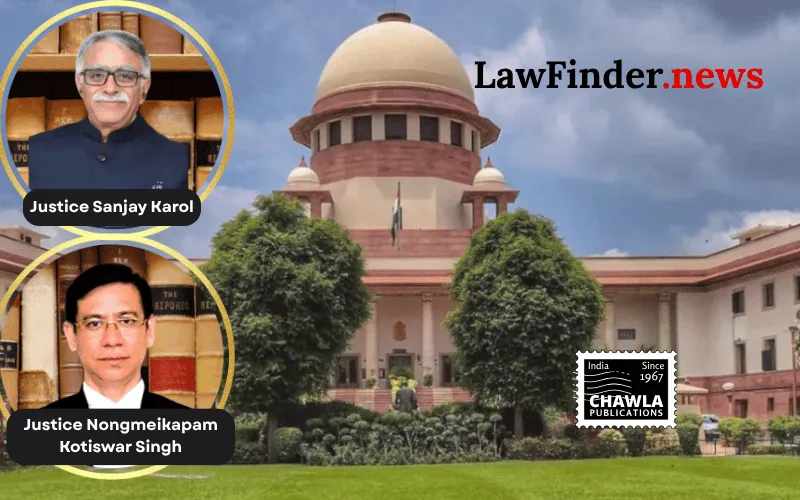
The Supreme Court bench, comprising Justices Sanjay Karol and Nongmeikapam Kotiswar Singh, observed that the error in taking cognizance under an incorrect section is curable, provided it does not result in a failure of justice. The Court emphasized that cognizance is taken of the offence and not the specific section under which it is framed.
The appellant's counsel argued that the Representation of Peoples Act, 1951, was not applicable to the election of a Councillor, which is governed by the relevant State legislation. However, the Supreme Court dismissed this argument, indicating that the filing of a false affidavit is a serious offence that undermines the electoral process.
The Supreme Court's decision mandates that the Magistrate take cognizance afresh and proceed according to law, underscoring the importance of transparency and accountability in the electoral process. The ruling serves as a reminder of the legal obligations of candidates to disclose accurate information and the judiciary's role in upholding the integrity of elections.
Bottom Line:
Filing of a false affidavit during the electoral process is an offence against society at large and must be investigated. Any error in taking cognizance under an incorrect section is curable under Section 465 of the Code of Criminal Procedure, provided it does not cause a failure of justice.
Statutory provision(s): Representation of The People Act, 1951 Section 125A, Gujarat Municipalities (Conduct of Elections) Rules, 1994, Criminal Procedure Code, 1973 Sections 465, 468, 469.
Chandrikaben Kishor Dafda v. State of Gujarat, (SC) : Law Finder Doc id # 2932963