Court affirms citizens' right to property under Article 300A, directs CRPF to relinquish land and pay compensation
In a significant judgment, the Gauhati High Court has directed the Central Reserve Police Force (CRPF) to vacate land illegally occupied since 1975 and compensate the rightful owners. The court emphasized that the State or its instrumentalities cannot occupy private land without following due legal procedures for acquisition and payment of compensation, underscoring the right to property as a constitutional and human right under Article 300A of the Indian Constitution.
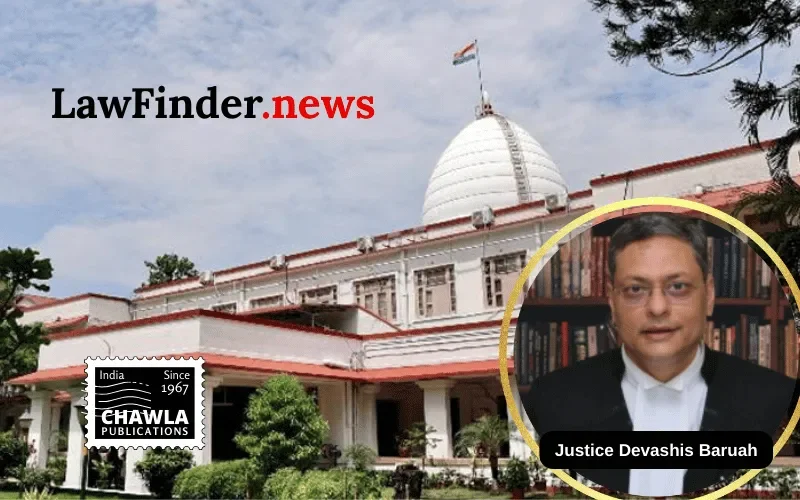
Presided over by Justice Devashis Baruah, the court passed the order in the case of Crisceda Ruth Rapoza and Others v. Union of India and Others. The petitioners, who are legal heirs of the original landowner, had approached the court seeking the return of their land or compensation for its use by the CRPF.
The dispute revolves around 5 Bighas 0 Katha 4 Lechas of land in Kamrup (M), Assam, which has been under the occupation of the CRPF for over five decades without any legal acquisition or compensation to the owners. Despite various communications and verifications by state authorities, the CRPF could not produce any documentation proving legal acquisition of the land.
The court rejected the CRPF's defense of adverse possession, stating that a welfare state cannot justify illegal occupation of private property. It ordered the CRPF to vacate the land within 60 days and hand over possession to the petitioners, failing which state authorities would intervene to remove any CRPF assets from the land.
Additionally, the court directed the Deputy Commissioner, Kamrup (M), to assess compensation for the illegal occupation from the date of the writ petition filing in 2015 until the handover date, as per the Assam Land (Requisition and Acquisition) Act, 1964. The compensation is to be paid within six months, with provisions allowing either party to challenge the assessment if aggrieved.
This judgment reinforces the inviolability of property rights and sets a precedent for upholding citizens' rights against unauthorized state occupation.
Bottom Line :
The State or its instrumentalities cannot occupy private land without following due legal procedures for acquisition and payment of compensation. The right to property under Article 300A of the Constitution is a constitutional and human right, and illegal occupation violates this right.
Statutory provision(s): Article 300A of the Constitution of India, Article 21 of the Constitution of India, Assam Land (Requisition and Acquisition) Act, 1964, Section 11(4).
Crisceda Ruth Rapoza v. Union of India, (Gauhati) : Law Finder Doc id # 2960235