Court Rules Traditional Bodies Like Putu Menden and Senso Mungdang Amenable to Writ Jurisdiction When Exercising Public Functions; Excommunication Orders Violated Articles 14, 19, and 21 of the Constitution
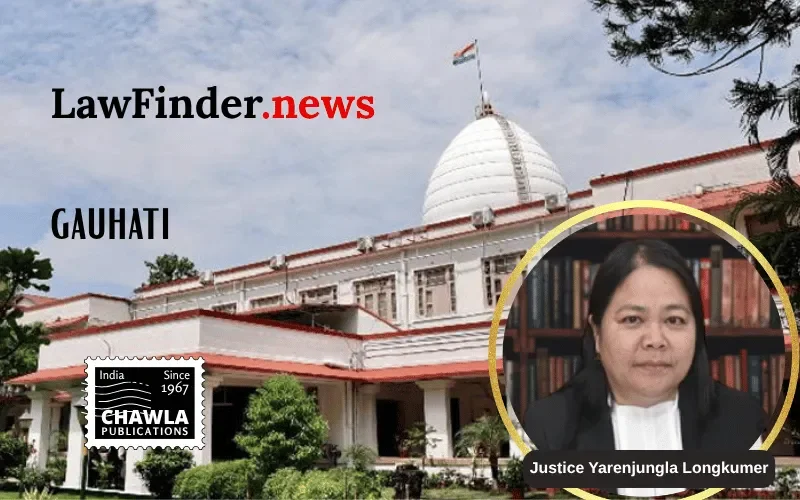
In a landmark judgment dated October 27, 2026, the Gauhati High Court (Kohima Bench) delivered a significant verdict in the case of Shri Temjenchiba Longkumer and others versus Yaongyimsen Riongsanger Putu Menden and others, striking down excommunication orders issued by traditional institutions of the Ao Naga community that had expelled 42 villagers and their families from the citizenship of Yaongyimsen village in Nagaland.
The petitioners, belonging to the Ao Naga tribe and originally from Yaongyimsen village but residing in Chumoukedima district, had challenged the decisions of the Putu Menden (a traditional customary body recognized under the Nagaland Village Area and Councils Act, 1978) and the Yaongyimsen Senso Mungdang (an association of villagers) that excommunicated them and imposed severe restrictions, including barring marital ties with other villagers, prohibiting use of the village name in identity documents, and denying participation in village social functions.
The High Court examined the maintainability of the writ petition, rejecting the respondents' contention that the Putu Menden and the Senso Mungdang were private bodies immune from judicial review. Relying on precedents such as the Supreme Court’s ruling in Board of Control for Cricket in India v. Cricket Association of Bihar and the principle that entities performing public functions or exercising pervasive control over a community are amenable to writ jurisdiction under Article 226 of the Constitution, the Court held that these traditional institutions, despite not being “State” under Article 12, fall within the ambit of judicial review due to the public law elements involved.
Delving into constitutional provisions, the Court affirmed that while Article 371A protects Naga customary law and Article 29 safeguards cultural identity, such protection cannot be used to justify actions infringing fundamental rights under Part III of the Constitution. The Court emphasized that no custom can override constitutional guarantees, especially when it violates human dignity, social equality, or public policy.
In this case, the excommunication and the accompanying restrictions were found to violate Articles 14 (Right to Equality), 19 (Freedom of Speech, Expression, Assembly, and Movement), and 21 (Protection of Life and Personal Liberty) of the Constitution. The Court noted that the impugned orders affected the civil status and identity of the petitioners and their families, impacting their legally protected rights including access to identity documents and the ability to associate freely.
The Court distinguished this case from the Supreme Court’s judgment in Sardar Syedna Taher Saifuddin Saheb v. State of Bombay, which upheld excommunication powers in a religious context, by highlighting the difference between a religious denomination and a traditional village institution. It also recognized that the excommunication in this case was not based on religious norms but rather on a disputed customary practice which cannot supersede fundamental rights.
Consequently, the Court quashed and set aside the excommunication notices, the announcements published in the Ao language newspaper "Tir Yimyim," and all related orders imposing restrictions on the petitioners and their families. The Court also held that the Yaongyimsen Village Council was not a necessary party in the petition.
The judgment reinforces the primacy of fundamental rights over customary laws and practices, particularly when such customs adversely impact the civil and legal rights of individuals. It underscores that traditional bodies, though rooted in indigenous customs, must act within constitutional boundaries and cannot infringe upon the fundamental rights of community members.
This decision is expected to have far-reaching implications for the governance and customary practices of indigenous communities in Nagaland and other tribal areas, emphasizing constitutional supremacy and the protection of individual rights.
Bottom Line:
Customary practices, even when protected under Article 371A of the Constitution of India, cannot override fundamental rights under Part III of the Constitution. Any custom that violates human dignity, social equality, or public policy is void to the extent of inconsistency with constitutional provisions.
Statutory provision(s):
Article 12, Article 13, Article 14, Article 19, Article 21, Article 26, Article 29, Article 37A, Article 226, Nagaland Village Area and Councils Act, 1978, Citizenship Act, 1955 Section 6A