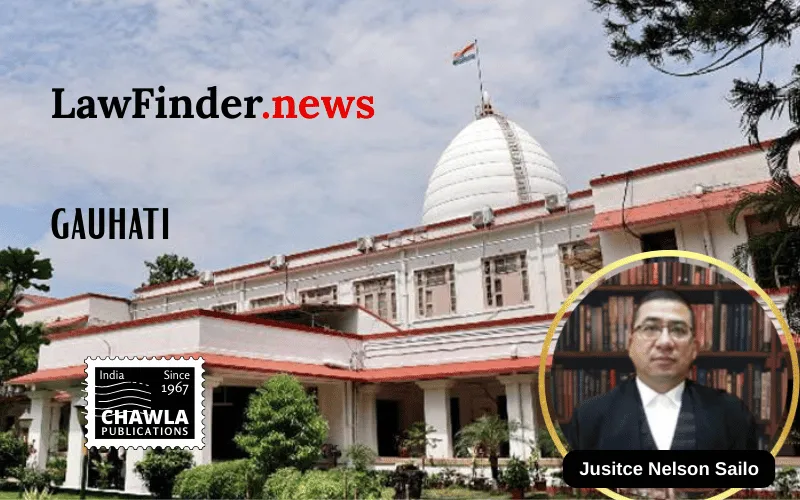
Court emphasizes that enforcement of liquor prohibition must be carried out by authorized agencies, restraining NGOs from locking houses of alleged offenders
In a significant judgment dated September 7, 2026, the Gauhati High Court, presided over by Justice Nelson Sailo, addressed the unauthorized actions taken by local NGOs under the Mizoram Liquor (Prohibition) Act, 2019. The case arose when the petitioners, Mr. Dithanga and his wife, residents of Chhingchhip village in Serchhip district, approached the court after their house was locked by a joint committee of NGOs. The NGOs alleged that the petitioners were in possession of four litres of country-made liquor, and as per their internal resolution, decided to lock the petitioners' house for repeated liquor violations.
The Court noted that while the Mizoram Liquor (Prohibition) Act, 2019 aims to regulate and prohibit liquor possession and sale, the enforcement of this law must be carried out strictly by authorized law enforcement agencies. The NGOs, though playing a supportive role in upholding the law, cannot take the law into their own hands by imposing punitive actions such as locking private property. Such acts violate the Fundamental Rights of individuals, particularly the right to residence and personal liberty.
During the proceedings, it was revealed that the Superintendent of Police, Serchhip, had convened a meeting with the NGOs on May 19, 2026, and instructed them to open the petitioners' house, recognizing that the NGOs' action was unlawful. Subsequently, the NGOs complied and unlocked the house, allowing the petitioners to reside peacefully.
Justice Sailo observed that if the petitioners had indeed violated the Mizoram Liquor (Prohibition) Act, the appropriate authorities must follow due process under the Act and related rules. The Court directed the District Law Enforcement Agency to ensure that such unauthorized actions by NGOs do not recur in the future, reiterating the importance of maintaining the rule of law and protecting citizens' rights.
The writ petition was disposed of with these observations, providing clarity on the limits of NGO involvement in law enforcement under the prohibition regime.
Bottom Line:
Local NGOs cannot take the law into their own hands, such as locking the house of individuals alleged to have violated the Mizoram Liquor (Prohibition) Act, 2019. The enforcement of such laws must be carried out by authorized law enforcement agencies.
Statutory provision(s):
Mizoram Liquor (Prohibition) Act, 2019
Dithanga v. State of Mizoram, (Gauhati) : Law Finder Doc Id # 2975223