Court Rules That Irretrievable Breakdown of Marriage Is Not a Ground for Judicial Separation Under Hindu Marriage Act; Reiterates Binding Effect of Earlier Divorce Suit Verdict
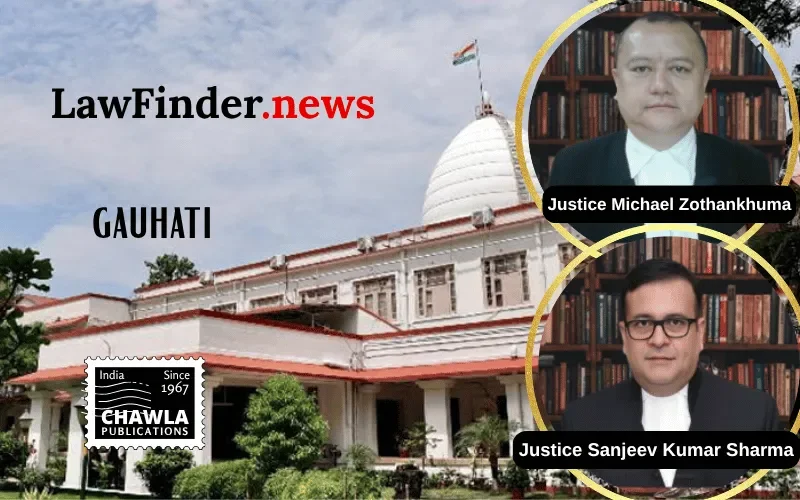
In a significant ruling dated November 12, 2026, the Division Bench of the Gauhati High Court, comprising Justices Michael Zothankhuma and Sanjeev Kumar Sharma, dismissed the appeal filed by Abani Das seeking a decree of judicial separation from his wife, Suravi Das. The judgment emphasizes that a subsequent suit for judicial separation must be founded on a fresh cause of action if it follows the dismissal of an earlier divorce suit based on the same grounds.
The dispute originated from a marriage solemnized on May 14, 2012, between Abani Das and Suravi Das, which produced a male child in 2013. In 2015, the husband filed a divorce petition citing mental cruelty, which was dismissed by the District Judge, Nalbari, and this dismissal was subsequently upheld by the High Court in 2018.
Undeterred by the prior dismissal, Abani Das initiated a suit for judicial separation in 2019 on grounds of cruelty and desertion—the very same grounds cited in the earlier divorce petition. The Family Court, Nalbari, dismissed this suit, and the husband appealed to the Gauhati High Court.
The High Court examined the grounds raised in the judicial separation suit and found that, except for one ground alleging increased rudeness after the divorce petition dismissal, the appellant had failed to establish when the causes of action arose. The Court pointed out that all other grounds lacked material particulars and did not demonstrate fresh causes of action arising after the dismissal of the earlier divorce suit. The Court also noted that the allegations of increased rudeness were bald and unsupported by evidence, failing to substantiate claims of cruelty.
Further, the Court reiterated the settled legal position that irretrievable breakdown of marriage is not a ground for judicial separation under the Hindu Marriage Act, 1955. It stated that only the Supreme Court of India, exercising powers under Article 142 of the Constitution, can grant relief based on the irretrievable breakdown of marriage.
The Court declined to delve into precedents cited by both parties as they were not sufficient to overcome the deficiencies in pleadings and evidence. Consequently, the appeal was dismissed as devoid of merit, upholding the Family Court's order.
This judgment reaffirms the principle of res judicata in matrimonial disputes and underscores the requirement of fresh cause of action for subsequent petitions based on the same grounds. It also clarifies the limited grounds for judicial separation under the Hindu Marriage Act, reinforcing the role of the Supreme Court in exceptional cases involving irretrievable breakdown.
Bottom Line:
Hindu Marriage Act - Grounds for judicial separation must be based on fresh cause of action arising after dismissal of a prior divorce petition on the same grounds. Allegations lacking material particulars and evidence cannot substantiate claims of cruelty. Irretrievable breakdown of marriage is not a ground for judicial separation under the Hindu Marriage Act; only the Supreme Court can grant relief on such grounds under Article 142 of the Constitution of India.
Statutory provision(s):
Hindu Marriage Act, 1955 Sections 10(1), 13, 24; Constitution of India Article 142
Abani Das v. Suravi Das, (Gauhati)(DB) : Law Finder Doc Id # 3128947