Court Rules Advocates Cannot Be Held Liable for Non-Appearance of Writ Petitioner Filed Through Institutional Channels; Issues Caution on Vakalatnama Acceptance
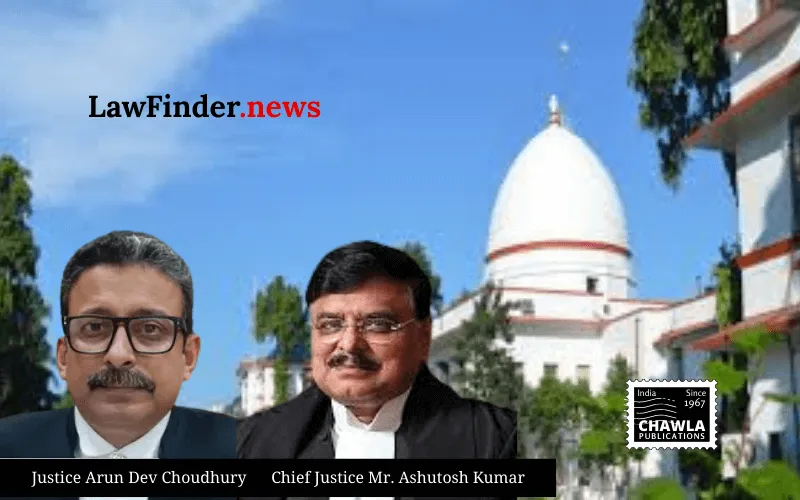
In a significant judgment delivered on August 31, 2026, the Division Bench of the Gauhati High Court, comprising Chief Justice Ashutosh Kumar and Justice Arun Dev Choudhury, decided the case of Harbinder Singh Kalsi and Another vs. State of Assam and Others, addressing the professional liability of advocates in writ proceedings.
The case arose when a writ petition was dismissed by a Single Judge on the ground that the writ-petitioner, Ms. Beolin Kharbhih, could not be located, and was thus treated as a fictitious person. The Single Judge had imposed costs of ₹50,000 each on the appearing advocates and referred the matter to the Bar Council of Assam for disciplinary proceedings. The petitioner-advocates challenged this order, contending that they had accepted the vakalatnama in good faith, through standard institutional processes, and had no complicity in the disappearance of the writ-petitioner.
The Division Bench closely examined the facts, including the identification of the writ-petitioner before the Oath Commissioner by a registered Advocate's Clerk and the filing of the writ petition after due satisfaction of the petitioner's existence. The Court acknowledged that the writ petition was pending for six years and that despite a CID enquiry reporting the petitioner's untraceability, the advocates could not be held responsible for the petitioner's disappearance after filing the petition.
Furthermore, the Court observed that the writ-petitioner was involved in other legal proceedings, as the respondent had filed a caveat petition in a separate property dispute case against her, which indicated her existence and contradicted the claim of her being fictitious.
While upholding the dismissal of the writ petition, the Court set aside the imposition of costs on the advocates and the referral to the Bar Council, terming such actions unjustified and harsh under the circumstances. The judgment emphasized that advocates, especially when accepting vakalatnama at the request of fellow advocates, cannot be made guarantors of the physical presence or veracity of the litigant beyond a reasonable verification.
However, the Court issued a cautionary note for members of the Bar to exercise greater care and prudence in accepting vakalatnama, ensuring the genuineness of the litigant and the correctness of the pleadings to avoid being inadvertently embroiled in disputes involving fictitious or absent parties.
This judgment clarifies the limits of professional responsibility for advocates in writ proceedings and protects them from harsh penal measures in cases involving untraceable petitioners, provided they act in good faith and follow institutional protocols.
Bottom Line:
Advocates cannot ordinarily be held personally liable for non-appearance or subsequent untraceability of a writ-petitioner when they accepted vakalatnama through regular institutional process and had no proven complicity; while dismissal of writ petition was upheld, costs imposed on advocates and referral to Bar Council were set aside.
Statutory provision(s):
Advocates Act, 1961
Harbinder Singh Kalsi v. State of Assam, (Gauhati)(DB) : Law Finder Doc Id # 2990516