Court directs State to ensure continued status, employment, and benefits for diploma holders under Assam Rural Health Regulatory Authority Act, 2004, invoking doctrine of prospective overruling
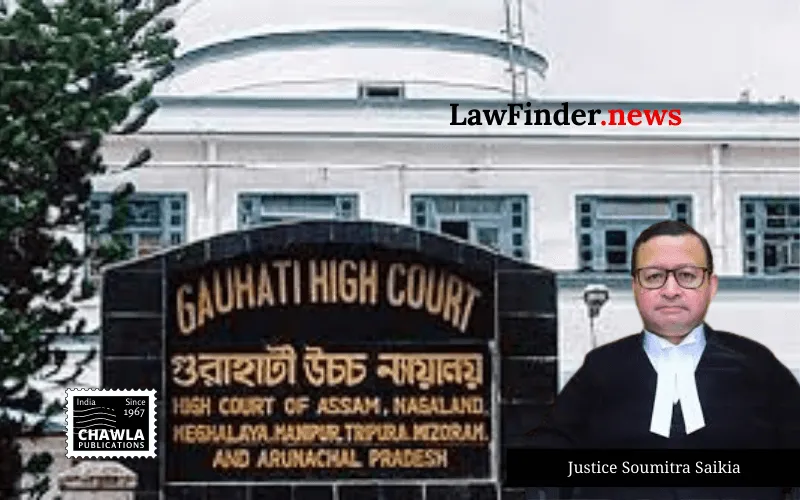
In a landmark judgment dated May 29, 2026, the Gauhati High Court delivered a significant ruling in the case of Bikram Pathak and 608 others versus the State of Assam and others, addressing the status and rights of Rural Health Practitioners in Assam. The petitioners, who had obtained diplomas under the Assam Rural Health Regulatory Authority Act (ARHRA), 2004, contended that their rights accrued under the now-declared unconstitutional Act could not be retrospectively taken away.
Background:
The ARHRA Act, 2004, enacted by the Assam Legislature, established a diploma course in Medicine and Rural Health Care and allowed successful candidates to register as Rural Health Practitioners authorized to practice medicine in rural areas under certain restrictions. However, the Indian Medical Council Act (IMC), 1956, a Central legislation, exclusively regulates standards in medical education and allopathic medical practice across India.
The Assam Rural Health Regulatory Authority Act was challenged before the Gauhati High Court in 2005 by the Assam Branch of the Indian Medical Association for lacking legislative competence as it conflicted with the Central IMC Act. The High Court, in 2014, declared the ARHRA Act unconstitutional for being in conflict with the IMC Act, 1956, on the grounds of legislative competence and procedural lapses such as the lack of prior permission from the Indian Medical Council.
Subsequently, the Assam Legislature enacted the Assam Community Health Professionals (Registration and Competency) Act, 2015, which created the category of Community Health Professionals distinct from allopathic medical practitioners and upheld by the Supreme Court as constitutionally valid and non-conflicting with the IMC Act.
Issues Before the Court:
The petitioners argued that despite the ARHRA Act being struck down, they had lawfully obtained their diplomas and registrations as Rural Health Practitioners under a valid statute at the relevant time, and their rights to practice medicine in rural areas could not be nullified retrospectively. They contended that the doctrine of prospective overruling should apply to protect their accrued rights, and the State should be directed to recognize their status and formulate appropriate schemes and cadres accordingly.
Findings and Legal Reasoning:
The Gauhati High Court examined the legislative competence under the Seventh Schedule of the Constitution, focusing on Entry 25 of List III (education) and Entry 66 of List I (coordination and standards in higher education). The Court affirmed that medical education and allopathic practice standards fall under Entry 66 of List I, reserved for the Parliament, rendering the ARHRA Act ultra vires. However, the subsequent 2015 Act was validly enacted under State competence as it regulates Community Health Professionals distinct from allopathic practitioners.
Crucially, the Court applied the doctrine of prospective overruling, emphasizing that rights accrued under a statute valid at the time of acquisition cannot be retrospectively taken away merely because the statute was later declared unconstitutional. The Court noted that the petitioners had completed their courses and earned diplomas legally before the ARHRA Act was struck down.
The Court underscored the fundamental right to health under Article 21 of the Constitution and highlighted the national importance of rural health care. It directed the State Government to expedite framing rules and schemes enabling Rural Health Practitioners/Community Health Professionals to continue practicing in rural areas with appropriate recognition, employment benefits, and promotion avenues.
The Court also expressed concern over the apparent delay and indecisiveness of the State Government in implementing the Supreme Court's directions and ordered the constituted committee to submit recommendations within 90 days.
Conclusion:
The Gauhati High Court allowed the writ petition to the extent of protecting the accrued rights of the Rural Health Practitioners who completed their courses under the ARHRA Act, 2004. It directed the State to give effect to the Supreme Court's judgment, ensuring the petitioners' continued recognition and dignified employment as Community Health Professionals in rural Assam.
This ruling reinforces the principle that constitutional invalidation of a statute does not automatically erase rights lawfully acquired under it and underscores the State's obligation to balance legislative competence with citizens' fundamental rights and public health interests.
Bottom Line :
Assam Rural Health Regulatory Authority Act - Rights accrued under a validly enacted statute cannot be retrospectively taken away by declaration of the statute as unconstitutional; doctrine of prospective overruling protects such rights.
Statutory provision(s):
Assam Rural Health Regulatory Authority Act, 2004; Assam Community Health Professionals (Registration and Competency) Act, 2015; Indian Medical Council Act, 1956; Constitution of India, Articles 21, 246, 254; National Medical Commission Act, 2019.
Bikram Pathak v. State of Assam, (Gauhati) : Law Finder Doc id # 2913954