Petition dismissed due to availability of statutory appeal; High Court emphasizes rule of alternative remedy
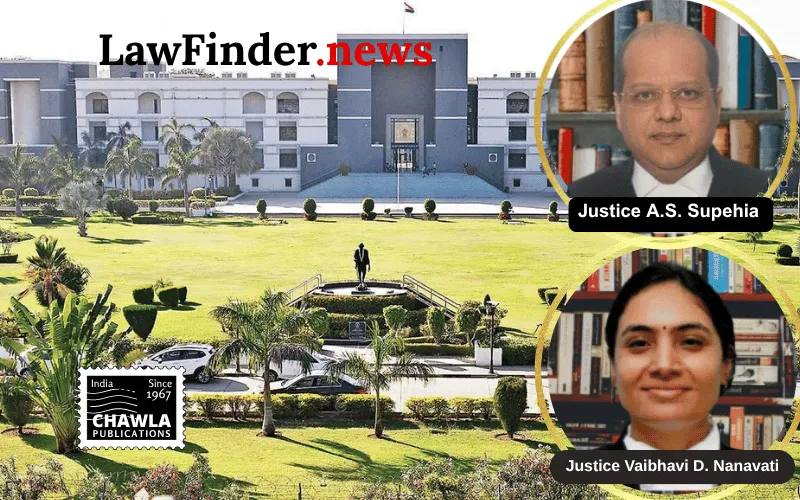
In a significant ruling, the Gujarat High Court has dismissed the writ petition filed by Jitendra Shankarlal Mistri challenging the reopening of his income tax assessment under Section 147 of the Income Tax Act, 1961. The court, presided by Justices A.S. Supehia and Vaibhavi D. Nanavati, upheld the principle of alternative remedy, emphasizing that the petitioner should pursue the statutory appeal process available under the Act rather than seeking judicial intervention.
The case stemmed from a search operation conducted at Khavda Travels Limited, which uncovered alleged cash financing activities. Based on statements recorded and financial records, the Income Tax Department issued a notice under Section 148, leading to the reopening of Mr. Mistri's assessment for the year. The petitioner contended that the reopening was unjustified, arguing that the criteria for invoking extended limitation under Section 149(1)(b) were not met, as the transactions did not represent escapement of income exceeding Rs. 50 lakhs.
However, the court highlighted that the determination of escaped income exceeding the statutory threshold is concluded at the assessment stage, not at the notice issuance phase. It noted that the actual income assessed was Rs. 60,49,260, surpassing the threshold required for reopening. The court dismissed the petition, asserting that the statutory appeal to the Commissioner of Income Tax (Appeals) offers an adequate redressal mechanism.
The judgment reaffirmed precedents set by the Supreme Court, notably in Commissioner of Income-tax v. Chhabil Dass Agarwal, which underscored the necessity of exhausting statutory remedies before invoking writ jurisdiction. The court clarified that interference is permissible only under exceptional circumstances, such as violation of judicial principles or natural justice, which were absent in this case.
Legal experts view this ruling as a reinforcement of procedural adherence within tax litigation, highlighting the judiciary’s stance on respecting statutory frameworks. Taxpayers are encouraged to follow the prescribed appeal procedures to address grievances regarding assessment and penalty orders.
Bottom line:-
Income Tax Law - Writ petition challenging reopening of assessment and assessment order under Section 147 of the Income Tax Act, 1961 - High Court held that writ petition under Article 226 of the Constitution cannot be entertained when there exists an alternative efficacious statutory remedy.
Statutory provision(s): Income Tax Act, 1961 Sections 147, 148, 149(1)(b), 271D, 271E; Constitution of India, 1950 Article 226