Court finds allegations of air, noise, and water pollution baseless; Gujarat Pollution Control Board’s inspections confirm compliance with environmental norms.
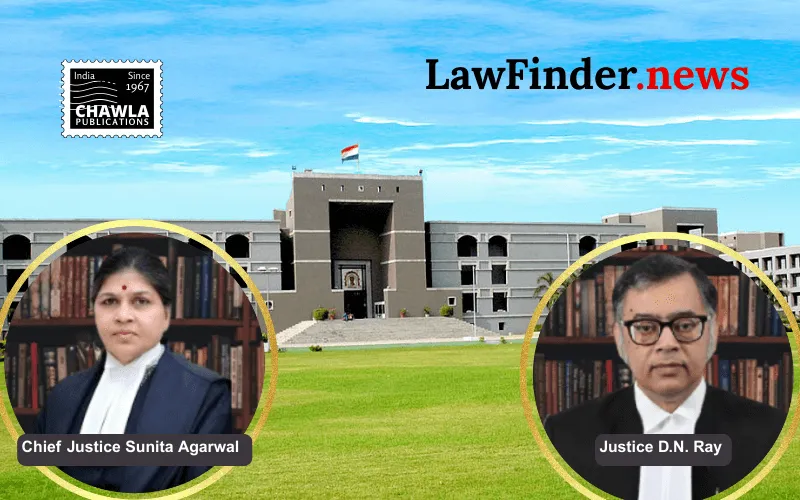
In a significant ruling dated August 18, 2026, the Gujarat High Court (Division Bench comprising Chief Justice Mrs. Sunita Agarwal and Justice D.N. Ray) dismissed a Public Interest Litigation (PIL) filed by Satyajeet Paras Nath Rai Kumar against an industrial unit in Sarigam, Gujarat, alleging environmental violations including air, noise, and water pollution. The court termed the PIL as frivolous and motivated, imposing a cost of Rs.1,00,000 on the petitioner for filing false and misleading allegations, thereby misusing the judicial process and wasting the court’s valuable time.
The petitioner, claiming to represent the interest of local tribal residents affected by the industry, sought directions for the immediate closure of the respondent industry’s activities, which involved manufacturing finished paper products and operating a captive power plant fueled by non-recyclable plastic waste. The petitioner alleged that the industry was causing grave environmental damage and violating the Environmental Clearance (EC) conditions, especially by operating a plastic waste-fired boiler without prior environmental clearance.
However, the Gujarat Pollution Control Board (GPCB) submitted a detailed affidavit refuting these claims. According to GPCB’s response, the industry in question had obtained all requisite environmental clearances and consents from the competent authorities, including a prior EC dated January 29, 2019, and subsequent amendments. The Board also pointed to multiple inspections carried out between January 2025 and June 2026, which consistently showed compliance with ambient air quality, noise pollution, and water discharge standards. The GPCB noted the industry’s implementation of environmental control measures such as the planting of over 15,000 trees within the premises and installation of an acoustic enclosure to mitigate noise.
The court carefully examined the petitioner’s claims and the GPCB’s affidavits and inspection reports. It was observed that the petitioner’s allegations about the industry being a standalone unit located close to residential areas were misleading. The GPCB demonstrated that several other industrial units were located in close proximity, and the area was not predominantly residential as claimed. Furthermore, the court noted that the petitioner failed to specifically deny or rebut the detailed factual assertions made by the GPCB.
Regarding the critical allegation about the captive power plant operating a plastic waste-fired boiler without environmental clearance, the court relied on a Ministry of Environment, Forest and Climate Change (MoEFCC) Office Memorandum dated January 23, 2019. This memo clarifies that captive power plants employing Waste Heat Recovery Boilers (WHRB) without auxiliary fuel in certain industries are exempt from obtaining fresh environmental clearance. The court found that the industry’s boiler uses waste heat and is exempt from the EC requirement as per the official clarification. The petitioner’s counter-arguments that the boiler combusted externally procured plastic waste and thus required separate clearance were found unsubstantiated and contradictory.
The court further highlighted that the GPCB had taken appropriate measures, including issuing notices and directions to the industry wherever minor violations or aberrations were noticed during inspections. It was also noted that the ambient air quality in the region, while part of a critically polluted industrial belt (Vapi), was being monitored and managed through ongoing regulatory action and National Green Tribunal supervision.
In conclusion, the court held that the petitioner’s writ petition was motivated by personal grudges and was based on false, vague, and misleading assertions aimed at maligning the respondent industry. The petition was dismissed with a cost of Rs.1,00,000 to be deposited within three weeks. The amount is to be utilized by the Gujarat State Legal Services Authority for environmental and social welfare programs, including tree plantation and support for tribal and orphan children in the region.
This judgment underscores the importance of substantiating public interest claims with credible evidence and reinforces the role of regulatory bodies like GPCB in enforcing environmental laws. It also cautions against the filing of frivolous litigation that wastes judicial resources and harms legitimate industries.
Bottom Line:
Public Interest Litigation (PIL) dismissed as frivolous and motivated, with a cost imposed on the petitioner for filing false and misleading allegations and wasting judicial time.
Statutory provision(s):
Environmental Protection Act, 1986, EIA Notification, 2006 (as amended), Noise Pollution (Regulation and Control) Rules, 2000, Gujarat Pollution Control Board regulations, Ministry of Environment, Forest and Climate Change Office Memorandum dated 23.01.2019